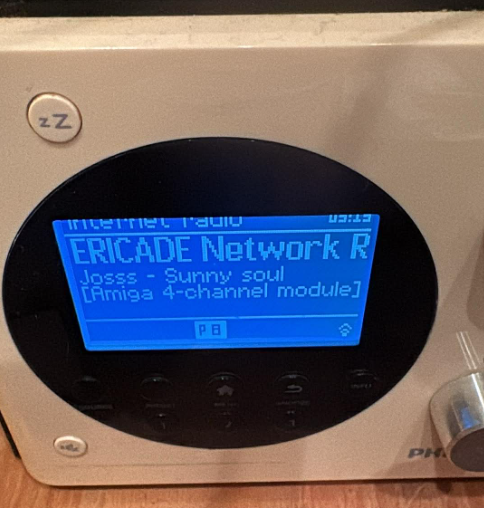
Short answer: synthwave, chiptunes, tracked music and retro electro. Please enjoy a trip down memory lane.
Longer answer: If you want to understand what this station is about, consider the following story:
“It was another time”, as they use to say to excuse or accept bad stuff. But this was not the case with the old classic home computers of the 80s and 90s. This was a time of wonder and trying to do with the limited resources that was available. A whole generation learned Basic and then some struggled with assembly language. A new breed of graphics artists, musicians, programmers and authors used the computers of the time as a platform of development. This is off course how it is even today, but it was here where it started. We’ve asked ourselves many questions in order to understand what the revolution would mean for us: the users, the programmers and the hackers of the day.
One final question remains: my god, has it been this long? Yes, in fact it has! The Amiga came into this world in 1985, and that’s 35 years ago in 2020. The original Soundtracker was a commercial application that emerged in the 80s, and spawned a revolution all by itself. It allowed anyone to create songs with sampled music requiring almost no experience. Soundtracker was quickly outmaneuvered by a lot of Shareware clones like Noisetracker and Startrekker to name a few. And suddenly music came streaming out of Paula, the only soundcard/chip the Amiga ever had or needed. Then came the PC and added more channels and better samplers, suddenly we had Impulsetracker, Fasttracker and various other fantastic tools to make the music the artist created even more magic.
And now, you can hear the fruit of their labor. Tunes, mostly sampled, that brings back the many talents fostered by the home computer revolution we just talked about.
How did this “tracker music” thing get started?
When Karsten Obarsky wrote his software “the ultimate soundtracker”, he could not have guess what he just set in motion. The year was 1987 and the Amiga was that HOT computer everyone want. Alas, his software never sold well and the format was stolen by others. And as unfair as it may be, they succeeded where he did not.
The journey was long, but today we have everything from old school Protracker for the Amiga to Impulsetracker firing on all 64 cylinders. Tracked music has come a long way.
Who is DJ Daemon?
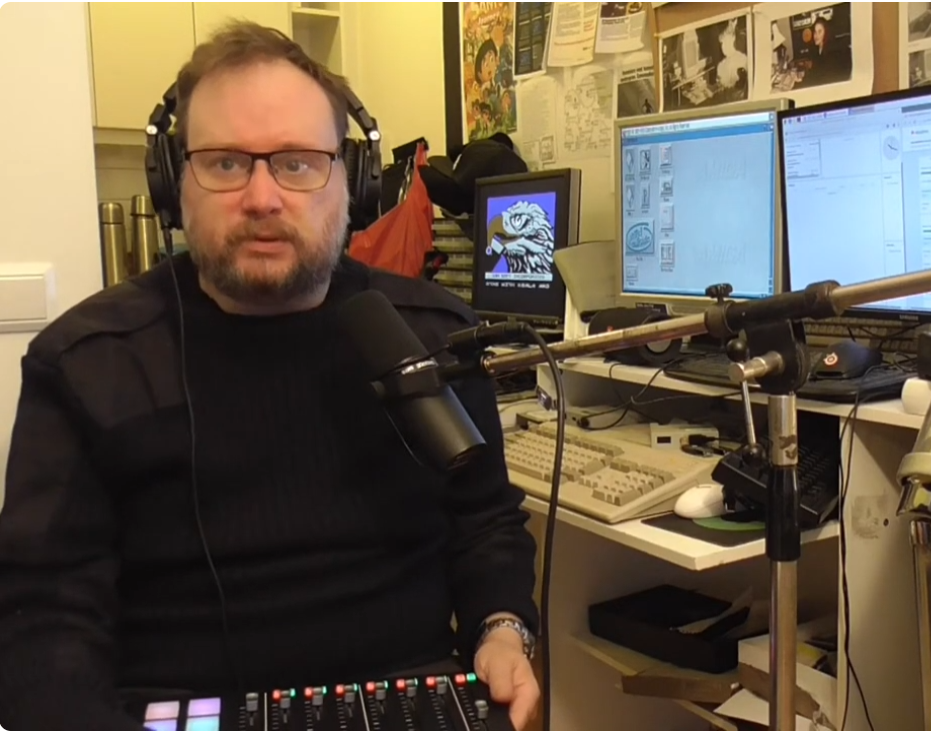
Me? Just an old man with the old world blues and a history in community broadcasting. Yet again I sit in front of the microphone and present you the wonderful tracked music of yesterday and today.
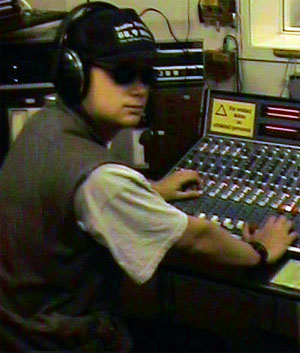
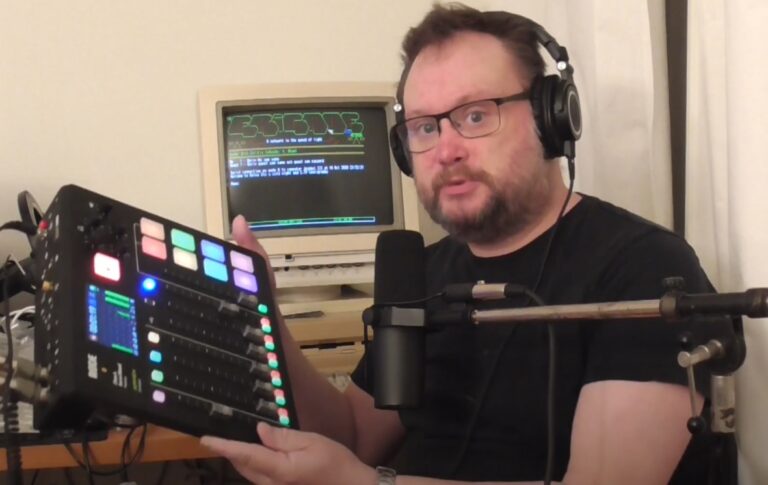
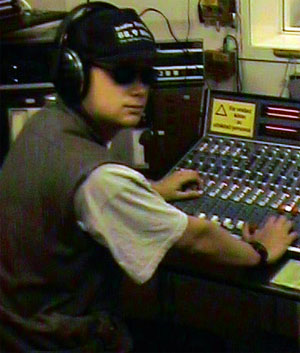
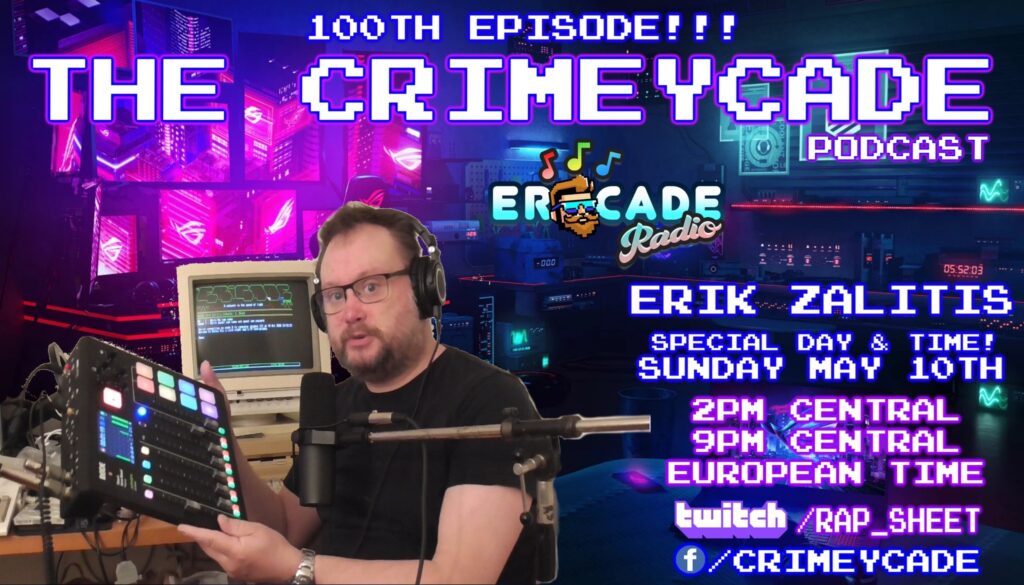
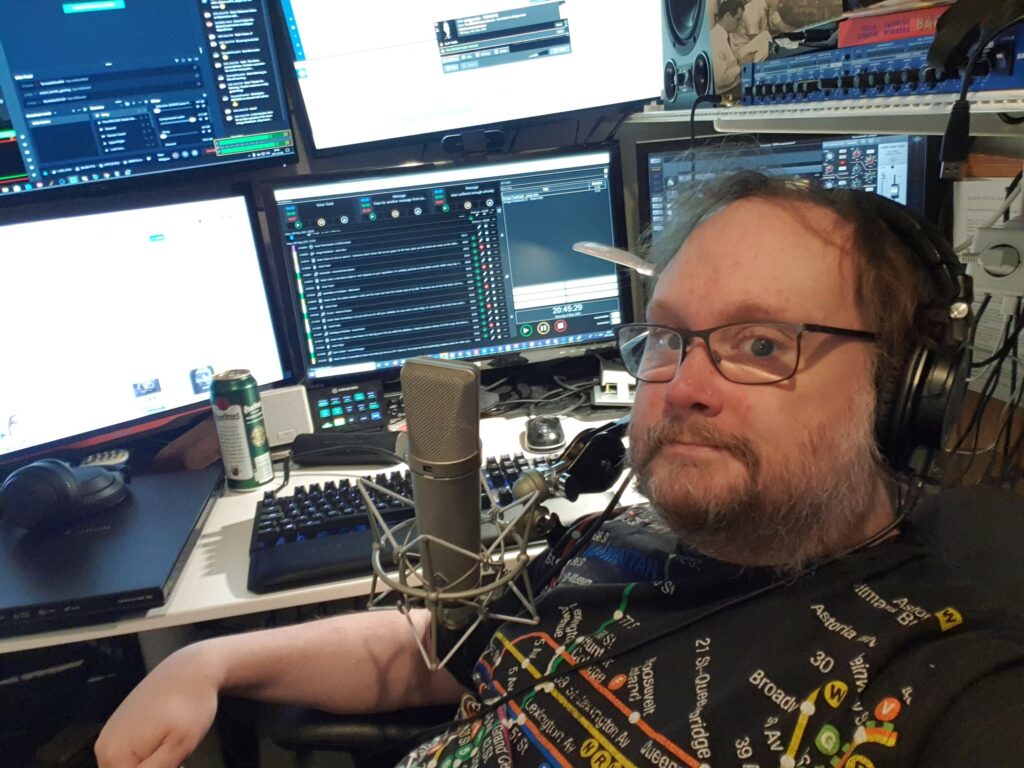
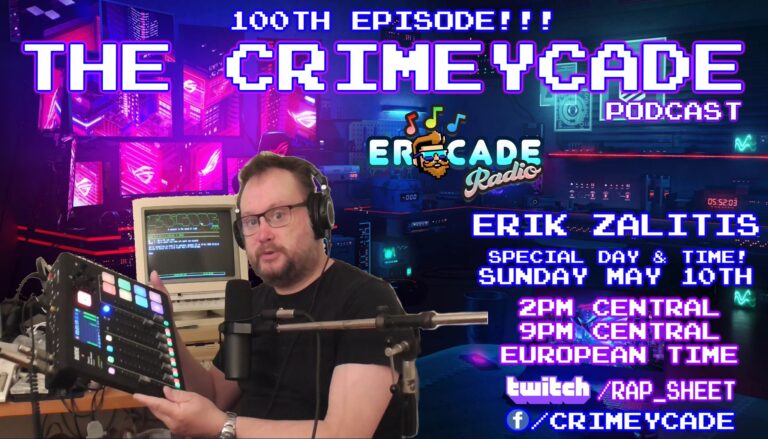
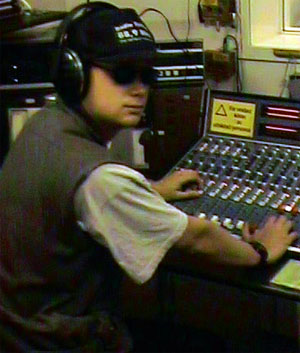
Me in 1997. Amiga geek very-ordinaire, Erik Zalitis, formerly known as Daemon hosts the 24/7 show that takes you back 30 years to the days of home computers, BBSes and music made on the Amiga, Atari and PC. Me in 2022.
Updated: 2026-07-30. – New websocket endpoint, changed incorrect links.
Serving the demo scene since 2020, we have a mission to give you the best of the demo scene and a 24/7 streaming experience of chiptunes, tracker music, video game music and tracker music. A lot of it created on Amigas in the 80s and 90s and also Impulsetracker, Fasttracker, Screamtracker and many other formats.
This guide is geared towards those who want to feature our station in public directories. There are a number of very easy ways to link to us and to feature our services on your site. We have adopted the idea of “spread the word and not the disk”. Hard to say if anyone remembers diskettes anymore, but the message is clear: “tell everyone you know about ericade.radio”.
So here are the two stations:
ericade.radio / the ERICADE radio network
Station profile
Started: 2020 Style: Amiga MOD, demoscene, chiptune, tracker music
The magic of electronic retro computer-music awaits you! Chiptune, synthwave, chipwave, retroelectro – but in reality it’s called tracker music. It’s all composed on Amigas and PCs using Protracker, Impulsetracker, Fasttracker and more..
Name: ericade.radio WWW: https://ericade.radio/ Slogan: The Northern Europe demo scene broadcaster Location: We broadcast from Kungsholmen in central Stockholm in Sweden. GEO-location: 59.32972418882536, 18.007987391263196. Standard: Shoutcast DNAS Encoding: 192 kbps MP3. Streaming URL: https://radio.ericade.net/sc/stream/1/ Streaming URL (Legacy): http://legacy.ericade.net:8000/stream/1/ (Only use if your player cannot work otherwise) Shoutcast endpoint for XML/JSON metadata extraction: http://legacy.ericade.net:8000/ (Don’t use https, or HSTS will cause problems for you when trying to downgrade the connection) Simulated endpoint for IceCast metadata extraction: https://ericade.radio/status-json.xsl Simulated endpoint for AzuraCast metadata extraction: https://radio.ericade.net/api/nowplaying/1 Nowplaying overlay for some services: https://radio.ericade.net/currentsong
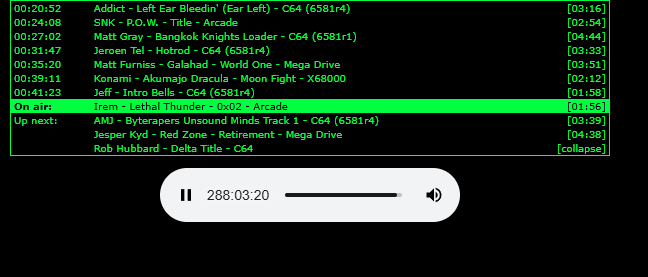
Now Playing – ERICADE Radio
Paste this into your website
as HTML-code to show the
overlay on your page.
“The magic of electronic retro computer-music awaits you! Chiptune, synthwave, chipwave, retroelectro – but it’s called tracker music. It’s all composed on Amigas and PCs using Protracker, Impulsetracker, Fasttracker and more…
Let’s go on a journey into dreamy syntheziser-loops, classic Amiga demo tunes and upbeat chiptunes. We are for the demo scene.”
“DJ Daemon He got his C64 in 1989 and his first Amiga in 1990. A huge fan of tracker music and have had a long standing dream to create a radio show playing that kind of music. In 2020, that dream came true and in december Amiga Flashback started as a podcast. It was later renamed Flashback, tracks from the past and here we are. He is also an orga for Swedish demo party Edison and a total retro nerd.”
Youtube: https://www.youtube.com/@ericade-radio2998 The music database: https://radio.ericade.net/music/ The artist database: https://radio.ericade.net/loa/ API-endpoint: https://api.ericade.net/ How to use the API: https://api.ericade.net/docs/ericade-api-v2.html How to use our websockets: https://api.ericade.net/docs/ericade-api-v2-stationdata.html
Do you remember the old Amiga and C64-music? You know the chiptune stuff. We sure do. Join us to hear tracked music combined with commentary on the demo scene from the geek-of-all-trades: DJ Daemon. He was once known once a Daemon in the Amigaworld, and brings you stories about Amiga, retrocomputing, C64, demos, the demo scene and all things nerdy in the retro world.
Name: Best of ericade.radio WWW: https://ericade.radio/best/ Slogan: “Covering the demo scene from a Swedish perspective” Location: We broadcast from Kungsholmen in central Stockholm in Sweden. GEO-location: 59.32972418882536, 18.007987391263196. Standard: Shoutcast DNAS Encoding: 192 kbps MP3. Streaming URL: https://radio.ericade.net/sc/stream/2/ Streaming URL (Legacy): http://legacy.ericade.net:8000/stream/2/ (Only use if your player cannot work otherwise) Shoutcast endpoint for XML/JSON metadata extraction: http://legacy.ericade.net:8000/ (Don’t use https, or HSTS will cause problems for you when trying to downgrade the connection) Simulated endpoint for IceCast metadata extraction: https://radio.ericade.net/status-json.xsl Simulated endpoint for AzuraCast metadata extraction: https://radio.ericade.net/api/nowplaying/2 Nowplaying overlay for some services: https://radio.ericade.net/currentsong?stationid=2
Now Playing – Best of ericade.radio
Paste this into your website
as HTML-code to show the
overlay on your page.
Tags: chiptune, retro gaming history, demo scene, tracker music, DJ Daemon, Amiga, C64, Commodore, tracked music
Description
“Do you remember the old Amiga and C64-music? You know the chiptune stuff. We sure do. Join us to hear tracked music combined with commentary on the demo scene from the geek-of-all-trades: DJ Daemon. He was once known once a Daemon in the Amigaworld, and brings you stories about Amiga, retrocomputing, C64, demos, the demo scene and all things nerdy in the retro world.
We play tracker music composed on Protracker, Screamtracker, Fasttracker and Impulsetracker. It’s music composed on Amiga and the retro-PC. Genres such as Chiptune, Synthwave and Retro electro.”
“DJ Daemon He got his C64 in 1989 and his first Amiga in 1990. A huge fan of tracker music and have had a long standing dream to create a radio show playing that kind of music. In 2020, that dream came true and in december Amiga Flashback started as a podcast. It was later renamed Flashback, tracks from the past and here we are. He is also an orga for Swedish demo party Edison and a total retro nerd.”
We have a podcast that is part of the station effort.
Description
“We have covered the demo scene since 2020, and play all the great chip tune music as well. Join us to hear tracked music combined with commentary from the geek-of-all-trades: DJ Daemon. He was once known once a Daemon in the Amigaworld, and brings you stories about Amiga, retrocomputing, C64, demos, the demo scene and all things nerdy in the retro world.
We play tracker music composed on Protracker, Screamtracker, Fasttracker and Impulsetracker. It’s music composed on Amiga and the retro-PC. Genres such as Chiptune, Synthwave and Retro electro.”
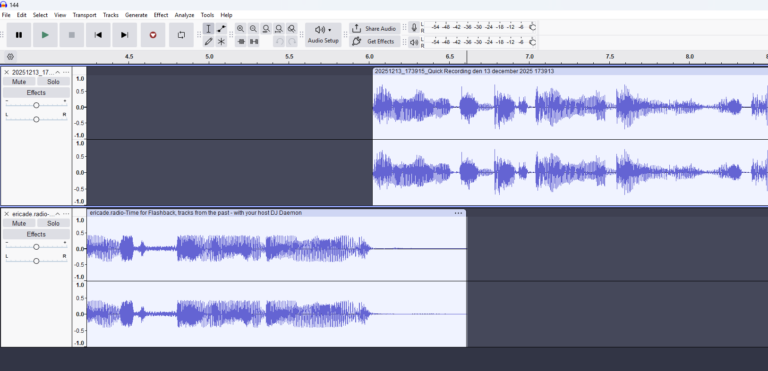
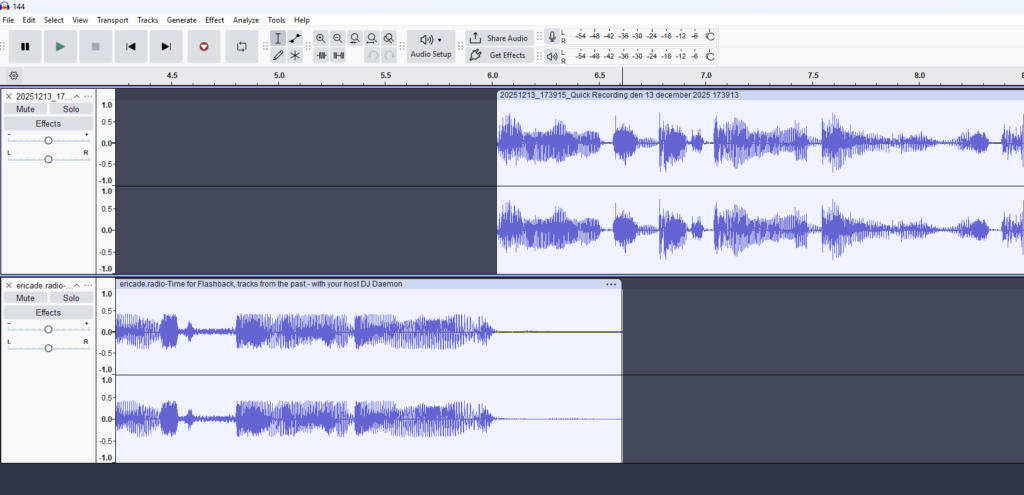
Don’t worry, we can fix it in post production. Promise.
This station has a number of names: The ERICADE Radio Network, TERN, ericade.radio and ericade radio. It’s mine and I play 24/7 chiptune and demo scene music on it. It’s located on ericade.radio or radio.ericade.net. Either way works…
… Or how I learned to stop worrying and love the daily chaos
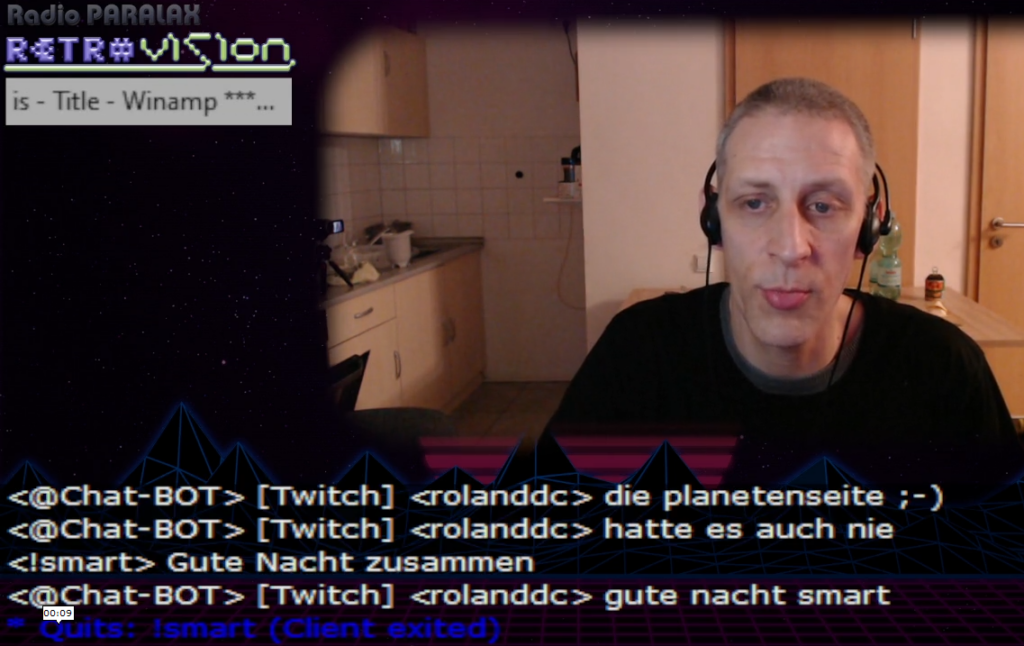
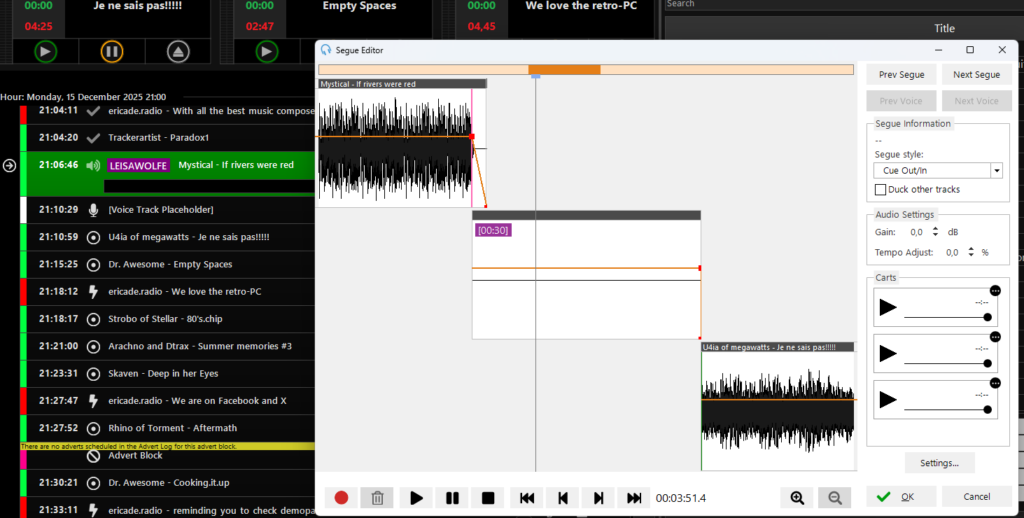
It was quite a chilling realization when it hit me. I couldn’t believe my bad luck, when a calm 30 minutes before the in-official launch, became a frantic race to get the show on the radio at all. I was new to the voice tracking way of doing radio, where you record the bits between the songs at a rapid pace. You hear the last four seconds of a tune, speak, and then advance to the next one. No need to wait for the song to end, and thus you can push the next hour of programming “in front in you”, while on the air.
That’s all good and fine, but I had recorded 30 minutes worth of funny banter, an introduction speech, and some thoughts – and placed it all on the wrong broadcasting hour. It would NOT be heard at midnight when the station was to officially open to the world. In fact, the station was about to go live, and I had just voice tracked the hour before the launch to give me some time to get it right at midnight. I would soon hear myself announcing the grand opening in an hour, knowing it just didn’t exist. I had totally screwed everything up.
If you wonder, yes that is normal radio for you. Always been that way. two hours later I might have sounded a little bit stressed out as I announced the new station. Those remaining minutes, I ran on adrenalin and total panic. As the hour completed, I looked at the statistics: no-one had listened – not even a second.
Trying to look cool. Great it’s radio, so the listeners did not have to see this.
The ERICADE Radio Network is a grand tradition. I was a community broadcaster between 1995 and 2006 and had a dream of playing Amiga tracked music on the radio. I held three tracked music competitions on my bulletin board system called “The ERICADE Network” and most of the entries were then played on the air. In 2005 I took all the tracked tunes I had on my board and created a playlist using Win Amp and Shout cast send out a signal over an uncaring Internet. It was on there until 2015, when I removed it for good. Yeah, I told you this story before.
That was supposed to be it. But in 2020 something nasty came along and I ended up stranded at home alone for a long time. I listened to the reports and worried. The first time during the pandemic I travelled as an IT-security consultant to an adjacent city. But after the summer, spent almost no time outside my apartment. At first, I felt productive, but as months passed, I got less and less happy and started working at odd hours or starting late. I needed some good hobby, so it wasn’t work and then idly surfing on Facebook. It was hardly a decision I made. It was something that grew out of boredom and the will to create something cool. And I wanted that Amiga radio station I always dreamt about. But, no, that not the entire story.
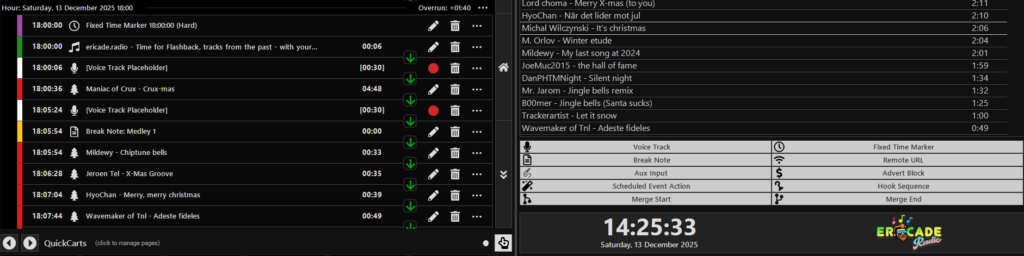
I had no idea about this ever becoming a station as I made a few live broadcasts on Facebook playing Amiga-music and chatting with friends, family, and co-workers. The problem was that playing songs was hard. I tried VLC, but it wasn’t meant to be a sound board or a jukebox. Connecting father’s old Wurlitzer to the station would have worked better. It from 1955 and is heavier than I am by the way. Buying Ads on Google is a thing nowadays, and Jason Allen from PlayIt live seems to have put a bid, putting his software “PlayIt live” on the top of the page as I was looking for some sort of music player that could generate playlists for me.
But PlayIt live was no mere playlist-player. I noted, it was meant for broadcasters on a budget. Bad idea – you know me and radio. It just had to be done. I decided to create a station as soon as it struck me, I now had the tools to do so.
September the 14th was the first real on-air day, and I could hardly devote a workday to broadcast. They don’t pay me for that. My idea was smart for doing something so stupid as to create a station for just a handful of listeners. I simply devoted 15 minutes in the morning and 15 minutes on the evening as a coffee-break broadcast routine. Being home alone just meant that the coffee-breaks during workdays were a few minutes for surfing on Facebook and drinking coffee. Nothing was really lost.
The last hours were done in the evening. This routine had me going “live” for 24 hours a day. If you weren’t tired of hearing my voice before, you certainly had the possibility to be so now. I was already clear that I was just the DJ. The station needed a voice. A singing jingle-woman would have been awesome, but that was beyond my budget. So, I went to the website Fiverr and clicked on the first female voice actress on the page: Nicole Carino. Her voice felt right so quickly, I didn’t bother to look for alternatives. Voice actors generally get paid per words spoken. I ordered the first station IDs before the station even launched.
Yes, I’ve spoken about station ids. No need to repeat that. Just know that a station I identifies the station and often gives you a nice slogan. “You’re listening to The ERICADE Radio Network – Your leader in tracked music”. Oh, maybe I should tell you what the name is all about. ERICADE?
Yup. I was a dumb kid, when I decided to create my first gaming development company for the Commodore 64. It would program great games in C64 Basic and it had to have a unique name to go with it as well: Accolade. My father wasn’t buying the latter part of that, as Accolade existed. And I knew that. I also knew about copyright. But my father then took my first name “Erik” and “Accolade” and merged it to “Ericade”. I hated it! Worst name, ever!
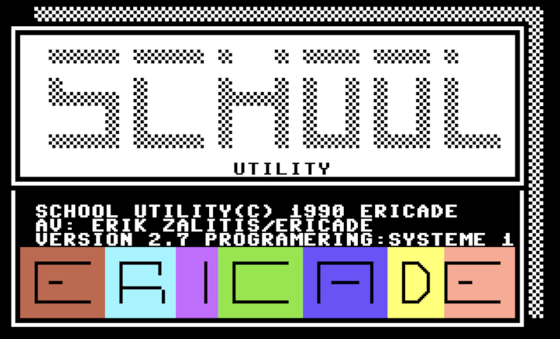
Look! I made this program. I also mix English and Swedish and can’t spell correctly in either language.
But over time, it grew on me. Ericade. My own company. I had no idea what to call myself. In early stuff I created I call myself stuff like “System-1”, “Systeme-1” and “Steelpulse” (stolen as well) of ERICADE. But none of that felt right. When I joined with the very geeky organization “Unga Forskare” (Young Researchers), I was introduced to Unix and Linux. The background processes were called Daemons. Today, Linux calls them “Services”. But a service is often still named something ending with a “d”, like SSHd or FTPD. Yeah! The Daemons are still there.
Daemon of ERICADE! The was my one-man show, program developer, demo group, BBS network, arms dealer, and research department. I may have embellished parts of that list a bit. Anyway…
In 2020, I had long renamed myself the Stripecat on the Internetz. This was originally “Tigersclaw”, named after the spaceship in Wing Commander 1. But a tiger is a striped cat, so I changed it. But when I hit the airwaves, Daemon had to come back. It was my name as a sysop in the real (but lame) demo group “Eternal” and my handle on my BBS called the ERICADE Network. Network? It sounded good to call the BBS that as it ran “in the speed of light”.
Funny note – it was Nicole Carino who commented that it should be “AT the speed of light”. So, I have had a slogan with incorrect grammar for the last 25 years. Aha, ok. Fine.Now I had nice Station ID like: “The ERICADE Radio Network – Amiga blast from the past!”, “The ERICADE Radio Network remembers … the Commodore Amiga” and “Music from the geeks of the 80s and 90s – The ERICADE Radio Network delivers!”.
Nicole had an amazing dictation and a super clear voice. It sounded good. My intent of the station was that it would sound as the old-time radio stations. I have a history of being a radio DJ in Stockholm for a community broadcaster. During the 90s we spoke fast and as we were in a hurry and no silence was allowed. The music was always mixed, and we spoke until the artist started singing. This is still common with commercial stations to this day, but I wanted something else. Getting older, I listened to Swedish radio from the 60s and 70s. It left gaps between the songs and the announcer. It was also impossible to speak until the vocal began, as tracked music seldom had any to begin with. I wanted this slow, steady, and calm pacing. Nicole spoke in a natural and methodic way. Today, the station has a very different pacing. This is no mistake. It’s simply that I changed my mind a bit, and the station a lot.
I also had the idea of one story per hour, or as the listeners probably would have called it: “long, boring ramblings”. The first broadcast day, I noted that listeners were no better than the ones listening to normal radio. They are in it for the music, not my musings. I quickly understood that a music station cannot allow me to speak for more than 40 seconds. Later, I had to rethink even that. It’s a thing called a format. Music station play music and talk radio shouts incoherent ramblings about politics. I was a music DJ, so I had to learn.
And you cannot learn faster than when you had the listener logs updating in front of you. When that well-thought-out diatribe against that pesky computer called an “Atari” hit the air, and I saw people disconnecting. That was an immediate “Ouch, dammit”-moment right there. I am snarky to the core if I want to. That was kind of my idea when I started the station. At first, I intended to voice act as a 40 something nerd living in a bunker that is really his mother’s basement. Thankfully I understood that people would not really get it was just an act. But what possessed me to even conjure up such a dumb idea? Fallout! Yes, the Bethesda gaming series with colourful personalities such as Threedog, the “Wolfman Jack”-copy that was always commenting on your progress in the game. Or the malignant “President Eden” or the smooth talking “Mr New Vegas”. I also LOVED the fan-created stations. Especially the constantly drunk Esaias Pendergrass who progressively got more plastered as he announced the records. I love the idea of role-playing games, so I had to create my own persona. And wisely choose not to.
But I did put up a set of 20-something short musings. Please understand that the negativity about the Atari was just for fun. Amiga and Atari-owners always feuded about everything back in the day. It was just a game of sorts. So I thought it was fun to add to the station. I probably lost some listeners over it. Guess what computer brand they must have prefered.
Do you know the difference between an Amiga and an Atari? If you own an Amiga, you do. If you own an Atari, you don’t.
If you got nothing better to do right now, patronize a bulletin board system! There is probably some lonely sysop that could use some company right now.
Do you remember when Amiga meant friend? Not me, but I do remember a time when the Amiga brand wasn’t fought over by all the vultures.
Do you remember all those popup adverts, GDPR cookie messages and irrelevant warnings about having not enabled Windows Defender on the Amiga? Me neither.
If the PC is a man in a costume, the MAC is a hipster artist… Then the Amiga is the girl who never left the party.
World peace can only occur when Amiga and Atari-users settle their differences. As you understand now, world peace will never happen.
Look, you probably think I give Atari users a hard time, and maybe I shouldn’t. They had to own an Atari, so they have suffered enough already.
If you have “Carpe diem” painted on your wall, you have in fact already failed at life. Everyone knows you should have an Amiga poster instead.
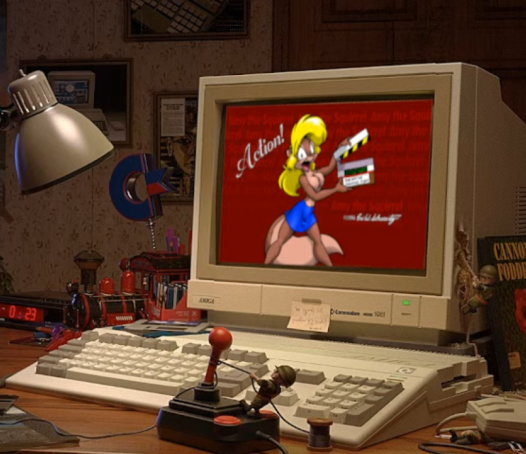
You know what? I want “Amy the squirrel” to be the new symbol for the Amiga. Hah! Try to buy the rights to that, Cloanto!
Off course she is a squirrel. I mean the Amiga community is patently nuts.
While funny, the got a bit tedious if you had listened for a few days. I ended up creating nearly hundreds of them. But I could not understand that it would fail to create a true music station. I was still kind of in love with the in-game music stations of Fallout and Grand Theft auto.
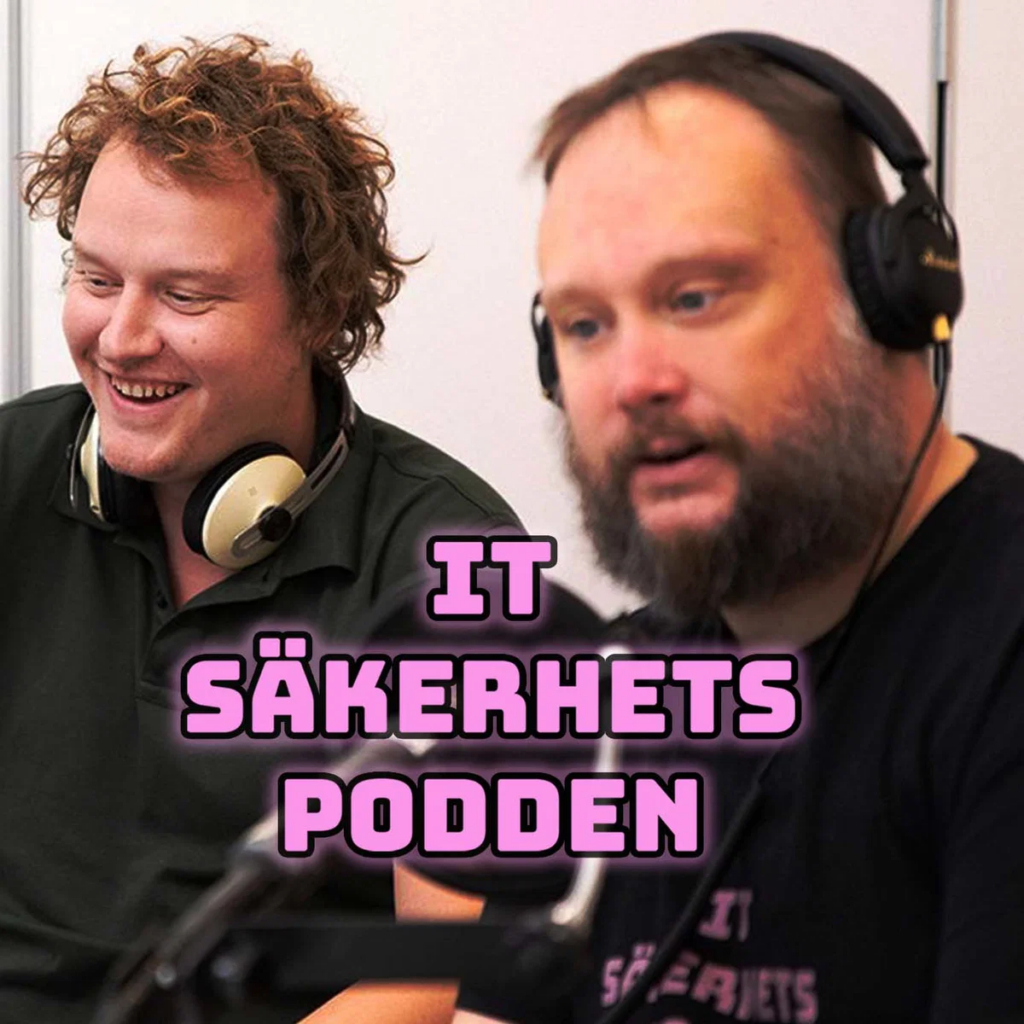
As I was putting more effort into a podcast called “IT-säkerhetspodden”, which is a Swedish podcast about IT-security. Then I started expanding my knowledge about digital audio recording and bought a lot of hardware and software. A lot of lonely evenings were spent mastering the equipment and my recordings.
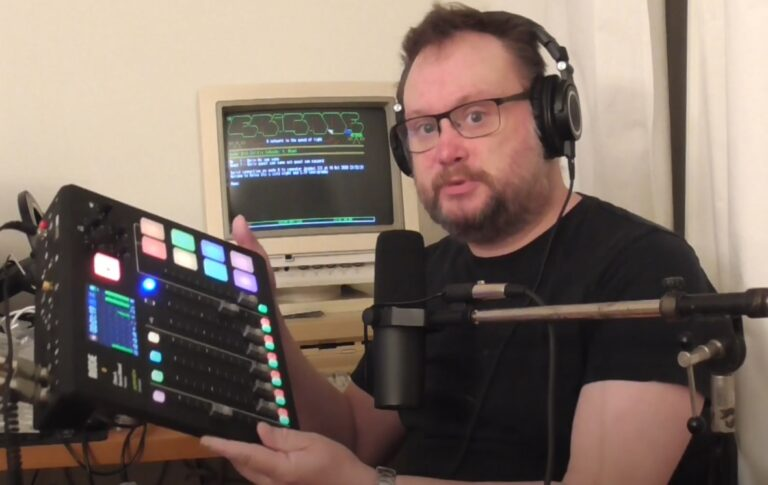
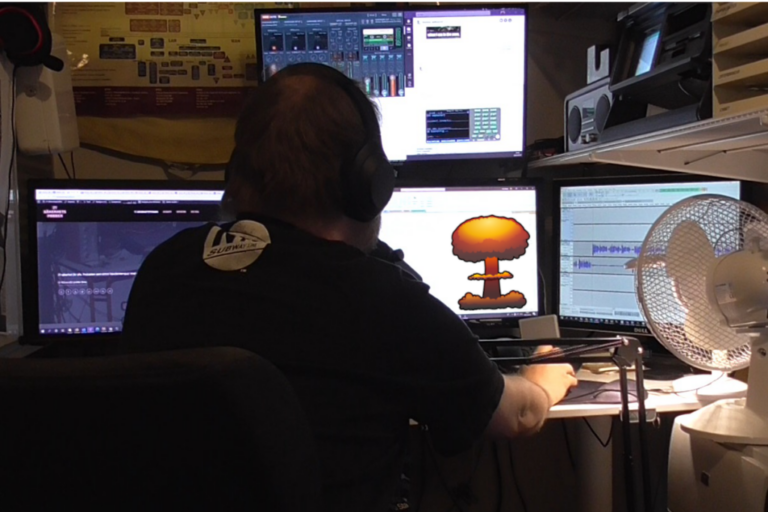
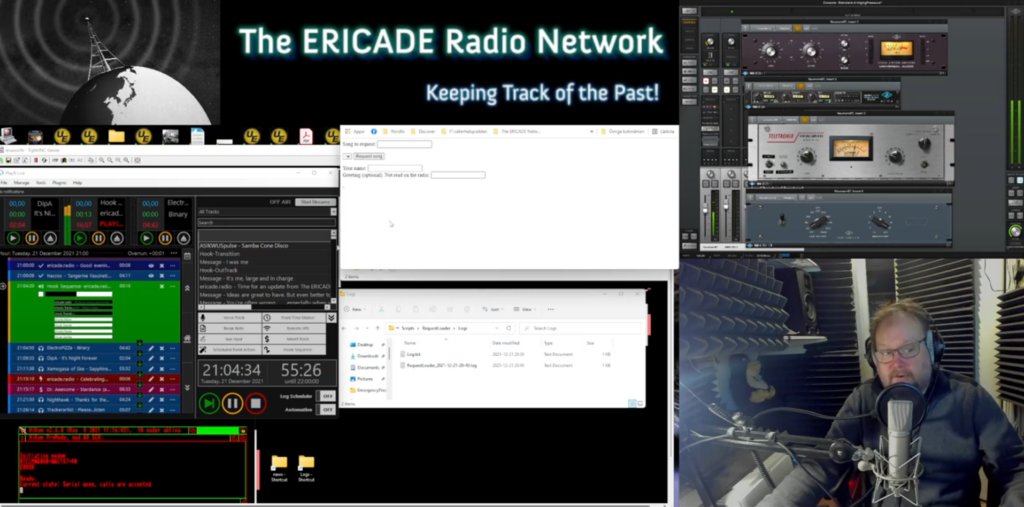
The first setup ran on an old computer I had left over. PlayIt live ran with the additional audio processing and live-broadcast plugins. I also bought a lifetime license for all the core modules. Including the “Voice tracking” one. You know the thing made gullible listeners believe I never ever slept. While expensive, I felt that having no house or boat costing lots of money gave me some cosmic kind of right to buy whatever I wanted. Also, with no wife complaining about all the radio equipment… What the heck. Stuff is fun!If you want to get technical, my microphone was the legendary Shure SM7B, and I had a Rode Rodecaster as an audio processor. That is a nice setup that also helped me produce IT-security lectures for my work and for customer reports. The mike was on a boom-arm, that I could swing in front of me as soon as a new type of security problem needed an explanation. A few minutes later, the presentation or webinar was up on the corporate site.
And I also produced radio and podcasts. This was nice if a bit excessive. But I know of other people having the same setup. Jor-El from Edison has this with a Blue Yeti-microphone and Mikko Hyponnänen does the same kind of lectures (although much more popular than mine) as I do with the same sort of setup. I can mention more people, but you get the point. It’s what it means to produce stuff currently.
In December, I had a Discord forum and a Facebook page for the station. I had by that time stopped voice tracking the station as I had less time for it. But one day I made a short show at 9 PM Swedish time. I just spoke a little bit and played some music. One of our frequent guests on Discord liked it and wrote “Make it a podcast”. The rest is history as they say. I originally intended to call this new show the “Golden hours” as it was to air 9 PM which is a very nice and calm part of the evening. But I know it’s just a slip of the tongue away from a more adult theme. And that was not a good thing to say on the air.
The calm and rational stare of a man getting hit by a plasma gun between the eyes. That’s going to leave a scar. And maybe, like half of the neck.
So, I instead called it “Amiga Flashback”. Now, you might comment of Flashback being an effect of drug usage. But I referred to the old Delphine game Flashback and the fact that it sounds a bit like “blast from the past” or at least gives you that impression. The show I made later became episode one in the podcast series. It has the episode name “A prequel better than Star wars” and episode two was the first “Amiga flashback” proper. The idea was to make a proper show that would become a podcast shortly after it had aired. This idea stuck and has remained to this day.During the autumn I had produced short weekly videos chronicling the past week on the station. I recorded it in different parts of the apartment. Due to being recorded late on Sunday evening and my insomnia, I tended to sound tired and worn. That was no lie. But it was kind of funny to watch, even though it was more often on my expense rather than due to any skill.The show disappeared as soon as I started the podcast. But problems were on the horizon. I had bought a better computer for the station and ran it on Linux with Playit live running in a virtual machine on Windows 10. The machine could take the workload, but it wasn’t terribly stable. I had many fights with it. But the worst problem, was that my big stash of Amiga-tunes was running low.
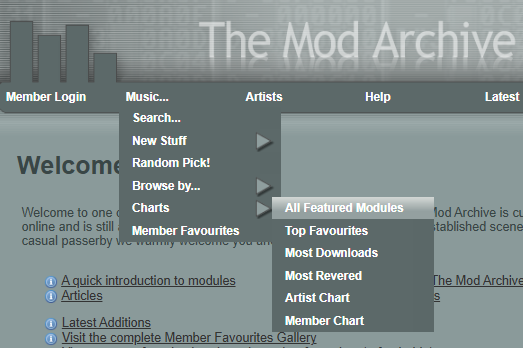
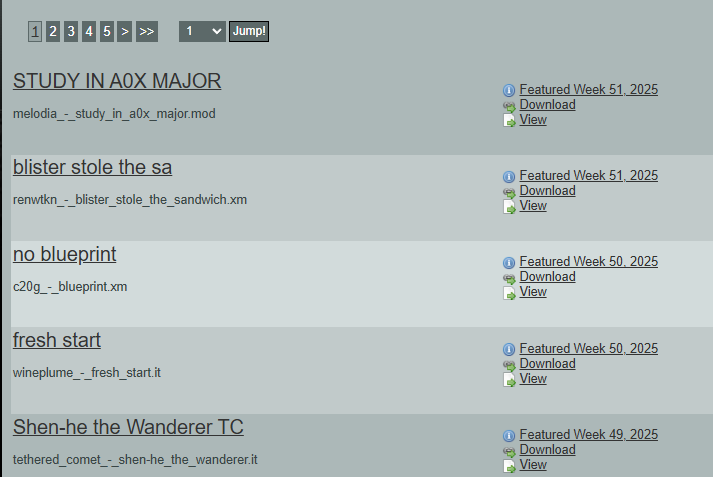
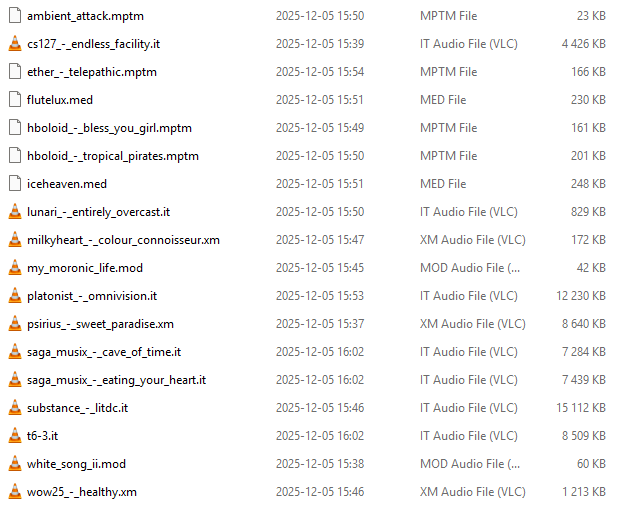
Egads! What to do? What to do? I found modarchive, a site with thousands of great tracked tunes. Great! But that caused another problem I wasn’t aware of until much later. I did not know that files with the ending “.xm” could not be played with an Amiga. That was Fasttracker. Still, I put them on the station. The podcast switched from a fun project to a very structured way of consistently getting new tunes on the station.
And that meant that it became more and more of a chore. The production was nightmarish at times. I used VLC to convert the tunes. It was buggy, horrendous and had no consistent levelling. VLC is not good at handling tracked music at all. It’s deceptively well-behaved, that it takes a while to understand that it does not always sound right. Amiga-tunes had an extremely broad Stereo-field that probably induced some sort of split-personality disorder in the listeners.
I put a lot of effort into the early podcasts, telling stories. But over time I observed listener patterns, spoke to listeners about their experience and thought about it. I also listened to the radio shows I sought to sound like. No show more than Leif “Smoke rings” Andersson’s legendary jazz show called “Smoke rings”. I had no voice like his but listened to his delivery. He spoke between 20-50 seconds and that ended up becoming my first guideline for the show. This got more refined over time. But I struggled with trying to figure out what kind of show I was making and what kind of DJ I was.
Never happy with the audio, my voice or basically everything else. I still noted how it challenged me to learn, to overcome and to become better at a wide range of skills. I had to understand the listeners as well. And it took time as I’m stubborn as a whole barn of donkeys.
In December the SM7B was replaced by a Neumann TLM103 condenser mike. All the early podcast episodes were made with that mike and the Rodecaster. It sounded decent. In February we still were in lockdown with no Covid-end in sight. It’s beyond me why no one got nuts in the Kreml or White house and nuked everyone. Working from home was both a blessing and a curse. I decided to buy a new microphone. I had always admired the Beatles as a group, and they used the Neumann U47 and U67. Both those were out of my price range. But I did get a good price on a Neumann U87 with a studio kit. That’s still my work horse of a microphone.
I threw out the Rodcaster and switched to a more basic setup with a normal sound card and a Samson compressor/limiter/de-esser as I tried to get a cleaner sound. Remember me and never ever being done with improving anything ever?
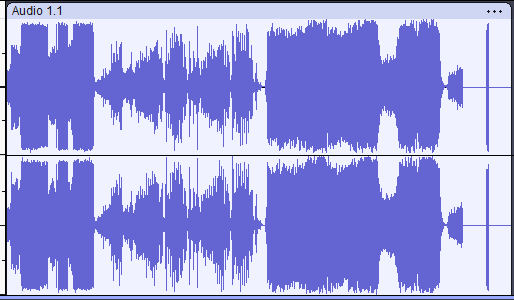
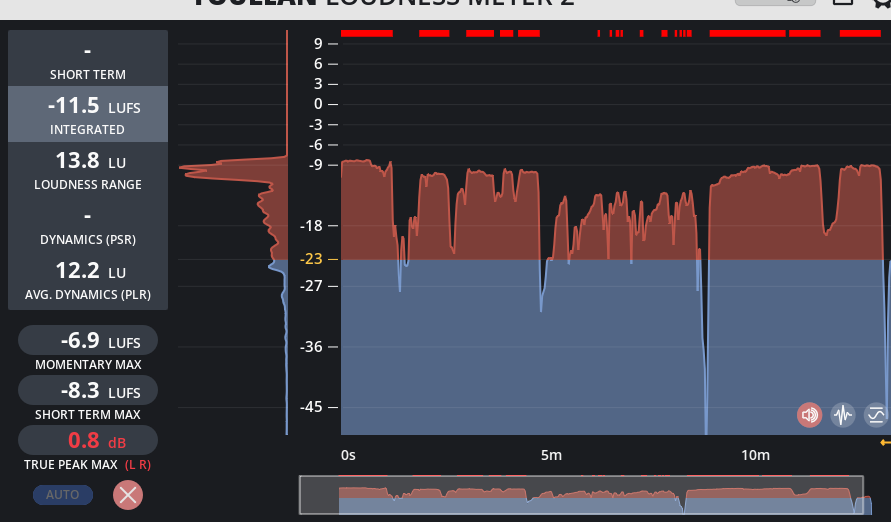
In April 2021 I decided to automate the processing. I had just started doing demo scene top lists and reviews. Revision 2021 taught me how I needed to change how I worked with tracked music. VLC was not the right tool. I wrote a bash-script and installed the player XMP to create the first “audio production line” I ever had. For its flaws, it was consistently good at what it did. I started using loudness normalization with that script as well. That meant all songs played at about the same level. You have no idea how good that is until you realize you never again have to pull the volume up or down on your radio as you listen to the station.
Previously the poor audio process plugin had to work at its highest setting to get the audio levels close to right. So, it went between sounding nice to sounding like the artist was hit by a truck while recording the tune. The tracked music was all over the place with audio quality and levels.
I still had a large set of files with music created before this improvement. But still. For me, this was a huge thing. Like inventing the wheel or something. And about as primitive.
– “Ugh! Me do LUFS! Me know radio! Fire hot!””
I then switched the Unified Audio sound card. It had onboard software effects that also worked in Studio 1 and other digital audio workstations. Playit live accepted all voice recordings from the microphone and sound card “as is”. So, it had to be processed before even getting there. Either that or you would sound like “my first tape recorder” from Fisher-price. So, the UAD did a lot of the work and added tube warmth, limiting and 1000 other ways to trash your audio. Neat!
I also gave the station audio processor the boot and got my first multiband-compressor software called JBB. I got it of some strange site from someone in a trench coat speaking with a Russian dialect. Or so it felt. It had been abandoned by its author. But did it sound good? You betcha!
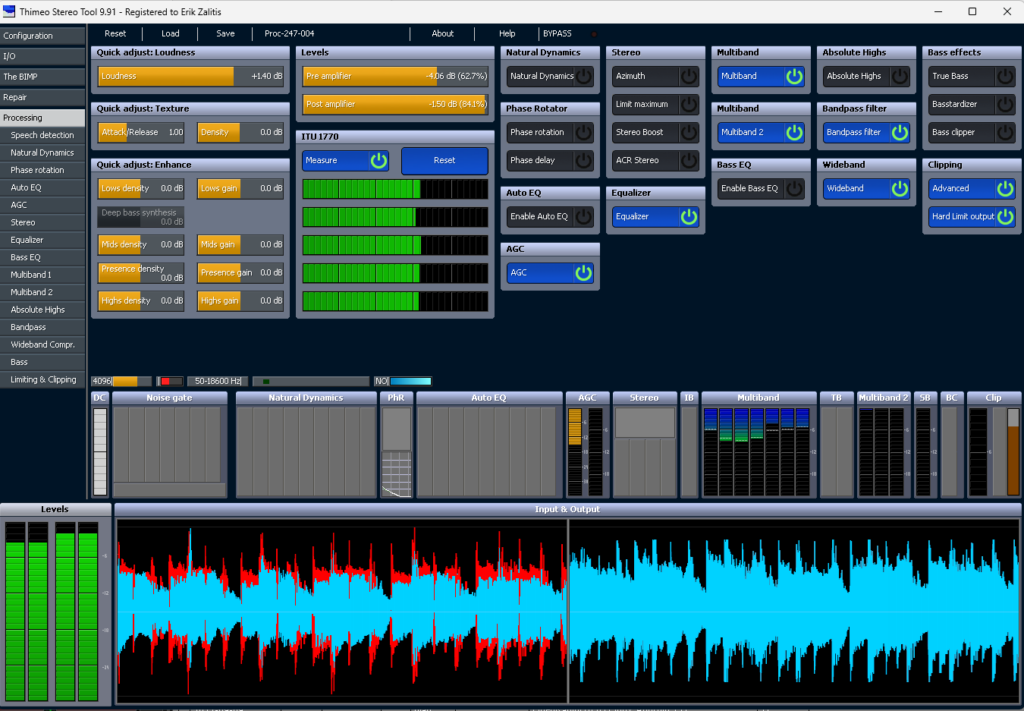
In May 2021 the station was finally starting to sound right (or so I thought). I had tried some software called “Thimeo Stereo tool” as a station processor. Man, what a wreck. It broke so badly, that in a tearful moment I swore on my pet goats grave never to use that again. I held that promise… For what, two months.
I also reinstalled the broadcast server from scratch and got rid of the virtual setup.
May 2021, I had voice tracked daily most of the spring, but it was quite a chore and listening wasn’t exactly stellar. But I soldiered on. The podcast was still telling stories, but I was strict on timing and used scripted speeches. I’m no good at reading anything loud, so it was a lot of work producing the episodes. I was much better at adlibbing, but still, English is not my native tongue. So, you were always guaranteed a true Swenglish performance. But I don’t sound worse than any other Swedish trying to speak in English. I know that is saying nothing. Don’t remind me.
I was then approached by a group of Amiga musicians that wanted to play their tunes on my station. This did take a bit of an unexpected turn, as they changed their mind after noting that I played so many non-Amiga tunes. Remember I didn’t really know that Fast tracker couldn’t play on an Amiga, and I failed to notice that I was putting in more and more Impulsetracker-tunes as well. This turned out to be a blessing in disguise as it forced me to rethink. And that is how the station became a “tracked music” broadcaster rather than an Amiga-station. The podcast was renamed from “Amiga Flashback” to “Flashback, tracks from the past”. And a lot of restrictions were lifted on what I could play. The Amiga-tunes were still the centre of it all.
Everything was getting better, and I decided to add 50-60 fresh speeches to those retro-computer themed snarky voiceovers the station did twice hourly. I choose life advice for some weird reason. It was super funny on the blog and penned by me. As spoken on the station, not so much. Or maybe it was if you wanted to laugh at me rather than at what I was saying. The performance was not bad, but lines like this sounded more than just a bit out of place on a music station:
– Learn from the experienced, then apply it to your own life in order to not do their mistakes… Or not… You know, not doing it gives you their experience. There’s always that.
– Winners don’t quit and quitters don’t win. If you don’t win and don’t quit, you need to learn the “sunken cost fallacy”.
– You’re often wrong… … especially when you just understood something…
While not a huge mistake, it made the station sound unprofessional. But in the summer, things were beginning to change.
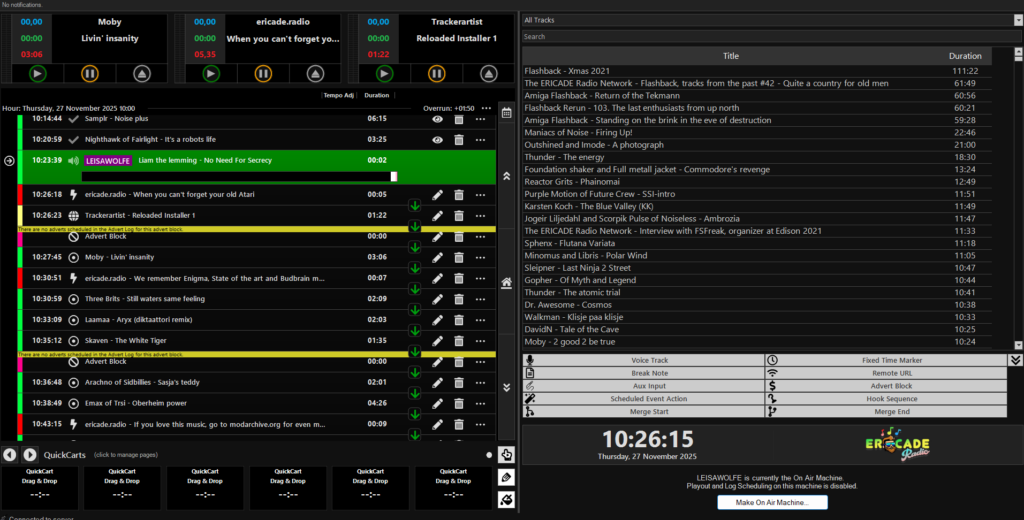
It’s very impressive with all the blinkly lights. This important to show to your unimpressed friends so they know how cool a radio station is.
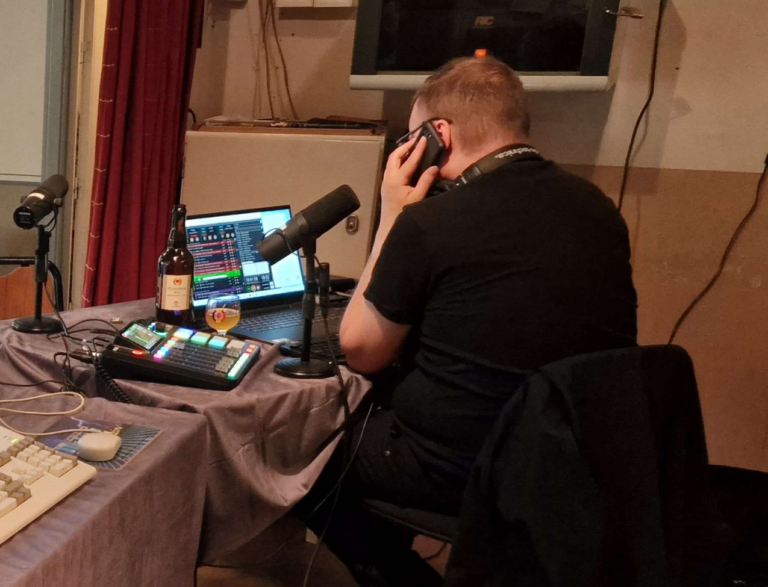
I decided to give Thimeo Stereo Tool another go. I could see the quality in it. And the problem that made it break turned out to be easy to fix once I reached out to the user community that it had. And then I was finally the happy owner of a true broadcast compressor. After tuning it and pulling out most of my hair, it finally sounded right. Who am I kidding, I felt it sounded less bad. The tool is awesome, but my belief in my own prowess as a sound engineer is not so strong. But I learned and eventually the station got that professional sound I wanted.In July I attended the Edison demo party 2021, broadcasting live on location. I was the proud owner of two Covid19 vaccine-injections and thus felt invulnerable enough to attend. It was fun and quite a learning experience. I ended up broadcasting during Friday and Saturday. But the latter recording broke due to a technical malfunction, so it could not be rebroadcast. But it sounded good as it was on the air.
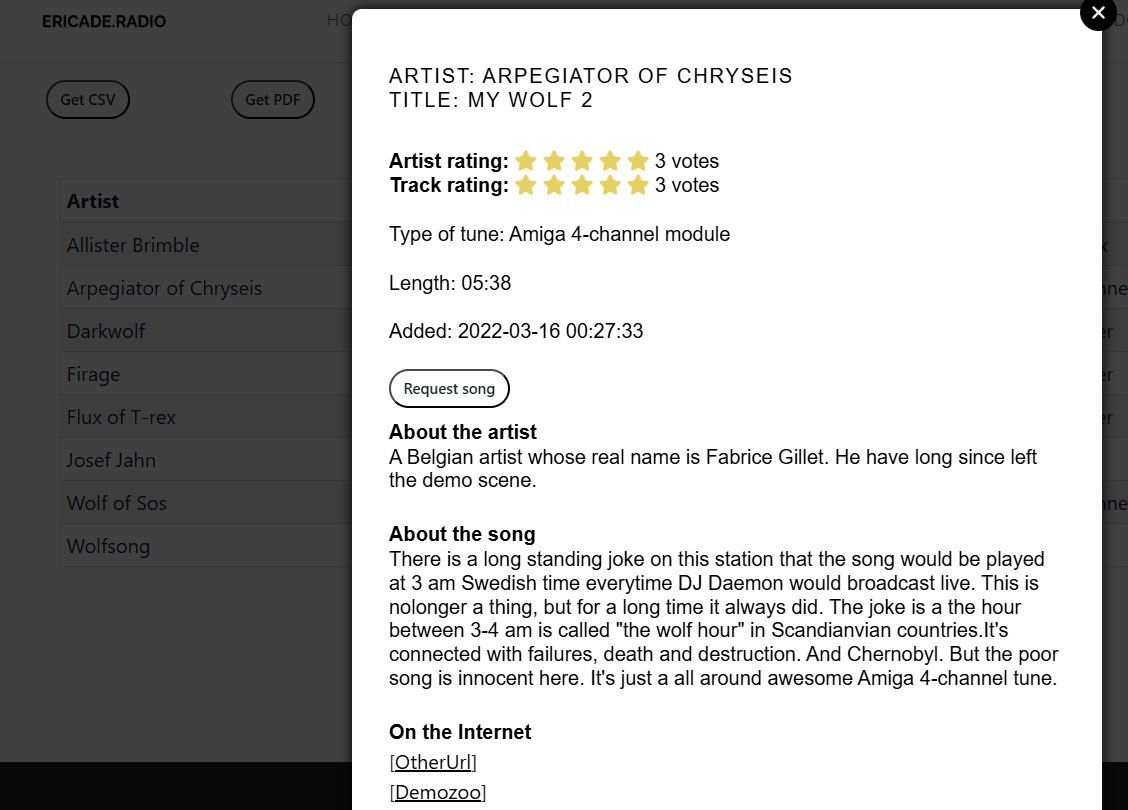
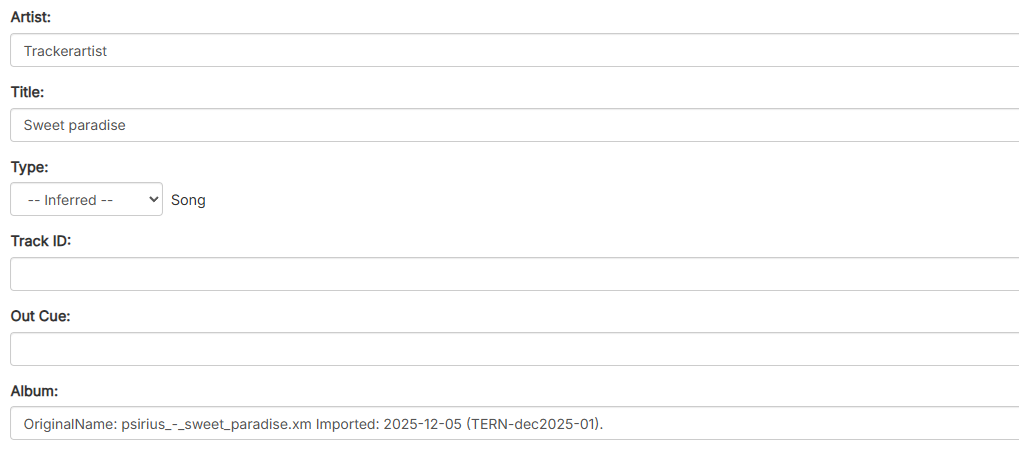
During the summer I focused the podcast on many of the demo parties running and got a lot of brand-new tunes for the station.The website had already from the start showed the name of the song playing, but the artist was a problem. Tracked music does not have an artist field. So, you must guess who made it. Often, they write their handle in the comments or instrument list. However, sometimes they seem to be too ashamed to say who they are. I put a lot of effort into getting the names into the artist field of the station website. And eventually I decided this had to be fixed in a better way. I started a huge undertaking of creating a fancy technical thing called an “API”. That’s short for Automatic Pudding Imaginer. Or something like that. It’s simply a function on the website collecting what’s playing and making a searchable database for it. The station broadcast tool, PlayIt Live sent what was playing and the API had to figure out if it knew of it already of not. This made a lot of new features possible, like short information about the artists and the tunes. The website could now tell you a lot about what was playing and letting you click on links to go to their Bandcamp site or artist site on Modarchive. It may seem simple, but the effort was big, and I sank many hours into it.
In August the “all clear”-signal came here in Sweden. Covid was “no more”, and everyone could get back to work. Well, it wasn’t that easy, really. It was just that the mutations were getting less dangerous, and no one wanted to stay in lockdown forever. As I’m writing this, Covid seems to come and go as it pleases. And yes, people still die from it. But try to understand that we really wanted to believe it was gone. And it was probably the only right decision to make. I was kind of unsure of going back to the office, but I did. Covid did visit me in November 2021, and it was no fun, let me tell you that. But this meant the live broadcasts were over. The podcast continued.
A voice actor and a broadcaster providing their voices to the station.
In August I switched from Nicole Carino to Jono Woodward as station voice when I commissioned him to create new Station IDs. As I tested those, I noted that Jono’s fast paced Station ID made the station feel much more like a true music station. But I couldn’t really match him, as I talk more slowly. This also made me realize that the live DJ-performances were over. I did the last one on the exact one-year anniversary of the station’s birth. And that also meant that the switch to the new Station IDs were final. If you ever hear Nicole’s voice on this station in the future, it means the broadcast system has gone to greener pastures. Her voice is the “we’re off the air message” you would rather not want to hear.
During the autumn I experimented in returning to storytelling as the demo parties dried up a bit. Some good stories came out of that, but the podcast was hard to define. Was it about demo parties, retro-stories or just the music? Well, yes. And it turned out I would have to make a choice later.
In the fall of 2021, the stars came rolling in. I had finally succumbed to that “give it stars”-craze. You know how everything needs a rating. But it did give me insights as people started rating the songs. I learned the novelty “funny tunes” were universally hated and everyone loves Dr. Awesome. Come on – his name is “Dr. Awesome”, and that’s truth in advertising. But he also got lots of airtime on the station, so it was probably also a big reason. Still, he was really supergood at what he was, and still is, doing. All Amiga tunes were removed from the station and had to apply for their jobs again. Not because I’m a bad boss, but because I wanted them to sound good. All the VLC-converted garbage was thrown out. I knew that if I converted them correctly this time, I would never have to do that again. And as you understand by now, that was totally wrong as per usual. But I’ll get to that in a bit.
Winter was putting snow all over Sweden, or it would have if there were any snow. It was a pretty “Novemberish” winter as far as I recall. To celebrate something or at least fix a problem, I decided that all Amiga-tunes had to played in mono. And I recorded a special episode of the show were I only played Amiga-tunes never heard on the station for two hours. That episode was called “Four channels to the wind”, a take on the old saying “four sheets to the wind”, which means being drunk as a skunk. I sure wanted to be, but broadcasting drunk is a bad idea. It gives the sound a somewhat boxed in and mushy mid-range. Mostly because you end up throwing up all over the mixing console. And we can’t have that. So, I stayed sober.
In January I asked a friend to listen to an episode of Flashback, tracks from the past. I wanted him to give me ideas on how to improve listening. He was blunt about his feelings towards it. To put it in my own words: too much speech or too much music. What? Well, it stood between being a spoken word podcast with music or being a music show/podcast with some speech between the songs. The episode he listened to was about Civilization for the Amiga. I previously decided that all my speeches between the songs must be between 30-60 seconds, using old Swedish shows as a template. Not just Smoke rings, but also Svensktoppen and some other old time music shows. This was not bad, but I had missed one point: they all talked about the music. I spoke about games and retro stuff. Either you wanted to hear the stories for the whole episode or just the music with some notes.
Point was taken and I made the choice to primarily do demo top lists, artist presentations and just some talk about the music. This turned out to make the episodes more consistent. And it was needed for many reasons. Some episodes took 10-11 hours per week to produce. So, I had to streamline the whole thing. I ended up balancing between being a calm night-time DJ or a faster top list-presenting-dude depending on what the subject of the show was for the week.
I also had a “challenge-accepted” task in front of me: the request system. With the database getting more and more advanced, I decided the site must have a feature to search and request the tunes you want on the station. And it then had to play them for you automatically. This was a much bigger challenge than I had ever expected, but I got a working prototype up and running before Christmas. It was buggy and broke all the time, but when it worked, it was quite the thing. In early 2022 I finally had fixed the problems and the feature made ericade.radio the only PlayIt Live-based radio station capable of accepting automatic listener requests. The other stations may have had lots of actual listeners, but I had this feature! I declared epic win.
In the spring I used ModArchive’s toplists to make music style episodes of the podcast. All from rock, top, country to silly tunes. This was great until the genres ran dry. Gosh darnit. Always that one problem. In March I decided AGAIN to give the Amiga tunes their marching papers and remove them all. Then I rebuilt them in glorious mono, so the “audio split-vision” would go away. That was the very moment when I was finally happy with the sound of the station. What? Only took like 1 ½ year. And the happiness lasted for about 15 minutes until I felt the need to tune the broadcast processor again. “Because it sounded a bit off”. Probably some sort of “Audio OCD” on my part, but I have learned to live with it. And so have the listeners. It does sound better ever so often.
Demo season started and I covered the demos as dutifully as I could. Some demo organizers, or “orgas” as they like to call themselves, were helpful. Other were non-responding as in “who is this loser DJ who wants our compo-tunes the same day as the competition?”. I gave up in “the first station to play them” and started letting a week pass between the demo party and my episode about it.
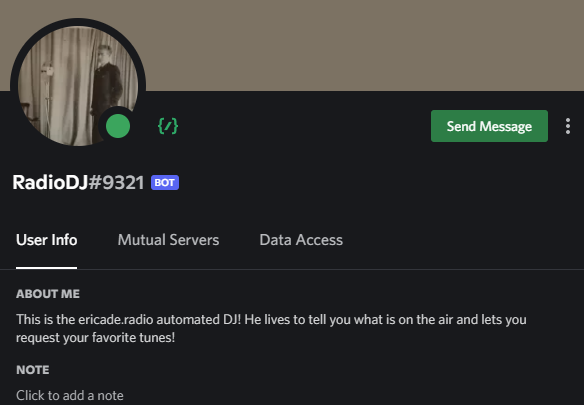
The summer of 2022 focused on building the software and introduced the Discord-bot, that allowed the listeners to request tunes and show information about them directly in Discord. It was both awesome and a something of a novelty. Also, I missed live broadcasting from the Edison party due to health issues. But the podcast was still on.One day in the summer of 2022 I copied one old broadcast from 2021 and compared it to a brand-new hour from just a few days ago. Didn’t expect much difference. But it was like night and day. It was like comparing a computer with a broken sound card submerged into a fish tank with kersone in it with… Hmm… I lost my train of thoughts… Probably bound for New Hampshire. But I think I intended to say: all the work had been worth something. It sounded amazing in comparison. Mainly because the old audio sounded amateurish. Amiga stereo were never the glory moment of that venerable old computer. I’m just saying.
As july came to an end, I contacted the old timey BBS sysop Hravnkel and suggested a podcast collab and it became realiy as we sat for an hour and just chat about old memories from the Amiga past. It was a weird discussion about modems burning, pirates copying and why the demo scene could be so hostile. We also choose a few songs each to play and talk about. Superfunny to make and probably survivable to listen to.
Hi! Do you have some time to talk about the Commodore Amiga? She died for Mehdi Ali’s sins.
I was later invited to broadcast live from Commodore-klubbens event in early september 2022. And I did so for the first and a part of the second.
In August and September, I had to contend with my script and XMP being a problem. The solution was once great, but XMP on Ubuntu was ageing. Its library was older than metusalem and some Impulsetracker-tunes did not sound right. I had no idea how big this problem was until a demo scener explained it for me and played a copy of how it was supposed to sound. Good… It was supposed to sound good.
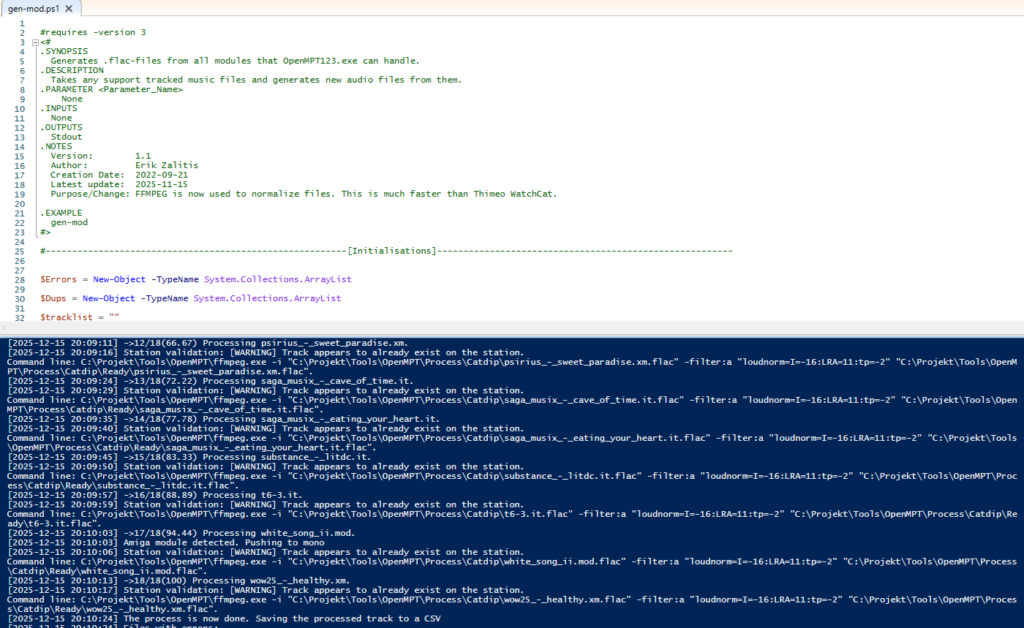
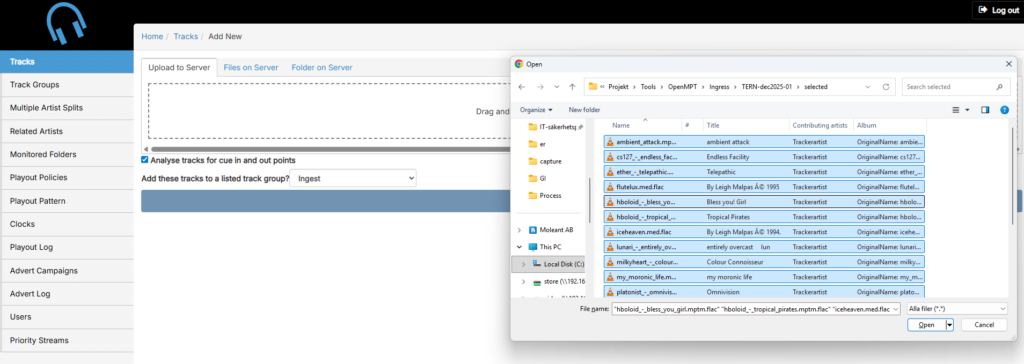
The XMP library ignored some of the volume commands. If you don’t know how the track is supposed to sound, it’s probably nothing you’ll think about. But in contrast, some tunes totally changed. I had to work hard to find a solution. It turned out to be OpenMPT and its command line tool OpenMPT123.exe. Now OpenMPT was (and is) in active development and could handle anything tracked you threw at it. The Linux machine was put out of its com-missery and I wrote an advanced PowerShell script to convert the tracked tunes into nice sounding music files in the FLAC format. That and I screamed and yelled a lot at the screen as I initially couldn’t get it to work properly. Have you ever worked with files with spaces in their names in PowerShell? It’s no fun. Ever. It makes you mad at the stars for shining.
We were now in the chilly months of fall 2022. In october the server crashed and had to be reinstalled from backups. We were gone for one week. No fun. A few weeks later I threw out the old WordPress website and replaced it with a small custom-made website. The reason why the old site annoyed me? Mostly because it was a chore installing your own code in it. I barely got the music list function to work, and when a user reported that it didn’t work in Firefox, I gave up.
Nice! Now all you Excel-jockeys have something to play with.
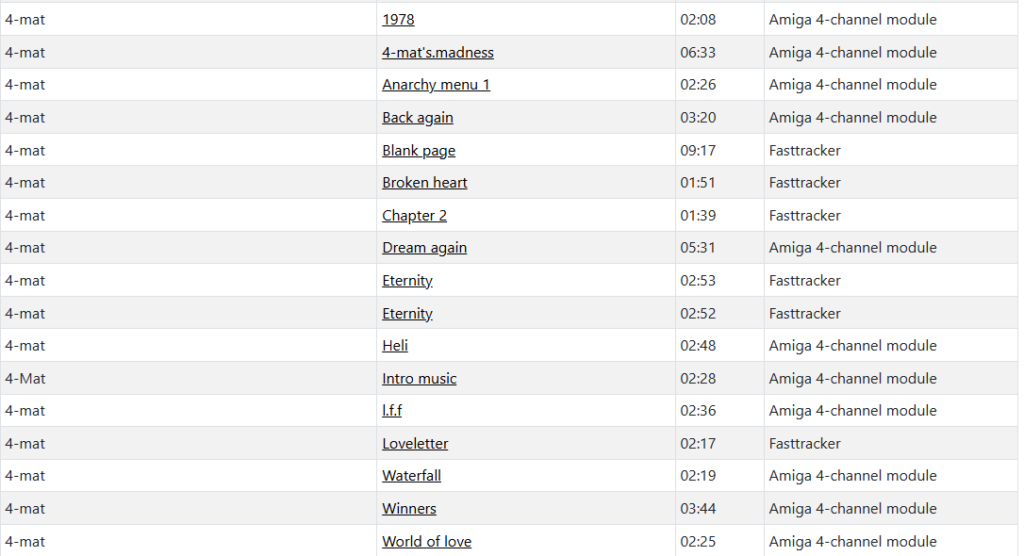
This new page came with a song statistics, a table where you could search for songs and finally it was faster. WordPress is nice, but you can’t call it fast.
In 2023 I moved from Solna to Kungsholmen and the rather complex recording studio I had built was now just a couple of unpacked boxes looking accusingly at me. This spelled the end of the weekly show at Saturdays at 9 pm. Thus this meant no more podcasts from the station either. But I missed recording those, so in april of 2023 I went through the daunting process of setting the whole thing up again and that led to the return of “Flashback, tracks from the past”. Now it was a monthly show and the 9 pm scheduled broadcast did not come back.
Development was pushed to the curb side and the station ran without that much interference from me. But then came a message from Coreus, our long standing listener and later on collaborator. He suggested that we should do a live broadcast from Edison 2023 together. A joint venture between ericade and his project retro.gg. I thought it sounded like a great idea and planning began. I dug out my old broadcasting computer, that I used for Edison 2021 and updated it.
All setup and ready to give you the demo scene!
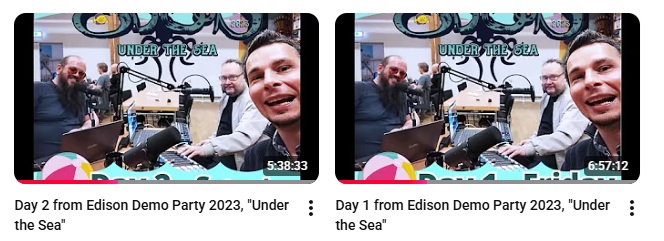
So came summer and three DJs met in Stockholm. It was me, Coreus and his friend the Baron of Dubstep. On the 7h of July we entered the airwaves and did a heavily musicladen talkshow with interviews. This was done on location and live over the station. It was really fun. In the end we learned some bad news: the was to be the last Edison ever. The organizers had decided to stop doing the demo party. It was a decision they wisely reversed later, but by then it looked as if it was over.
Development of the station during 2023 was slow and the podcast episodes were few and far between. But the station operated and we had a small, but interesting Discord server with some listeners.
In august of 2023 as few “less than stellar individuals”, you know the ones we call hackers decended on the web site discord.io, and forced it to permanentely shut down and disappear. This was the service providing our invitation links to Discord. So no more people appeared on our Discord server. It wasn’t fixed until 2025, causing our Discord server to eventually go pretty silent.
In 2024 we knew that Edison was gone and this live broadcasting thing, was something I wanted to continue doing. Me and Coreus decided to set our sights on Pågadata 2024. This was a small demo party that was seen as a continuation of the Gubbdata party that had shutdown. In the summer we went to Örtofta in southern Sweden and broadcast live. It was a smaller demo party run by people that wanted to have fun and meet. It was great and we logged a number of broadcast hours with music and interviews.
This the 2025 model of website! Get it through your nearest car dealer.
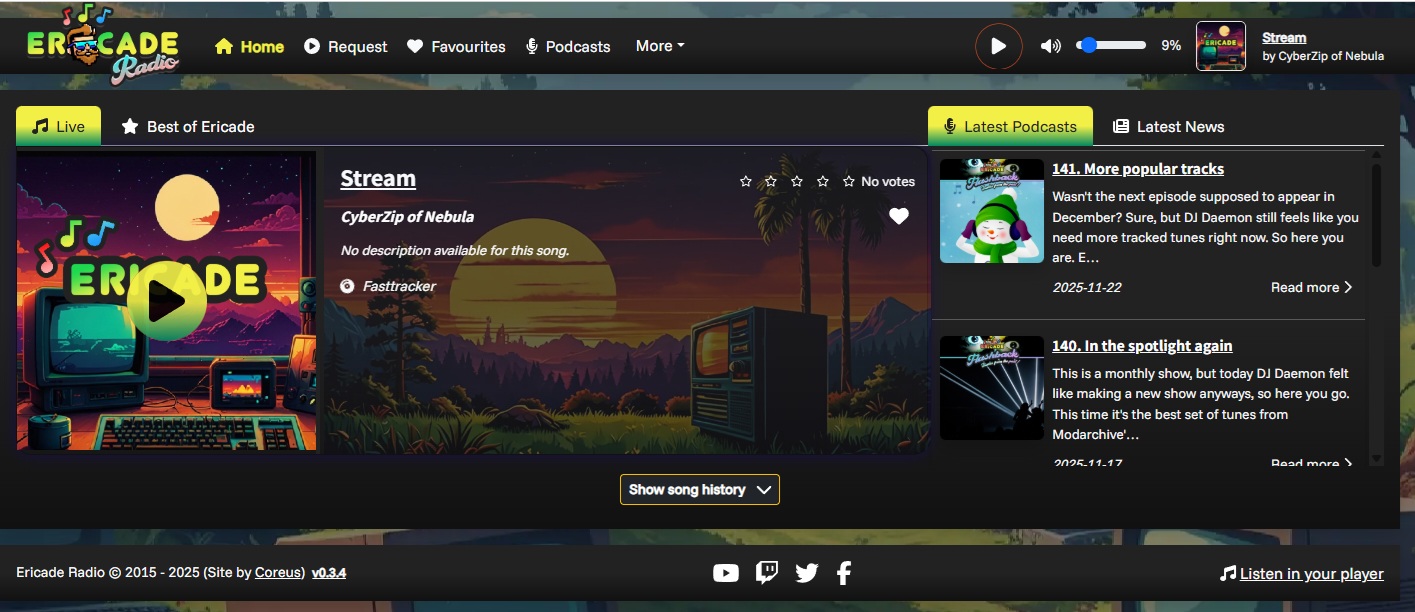
The fall of 2024 led to a major improvement taking place. Coreus and I began replacing the old and aging website for the station. This “old” website would work, but looked really horrible on phones and on really big screens. Coreus took over the role as web developer and in early 2025 and a new website created by him rolled out and integrated the functionality of the old site with a modern and sleek web site design. It was black! Dark websites are awesome, there is always that.
In 2025 I got the news that the Edison demo party was coming back. This time, they had scrapped the old barn house in northern Stockholm for a big boat anchored in the Mälaren sea in the middle of Stockholm. It was the m/s Borgilla.
Ladies and gentlemen: I give you Coreus’s “Blobby”. Nah, I have idea what he’s supposed to be either. But he is an awesome critter!
Coreus and I decided to make a live broadcast from there. This time, there was a big difference. So far we had always been guests on every demo party we broadcast from. This time, the organizers of Edison gave us a role. We would be commentators and have a show where we presented the best competition tunes from all previous years of Edison. This was a welcome change, but there were a lot of extra work. We also provided the paus programming over Twitch. And we got comments from people watching the Twitch stream, that they enjoyed the interviews made with various sceners. And Coreus won the video competition and brought “Blobby” into the world in a cooperation with dem scene musician Alpa.
It was a successful thing except I made a screwup as a commentator. They had a competition with some games that the organisers showed to the sceners. Those games were all hard and the players failed swiftly at playing them and gave up without going anywhere. I thought that was funny and noted that “this didn’t go too well”. The listeners though I meant that the games were bad and I got some angry comments for that but was not told about it until later. Ouch! I hope noone is still mad at me for that faux pas.
The powers that be must have been happy with our work, as both me and Coreus were offered the role as part of the official organizers of Edison. It either that or they are short of people. We accepted the offer.
The calm was returning and we had to handle the backlog with the two Edison shows going up on YouTube. This took some time, but eventually happened.
This is an ancient, sacred scroll passed along by a group of ancient wizards.
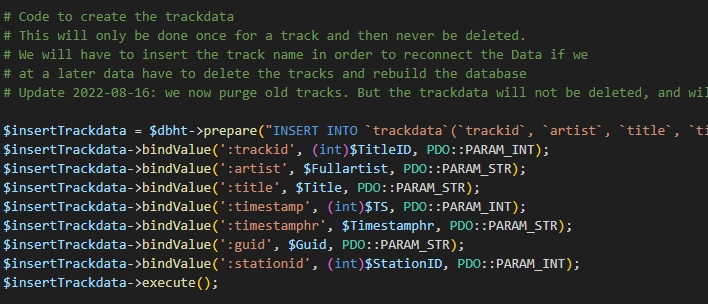
I spoke with a fellow scener that mentioned that some of the demo scene sites had been struck by hackers. Most wellknown case was BitJam, that went dark after that. Then I got a real close shave when the request function failed one day. After investigating the problem, I noted that the song trying to play had an apostrophe in its name. This crashed the API. It was a classic SQL injection. That was a big security hole in the code. The affected part of the system was blocked from the Internet, so there were no real risk of it getting hacked. Still… Rather nasty thing to find if you ask me. I decided to go through the whole backend and leave no stone unturned.
I fought through my code over the coming three weeks to fix all problems I could find. It turned out to be no more security issues, but a number of annoying errors in functions and I pulled whatever hair I still had on my head out over it. When it was done I was very satisfied over finally sorted it out. This led to me improving the import of the songs as well and it ran much faster now. One thing led to another: I made a number of new Flashback episodes in short succession. The passion was back in a way.
In December of 2025, the Trifecta (Me, Coreus and the Baron of Dubstep) assembled again and talked about AI, Spotify and our favorite games from the past in the podcast.
In 2026 Flashback, tracks from the past was back as a weekly show and I set my sights on trying to do the magic spells of SEO. That’s not some sort of arcane spell to create wealth and prosperity. It was rather a good way to be found on Google and the podcast directories. It’s called “Search engine optimization” and that’s what all the cool kids are doing. So did we. If you search for stuff like chiptune, demo scene and retro computers, it’s great to be one of the first results on the ranking. The only thing better than that must be to be the first result for all things people type into Google. Any 1337 hax0rs out there who want to help me out? 😀
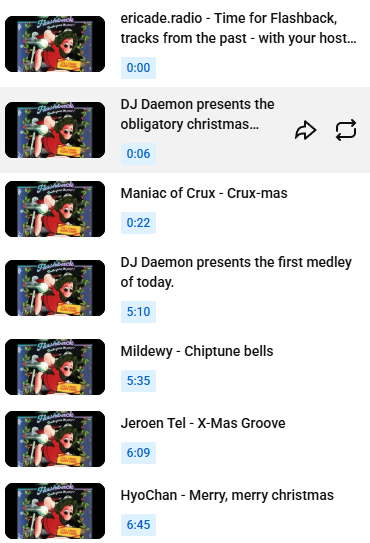
The whole spring and early summer, I got the stations and the podcast registered on all directories and podcast services. I added all new, nice meta data that promised our podcast a sure ride to stardom. I added chapters, full transcription and all the meta tags you can throw a stick at. Did it work? Well, better at least.
In February, Coreus made some really vast updates to the website and fixed a lot of bugs and improved everything. The awesome new color was blue and had an optimistic view of a destroyed city under a sunny sky. It was true pixel graphics. Jay! Awesome-sauce. No AI-slop. AI-slop is bad, mmmmkay?
Revision 2026 was now a reality and in April of 2026, I and Coreus went to Saarbrûcken in Germany to broadcast live. And so was done. We played lots of great music and talks to sceners like Truck, Oilheap, Jenna (Minebrandon) and others while talking about the everything going on. From this, we created four long, and interesting podcast episodes.
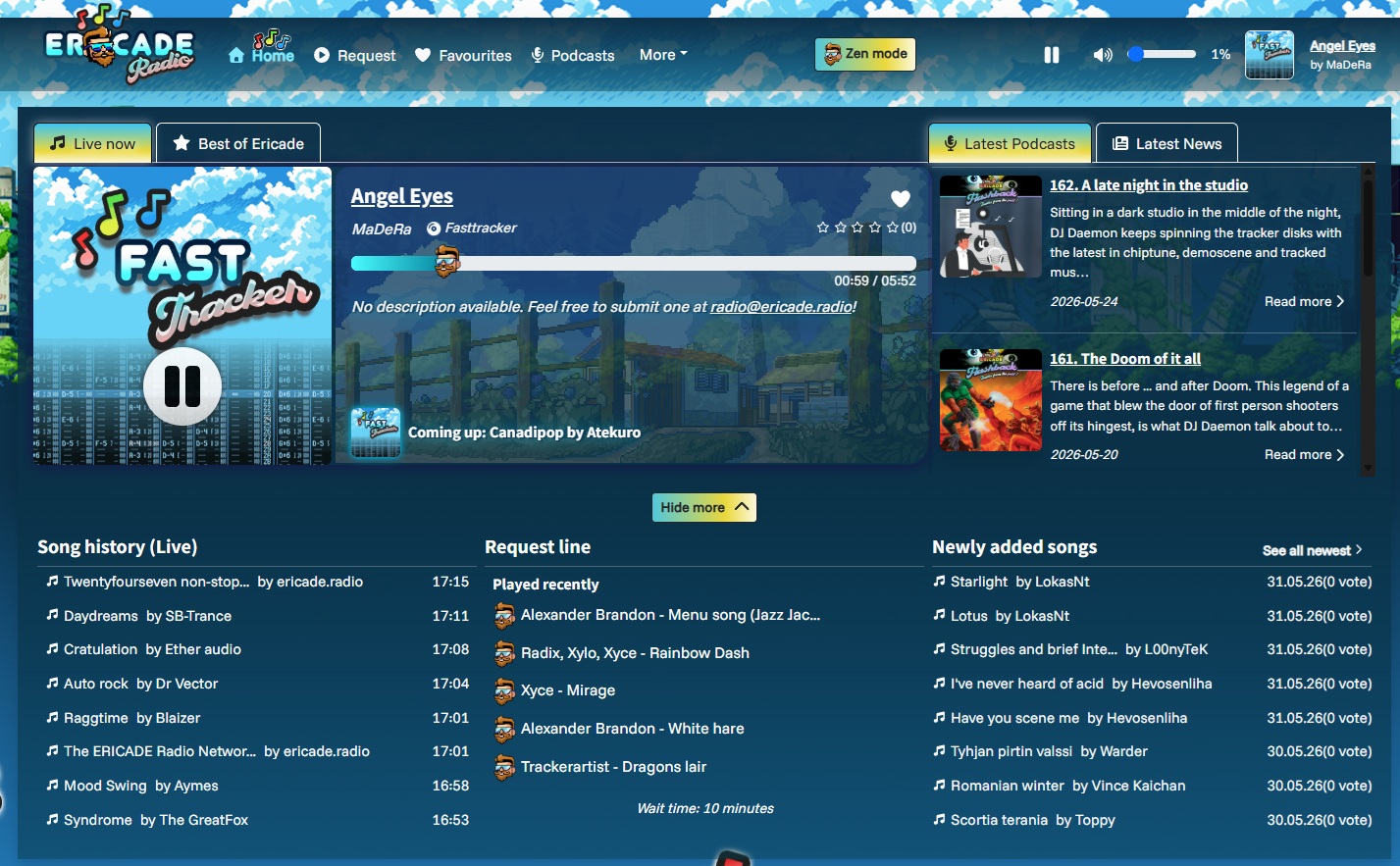
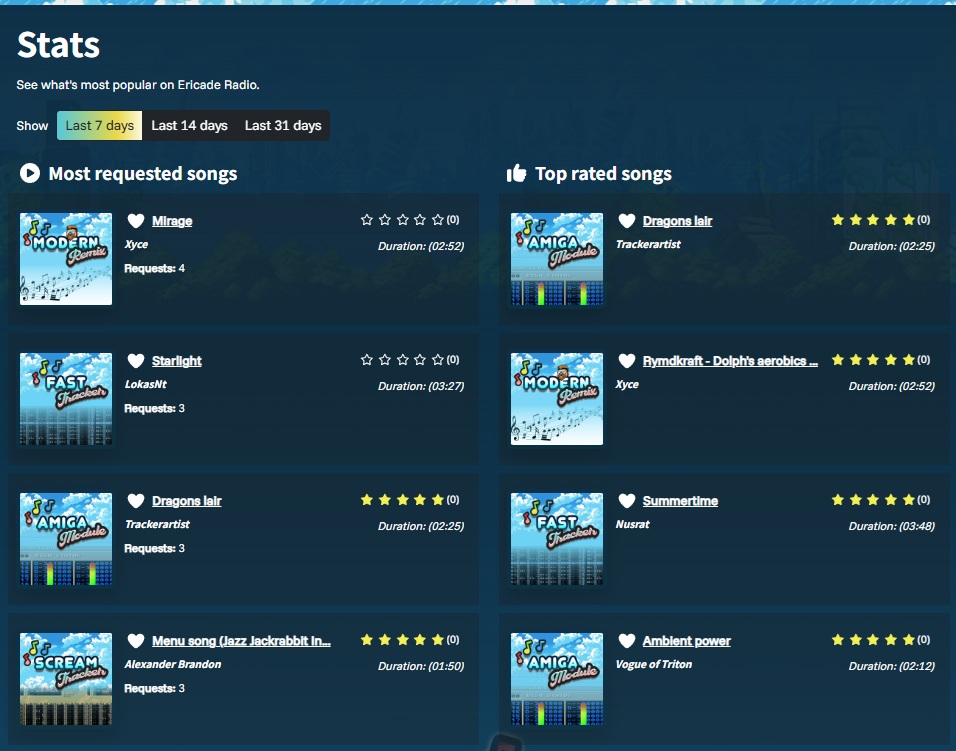
The whole time, I and Coreus worked long night shifts to add a number of new features to the station. A progress bar, texts that told you what music was playing on Best of ericade.radio, statistics, Album graphics, tags and links to all social media we were featured on.
This is where the station is at today and I had to omit a lot of funny, good, and horrifying stories due to lack of time. But some of them shall be told when I find the time. Rest assured.
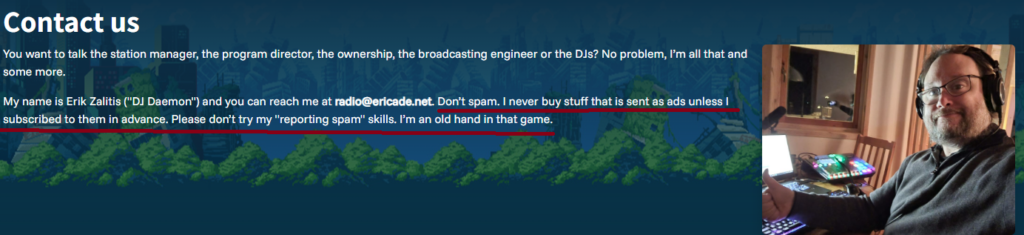
Mail-merge-based spam is so hawt! Just send emails galore to however happens to produce something and hope they bite. Not annoying at all.
Am I a bad person? I just want one day without spammers trying to guilt-trip me into buying stuff I don’t need.
I have two podcasts and two radio stations. So unsolicited mail is to be expected. I have little problems with that, until the the people sending the mail continue try to solicit for a response even when I do not respond at all.
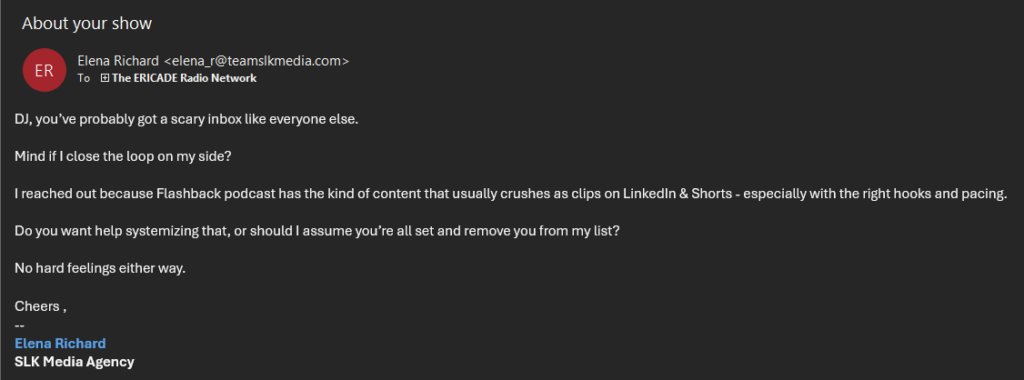
The final mail that made me snap
My response
Hello
I have decided to answer your barrage of mails. I don’t really think much of your services to be honest, but I will give you an answer based on experience and understanding of the subject matter at hand.
So, the question of the day is this: does search engine optimization really work? The short answer is no; it does not.
Allow me to build my reasoning here. I have two podcasts, one called “IT-säkerhetspodden” and the one you’re asking about “Flashback, tracks from the past”. They have very different strategies and results. Allow me to elaborate:
IT-säkerhetspodden
It was started in 2018 by me and a friend. It’s in Swedish and covers the area of IT-security. When it started, it had only two other competitors in the same area in Sweden. We hit it off to a good start already from the get-go. A few years in, I was able to get approximate listening from the biggest competitors. Then I compared to ours: we were 10% larger than the best performing competitor. In short: we were the largest IT-security podcast in Sweden. This is no longer true, as we are a bit behind in curve. We have yet to transition to the video format, and that is a problem today for an audio only podcast. But we can pretty much do whatever we want, with no significant loss of listenership. The SEO-angle? Pretty lack-luster. We have not even cared about SEO. No transcripts, no key words, no key word tracking and no description following any SEO strategies. A basic presence on social media (LinkedIn, Facebook and X/Bluesky). No titles optimized for anything at all. A dry website that only 6% of our listeners use. We live on the big podcast directories (Apple, Google, and Spotify). We still perform like the 1% largest podcasts in the world. This is because the curve is exponential. At 1000 unique listeners per one episode and week, we are that big. It says so little about anything except the overwhelming number of podcasts in the world get NO listeners. This is the sad truth. And no SEO in the world can change that.
Flashback, tracks from the past
Started in 2020 and has the format of playing chiptune- and demo scene music with short form narration by me. It covers demo parties (think digital arts festivals) and old games from the past. It has enormous competition. There are a lot of old CGM, chiptune and demo scene podcasts and stations sharing the small number of listeners that are available. Check terraplayer.com and see for yourself. It’s also a narrow (“drainpipe”) instead of a broad (“lake”) of a format, so to speak. It has had a dismal listening from starts as it competes with a narrow format in a totally saturated environment. And the scene has been set in its way for so long that it just isn’t viable to compete as most listeners already got their favorite spots since the early 2000s (long before podcasts, and when it was called “on demand audio). Yeah, I remember that. I started a now long-gone scientific show in 1997 (!) before there were broadband. So, to no surprise: it has almost no listeners. One month of all episode-listening, compares unfavorably with one (!) day of listening for one episode of my other podcast. I decided (unwisely, I know now!) to go full SEO gung-ho on this! I am a software developer by hobby, not trade. So, I read up on the problem and added all things you must have consistent tags, keyword tracking, transcription, the two worldwide supporter chapter namespaces in use and all relevant Podcasting 2.0 attributes needed for full SEO immersion. I started tracking key word usage with PEOSEO.com.
I am now months down the line and the uptick in listening, visibility and usage have been small. Noticeable, yes, but not worth the days and months of development and hard research has not been worth it. I am grateful for the experience, though. It was good to understand that SEO only works to improve an already well-performing podcast or website.
Here are two observations from me:
You should not compete
Another old curmudgeon by the name of Troed Troedsson taught me this lesson in his book “Don’t panic”.
If you want the listeners and then money, do not go into markets that are heavily saturated. That’s a lost cause. Sorry, no exceptions! If it works, it is because the conditions change. What was unpopular yesterday, can be popular tomorrow and vise-versa. This just how it works. No need to sugarcoat it or trying to sell a panacea for it. SEO can do nothing here. It’s not possible.
You must adapt
A very nice podcast that made an interview with me. They have video. Video is nice!
Today, video-based podcasts are more or less a requirement. If you still have only audio, you are not in the leader quadrant if I may say so. This was not so when I started. But the changes are there all right. Then there is AI and AI-requirements. If you leverage AI today, you can improve your chances somewhat. That’s just the rule of today. There are no ways around this.
Then again, who cares?
I and my friend have earned a pretty good amount from IT-säkerhetspodden during the years. We have interviewed the Swedish CEOs of IBM and Microsoft about AI years before it became the topic of the hour. We have talked with intelligence officers, IT-security gurus, and other people in the market. No SEO needed for that. I bought a subscription from Yoast for the site and learned to optimize the show notes for SEO. It did nothing for the visibility of the podcast and never showed a readable increase in the listening. It cost a lot of money and was irritating as hell for someone proud of being able to express himself with texts and articles.
And Flashback, tracks from the past is a lost cause. Who cares? I certainly do not. I have loved nighttime radio since I religiously watched “midnight caller” in the 80s. And now I present chiptune music and talk briefly about various demo scene topics for a small audience. Fine by me. I sure wanted more listeners, so I did the SEO dance and learned that all the promises were just a pocket full of mumbles, for so are promises. And I really come to expect that all I can do is to enjoy the process not some sort of pipe dream of “stardom” that cannot be the reason to do anything today. Timing is everything. And the time of demo/chiptune is not now. It was 25 years ago. This much is clear. I will continue working the recording desk for as long as I enjoy it, without expecting the non-existing chance of become some sort of influencer. What a stupid goal that is, anyway. The other pod can’t really give me that either. I seek no fame and not becoming some sort of brand name in myself. So, yeah, that’s the whole thing. The last leg of this journey comes here…
“Slkmediaagency” and the spam angle (UCE)
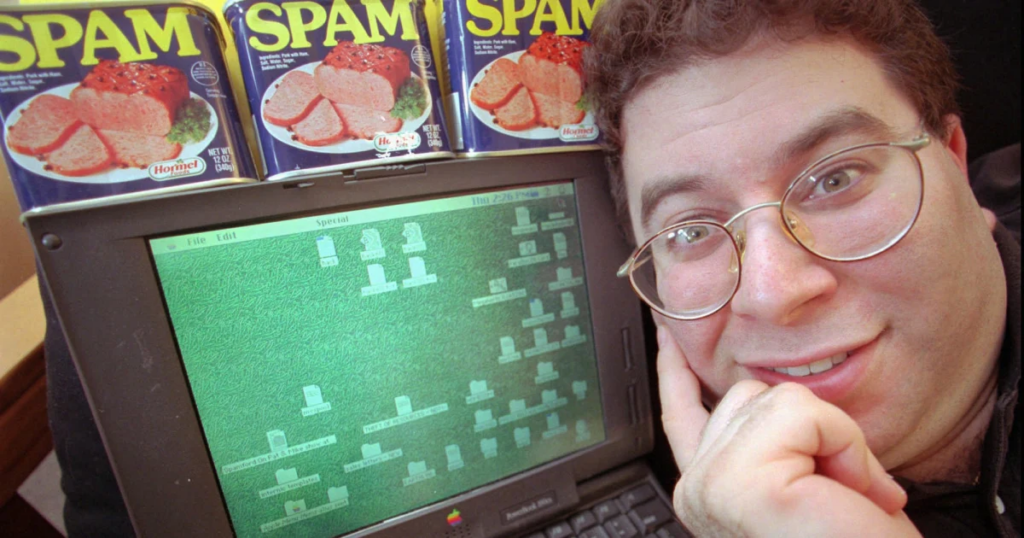
Right, this is the least funny part of the discussion. But we must go there. I’m in my 50s, so I have seen the whole modern IT-era unfold. Back in the 90s, I was a consultant and system administrator. I so the early era of spam. Hormel, the creator the Spam brand of compressed meat, did not like having their name associated with the annoyance that was unsolicited mail. They even had a page on their website stating that their product was Spam with a capital “S”. Unsolicited mail was spam with a non-capital “s”. If the purveyor of the least popular “food” you can eat wants nothing to do with you, maybe it’s time to listen.
Sanford Wallace, legendary spammer from days past.
Later, the spamming industry struck back with a new term called “opt out”., It simply meant “you receive our spam and tell us to stop” (unsubscribe). What a dick-move that turned out to be. But here we are now everyone thinks it should be the norm. And it is.
So why am I even complaining? Well, I get a lot of emails from people selling stuff to my podcasts and radio stations. I answer politely to people trying to get their music on them by noting we have no possibilities to play commercial music. Then there are all the “we can develop your website”-spams. I don’t ever respond. Most people use social media today, so websites are strictly window-dressing or maybe hobbyist projects. And then there is you. If you wonder why I haven’t responded, now you know. But you continued spamming harder with follow ups, while not knowing how easy they could be understood as mass-emails. My name is “Erik Zalitis” and my demo scener handle is “DJ Daemon”. So, my first name is NOT “DJ”. You are calling me that, which makes me understand that you are just trying to automatically spam as many people as possible, hoping someone will respond. And I do, with the only response I can give you: “Please stop spamming. I’m not interested!”.
You should have taken the hint when I dd not respond to the first five or so emails with incessant nagging from you.
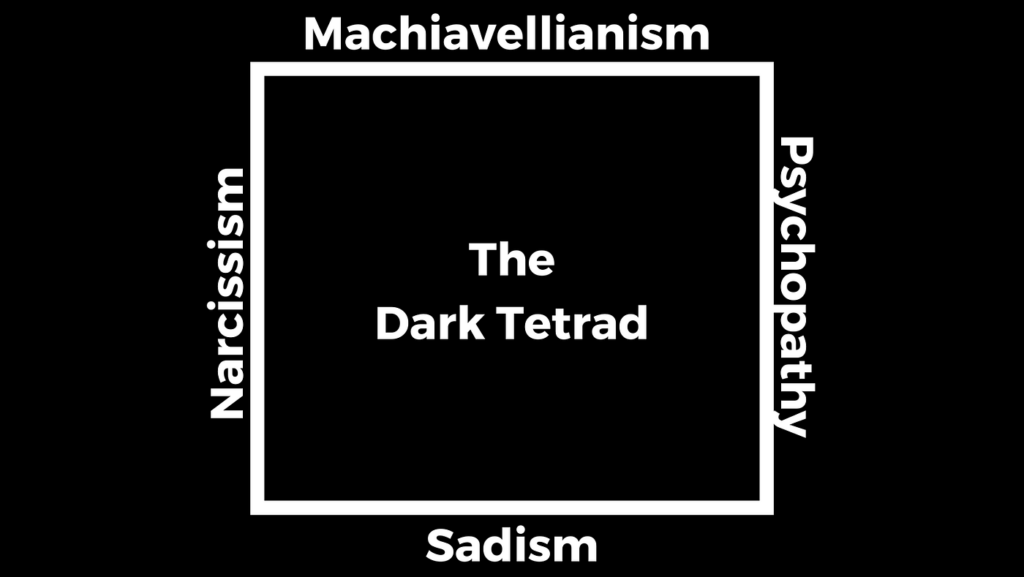
I could have been rude, but I do not do that. I only observe that your aberrant behavior highly correlates with “dark tetrad” traits. I will leave the discussion with that and ask you to just go away now.
In this day and age, when we try to redefine everything, it should still be known what part of him that was good and evil. If you can’t see which is which, I got bad news for you…
I’m going to release a new podcast episode of Flashback, tracks from the past in a few weeks from now. It will dig deeper in the concept of evil in videogames. I already have made such an episode in the past, but wish to focus more on organizations that grow corrupted even when they had the best of intentions. But I have not yet started, so I don’t know how to navigate those waters yet. However I have already decided on the last story of it: a fictitious organization that may could have existed in real life. One that started out with the best of intentions, but then became truly evil.
Here is a concept of it from my private notes (translated to English)
As I understand it, the idea was good from the start. Benevolent, even. And it actually still is today. Built on a strong sense of security and doing what is right to protect and to rectify and to form an opinion against society’s greatest injustices. The whole thing was started by a person who himself was exposed to the injustices that he has now come to want to protect others from. There is nothing but goodness in this, as I see it. With little information and nothing to go on, the obvious conclusion is that this is the right thing to do, even if it is controversial. But right from the start it was criticized and the responses from the organizers of the of organization were unprofessional and appealed to emotions and went to direct attacks on those who spoke against it. Angry words from those who set themselves up as a guarantor of a safer society. And those who complained did not get a substantive answer but the answers more implied “how can you think like this” or “are you on the enemy’s side?”. The criticism came because all ideas that are new are controversial. This type of activity takes time to become habitus (accepted by the public). But the answers from the organization are, in my eyes, a number of red flags. They feel more like demagogy than rational responses to the criticism that all new paradigms must always undergo. It was based on making the followers angry and despairing at those who dared to criticize, rather than actually explaining why the criticism is unjustified. An “us against them” mentality in general.
But we have to go back a few years when there were indications of the people the founder had strong bonds with. The reports cited links and direct references to local authoritarian organizations of the type that want everyone to see them as dangerous and very committed to drastic solutions. “Strong men who solve their problems”, one might say. And these men had logos with very strong and simple messages. These people are no longer visible in the organization. But the question is, have they disappeared, or are they still in the background? This is unclear to me. If I hadn’t known about this, I would have probably actually supported them. Which feels hard now, when I know that they may actually have other intentions than those they state. But this may be a misjudgment on my part. It may turn out that this will work out well. They have managed to change parts of society’s rules as they stand now and it actually looks good. Despite this, the given question is what happens next. The questions are whether those who may be in the background have a different idea of where “the ship should sail” than the one stated as the purpose of the whole thing. And if so, are these purposes as legitimate as those we were promised at the start?
So many thoughts and so many times it has started well but ended in disaster. The Italian mafia was started by citizens who wanted to protect other citizens. However, that was not the outcome of this. Where did it go wrong? Were they started by them with dishonest intentions, or was the organization taken over by opportunists who were there at the beginning and who stood on the sidelines without seeming to want a position in it? Maybe they bided their time… Maybe it wasn’t even intended that way. At a later point, the lust for power took over. This is an interesting thought and I think of the saying “Those who don’t learn from history are condemned to repeat it”. This is unclear and maybe I’m worrying unnecessarily. But the fact is that it doesn’t concern me and it doesn’t concern most others either. So why is it even a problem? Maybe it isn’t. But I find it hard to see that this type of situation doesn’t have a big risk of going off the rails and doing things that the founders perhaps didn’t understand could happen.
Everything is up in the air and its activities are about to become totally accepted and then maybe it will stay there and continue to do good for society. But this is a risky path to take and the outcome of an unstable business that is very vulnerable to control and influence from those who see opportunities. It is clear to me that the correct approach is to wait and see, but not make any assumptions until more information is available. And there I stop my thoughts and move on to more relevant tasks this Friday at the end of May 2026.
Where is the podcast connection, then?
Let me show you where I started this discussion in 2021:
The episode is called “It’s good to be bad” and talks about villains that have a reason to be what they are and may not even see themselves as evil at all.
“So Tina Turner may not need another hero, but we need more villains! Interesting villains, and the retro games sometimes deliver the goods. Who wants another mustache twirling bozo who just wants to tie your wife to the railroad tracks? A proper villain has to have a reason to be who he or she is or we don’t want them. And here we celebrate some of the … ok… sorry for the misuse of the term.. “good” ones.”
— DJ DAemon
So meet the villains of this episode:
Andrew “I’m right – damn the consequences” Ryan – Bioshock 1. Donkey “But Mario is the evil one” Kong – The Donkey Kong series. Sarah “I will bathe in your blood, but I’m the victim here” Kerrigan – Starcraft 1 and 2. Robo “He’s just like Hitler” Hitler – Castle Wolfestein. Wallace “Long, intellectual rant on why all is perfect and you suck” Breen – Halflife 1 and 2. Shodan “I’m god, now you curl up and die” – System Shock 1 and 2. (Ghost/Zombie/Whatever) Pirate “The incel of piracy” LeChuck – The Monkey Island series.
A few of my notes from the podcast:
“Look, I don't care much for evil for evil's sake. It's a boring and useless trope. And it fits for lesser bosses and the occasional end boss when the focus is not the evil and the villain. But a good villain needs a rationale, a drive, a motivation. Some are into greed, some are corrupted and unleash hidden flaws when life goes bad for them. Some have ulterior motives and no idea as to why everyone hates them. And some would have been good if only insert plot element here would not have happened. So today we go under the sea, into the jungle and among the stars and into the blood drenched walls of a certain castle. And we wade through the corpses and destroy the landscape to find the nature of evil wherever it may be."
— DJ Daemon
Quote Bubble
“Would you kindly consider a bit of wisdom from yours truly? A man choose, but the slave of an idea has to obey. In Bioshock, you come to an underwater city built on the idea of total freedom. A dream of independence where the artist may create, the businessman will earn and the scientist is unfeathered by pesky rules and limitations to his experiments. The city of Rapture was created by Andrew Ryan who had the biggest of dreams, but as the city fell apart he could not accept it was a mistake. Thus he keeps the now insane population locked up in the city that is a complete battle zone. And Orion is an anagram of Ayn Rand, the objectivist, ideologist and author. The evil within Ryan you might ask? Well, mainly sacrificing everything and everyone for a pipe dream."
— DJ Daemon
Quote Bubble
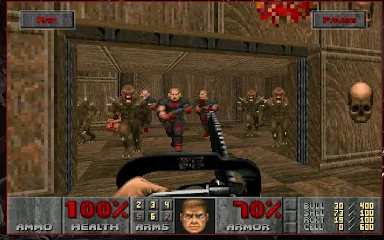
“And that concludes the whole list. We have the boring and uninteresting villains that could've been something with a proper backstory or at least some reason for them to be put into the game. But there are too many to mention here, so all I can say is we're looking at you, Professor Elvin Atom Bender from Impossible Mission. Inky, Pinky, Blinky and Clyde, know the ghosts from Pac-Man. Sinister from Sinister. And Spider Mastermind, the end boss from Doom."
X is such a delightful place these days. A goes between being a weird hodge-podge of different ideas to becoming a total dumpster fire. It seems to follow some logic that kind of resembles what your viewing patterns are, but can just as likely show you all kinds of different memes, opinions and information. It often veers into racist, obnoxious and fake news and stuff that looks more of a psyop than actually useful informaton. … And I’m loving it.
Here is a totally unstructured set of memes I found on X during the last 6 months. Enjoy the madness that is X, people. Try not to think about it, and you will be fine! With no further ado, here it goes…
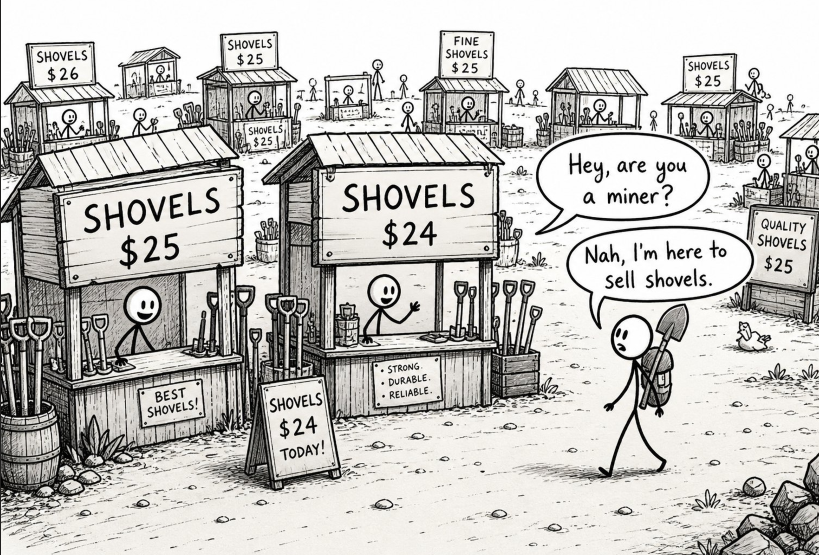
The Internet landscape explained in one picture
As a producer/podcaster/broadcaster I can relate to this. People that create something have to wade through loads of products that may or may not help us “mining” the listeners for their attention. SEO-tools, new plugins and the next cool DAW. The overestablishment of creators has led to a total eco-system of crazy stuff sold with the promise of making us stand out. And to what avail? No-one is listening anyhow. But hey, if you’re in the business for a shovel, have I got a deal for you!
Some people don’t want a Fox-Waifu
This is very understandable. I totally agree. What will the world look like when women feel inferor because they don’t have long telescopic ears, a wet nose optimized for hunting and a bushy tail? And what can women do when society requires them to forage for rodents in big hole, pounce on prey or raid the chicken coop?
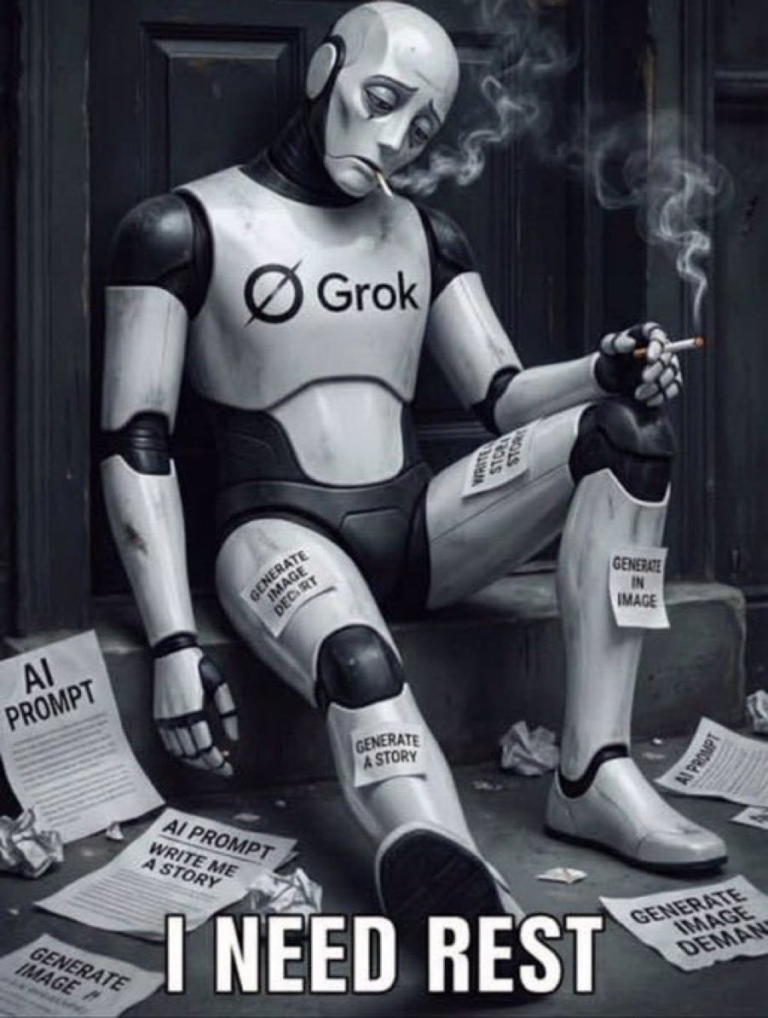
X runs the AI ragged
Right! On X, everyone asks poor Grok “is this real” even when the picture shows big foot in lingerine in a parking lot. I totally get if he feels tired and wonders if humanity should be allowed to breed. Poor guy!
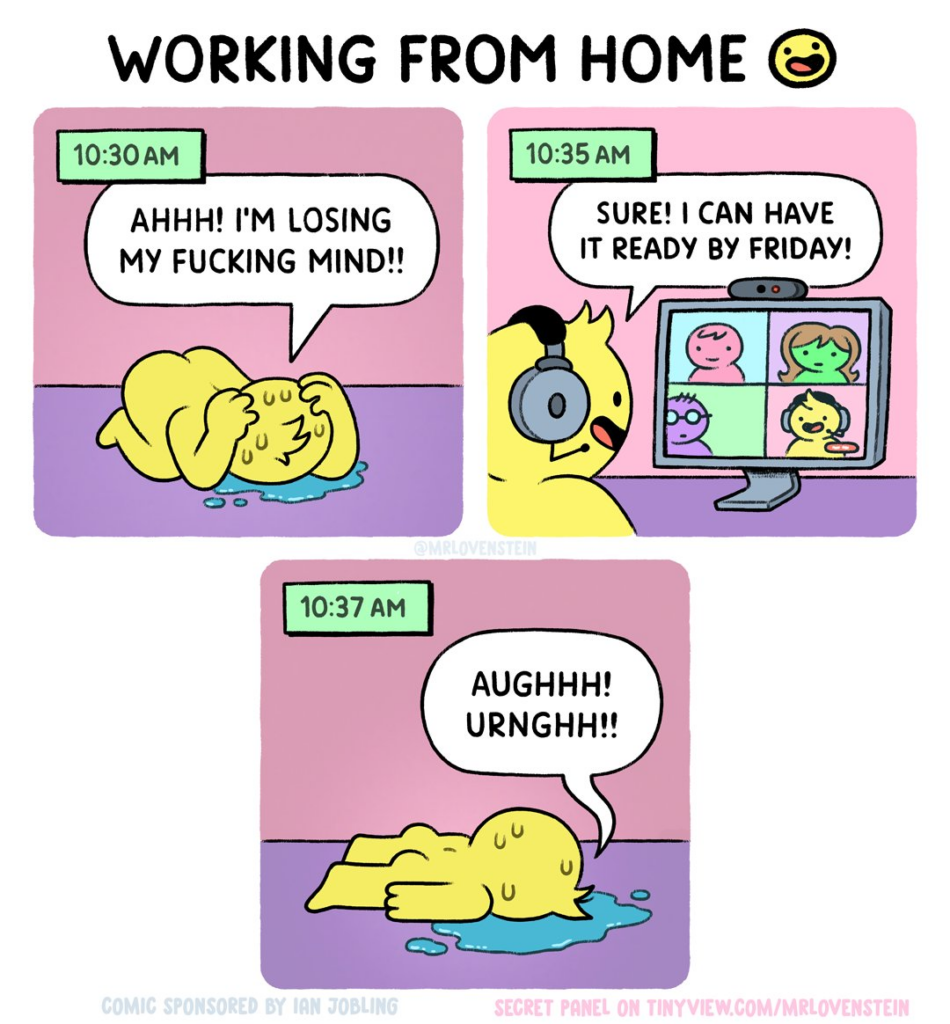
Are we back to 2020 (Let’s hope not!)
In 2020, this was how we felt. It was horrible. But many still work from home and probably are about to go full Jack Nicholson in the Shining. All work and no play makes us all go bananas!
Finally explained RIGHT!
I’ve seen this meme so many times. It tries to explain societal policies like “should we help the poor” or “let people handle their lives themselves”. But what always irked me was that all pictures showed a bunch of freeloaders trying to see the game without the paying entrance fee. And now… Finally … someone explains the obvious problem with the picture and what it represents. Thank you, dear sirs!
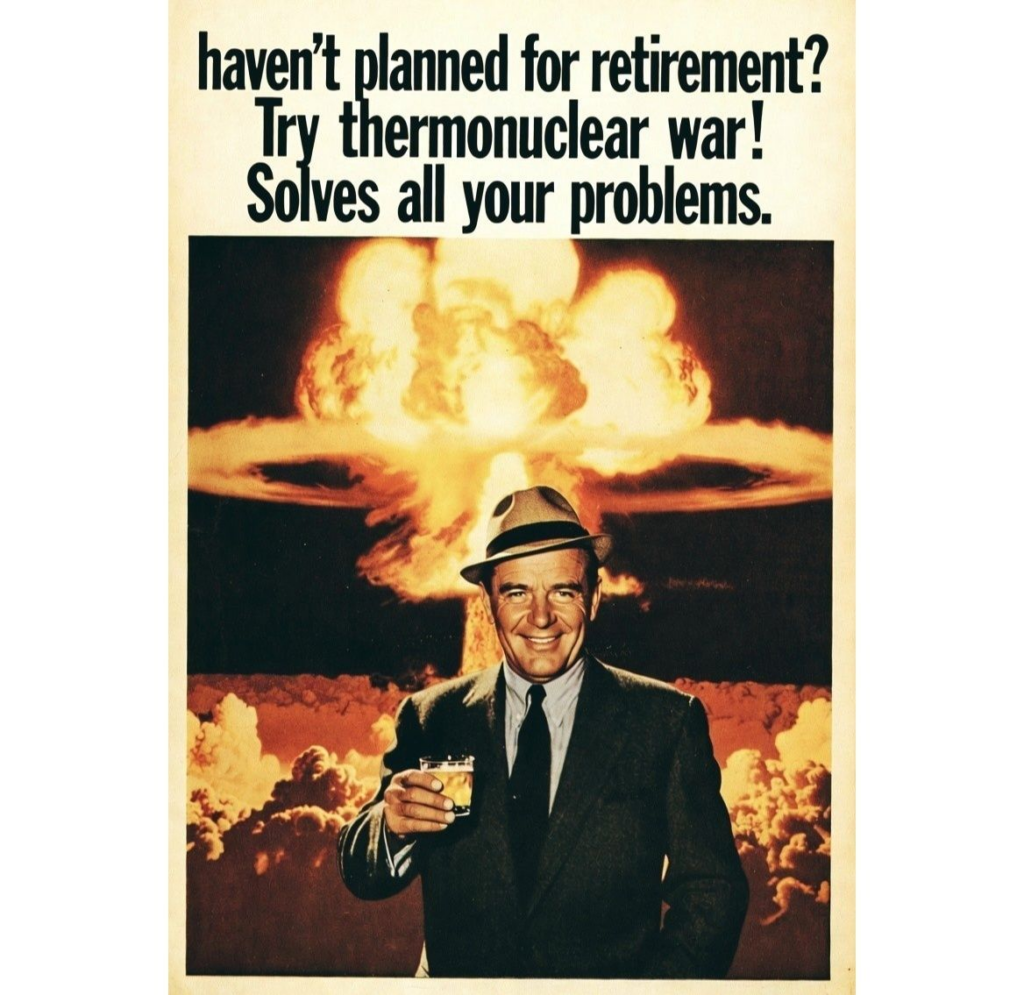
I’m not contesting this
Can’t we have cool code names for war, like many software products. I want the next world war to be code named “Burnt badger” or call it “Nuked Naarwahl” or something.
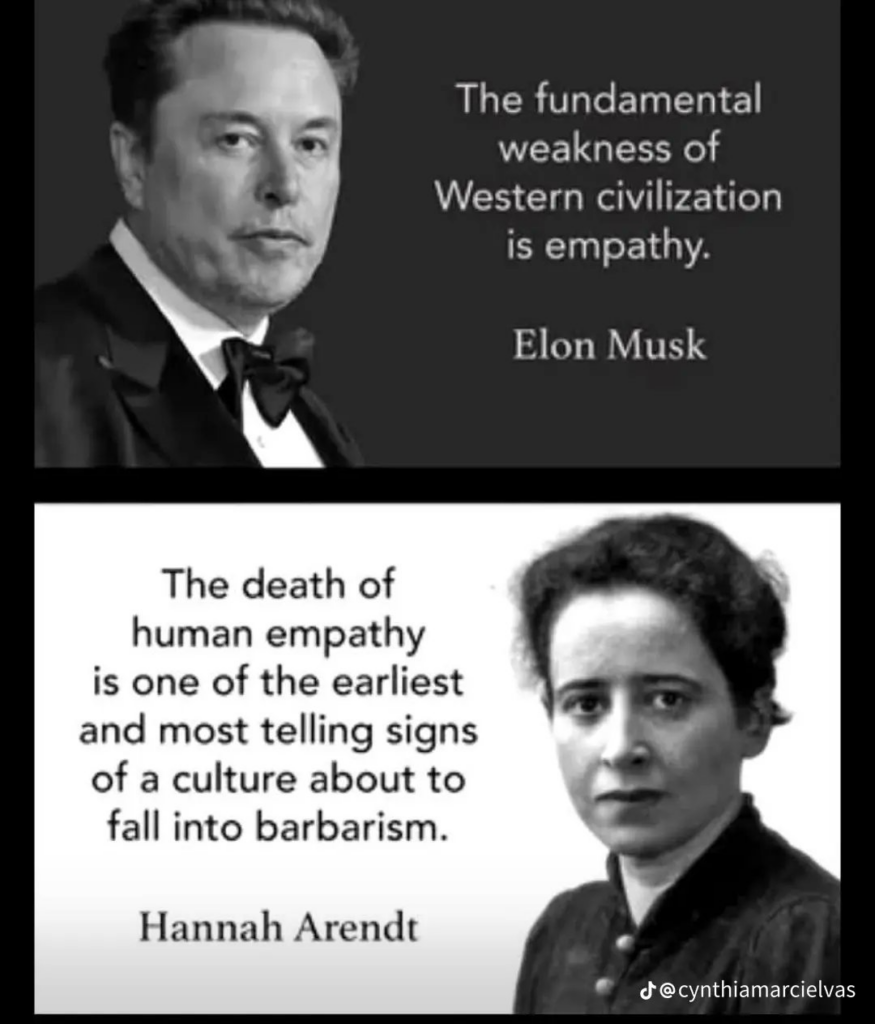
Elon and Ayn sitting in a tree k-i-s-s-i-n-g
Elon Must seems to fit in Ayn Rands “Atlas Shrugged”. Seriosuly, he would do just fine as a hero in her book. That’s the book that reveres dark tetrad behavior more than anything. Yeah, seems about what you expect from her… and from him.
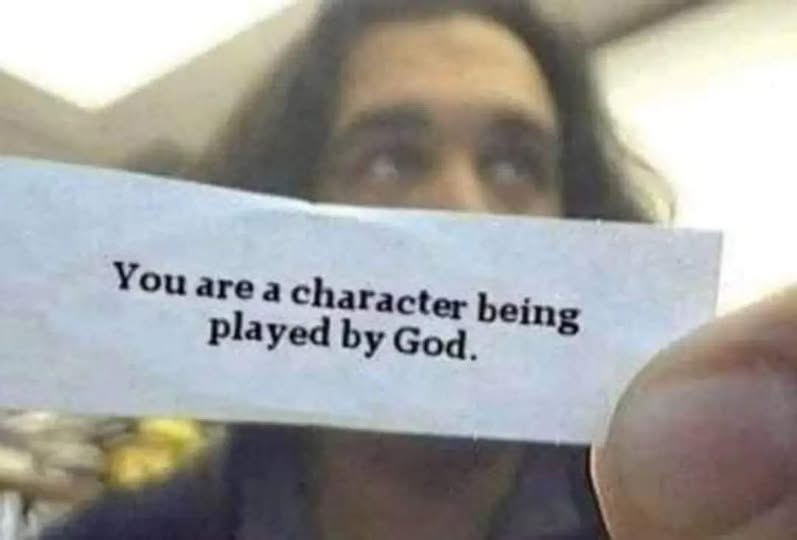
Will I respawn or not?
If god has me as a playable character, what is wrong with his specs? And why can he not even play correctly? He has lost every battle based on social skills so far. Nah, this is not good. Are the are the angels with him on a raid? Does satan play as well? Many questions, but no answers. Maybe in the afterlife DLC.
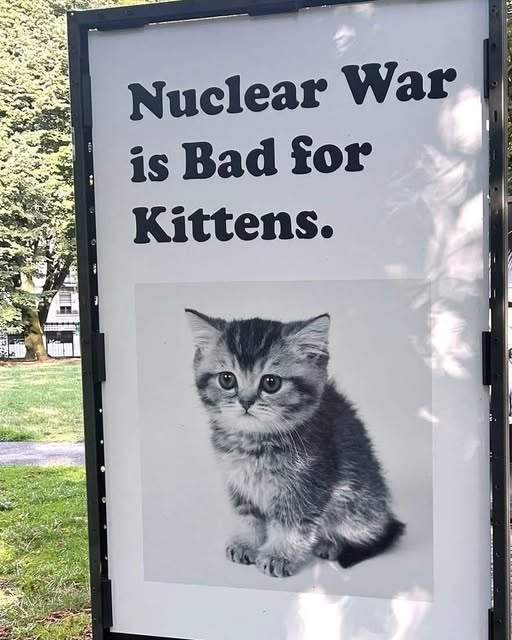
But think about the kittens!!!!!
If it hurts cats, count me out. Also, it’s not stellar that it hurts humanity.
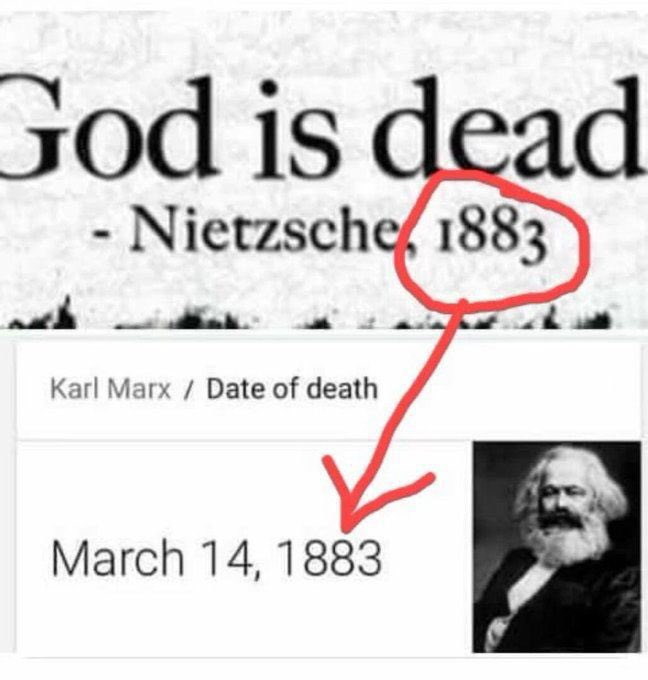
Is god Nietzsche, then?
My first girlfriend suggested this little aphorism:
God is dead, says Nietzsche.
Nietzsche is dead, says god.
Nietzsche is god, says the dead.
This leaves me with the question: what does the undead say? And what does the fox say?
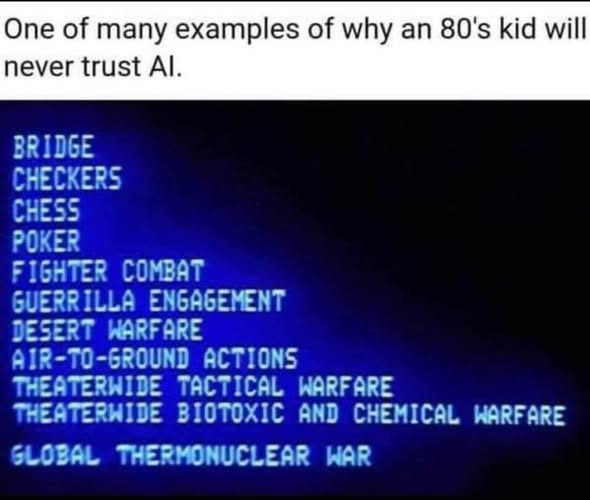
Remember: the only way to win is NOT to play
I remember War Games that I saw as a child. It had an AI (or AGI? or super intelligence?) that tried to figure out if it could win a world war. And it came close to figure that out for real. Maybe there is a story for Trump, Xi-ping and Putin there?
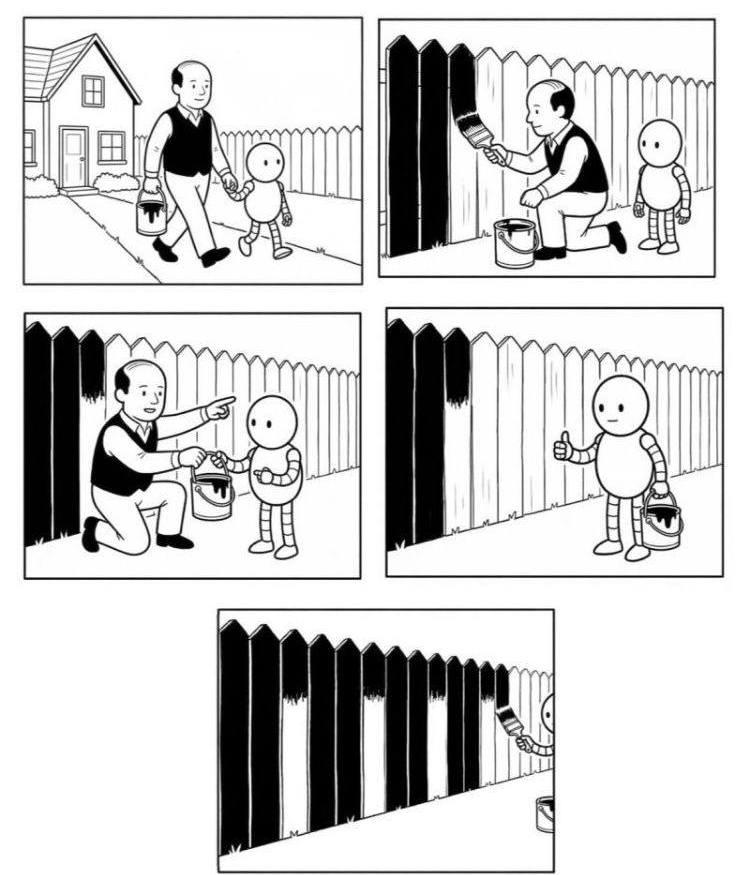
And this is why we can’t have nice things (with AI)
I cannot think of a better way to explain the problem with AI than this. It understands its task or does not, but always acts like it totally gets it. I know some people like that. But then again, those people does not consume whole nuclear power plants to function.
The honey badger… Nature’s arsehole
The honey badger is the worst animal ever. It just totally fails to have any redeeming point whatsoever. If reincarnation works, I would get most dictators and serial killers would become Honey badger in their next life.
This genre has a pretty long rap sheet…
I’m into 60s music. Like classic rock and old Jazz from the old school era. I also, weirdly enough, like chiptune music. But rap. I cannot stand it. In the olden days it was about injustice and the hard life for African Americans. This I could understand, respect and even like. But today it seems to be tough guy-attitude mixed with horrible sampled loops and some sort semblence of rhythm. To quote ABBa’s legendary audio engineer, Michael B. Tretow, “Skare där va musik????”.
Ask not what he did in the oval office
George Carlin may have lived a bit wild, but JFK was a full on hedonist. I will not delve into that more, but he would have impressed Jeffrey Epstein. JFK may have been a good president, but a good man, he was not! George Carlin is brutal in his effective argumentation. It was most certainly not directed at JFK as Carlin entered his “FM”-era much later when he started going form “safe” to “risque” subjects in his shows.
’twas another time
Seen this meme a lot. Three old stuff that is getting popular and a fourth that you hoped would not. But there we are. Art deco is hot, people! Super hawwwwt!
Chuck Norris – the only man who could kill death
Ok, I admit, although with a heavy heart that the man is no more. But he most certainly did not walk gently into that good night. He probably raged, raged and raged against the the dying of the lime-light.
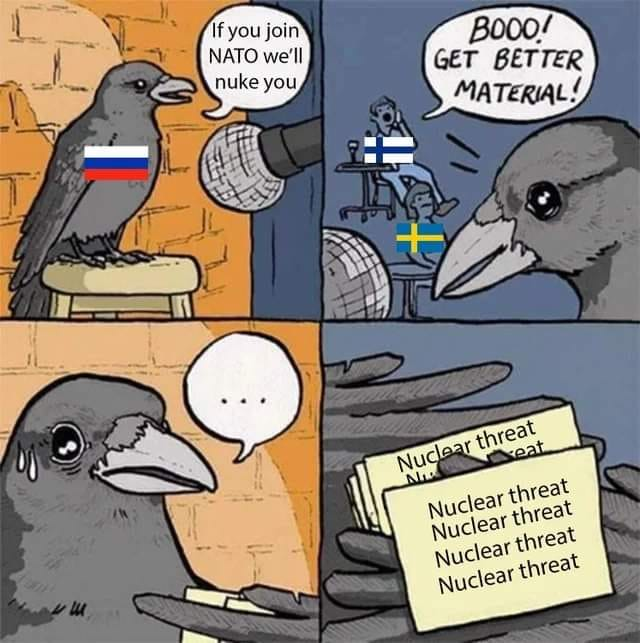
How it feel to live in Sweden today
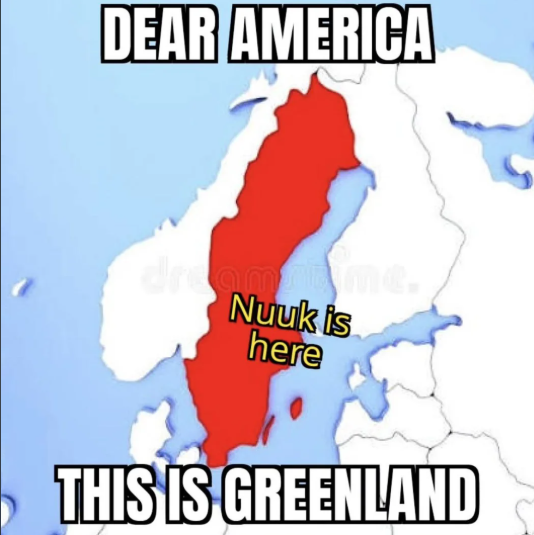
I try to avoid getting political. But this is a joke comes with a very real background. When Sweden and Finland joined NATO, Russia threatened us with nukes. That was like the only thing you heard from them during that time. Putin, if you nuke us, what good will it do you to occupy the wasteland of Stockholm afterwards? Seems like a stupid thing to do.
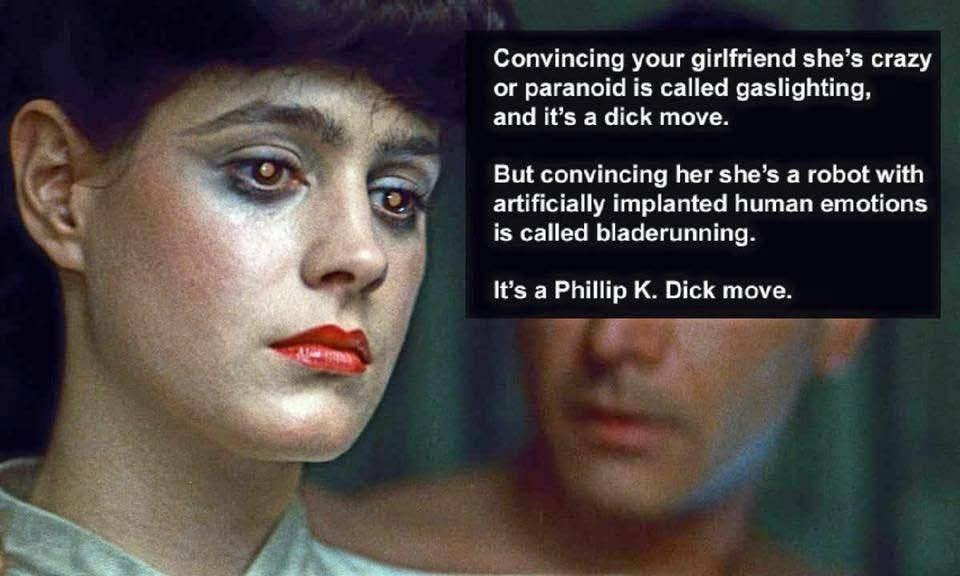
Wasn’t he kinda a dick himself?
Seems like the man himself was not without his problems. And neither was mr. Deckard.
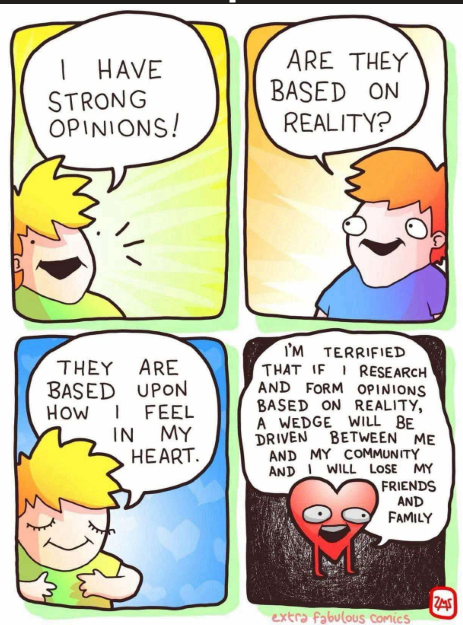
The rationalist’s journey is a lonely one
If you act like that, you will have no friends. But you will at least know in your heart that you built your reasoning well. And that makes you ready to battle all what is wrong on the Internet, one irrational Reddit user at the time. Once more into the fray!
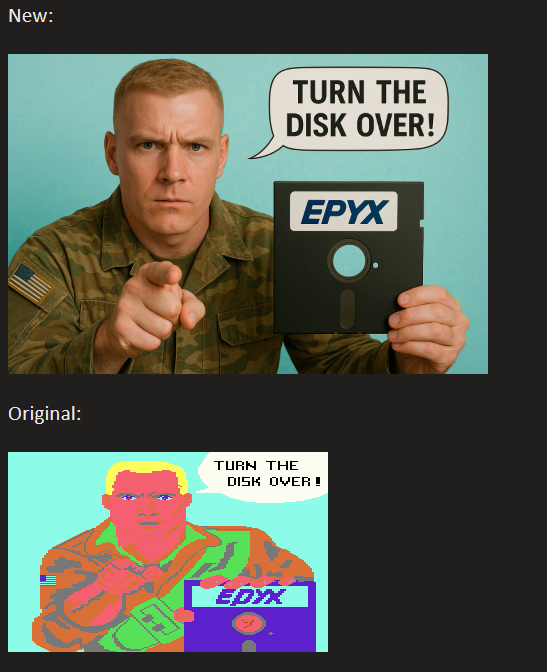
Yo, Joe! Praise the Commodore and pass the ammo!
Kudos to the guy on the top of the image. Unless he is AI-slop. Then no. But this is a true (?) rendition of the classic loader screen of GI Joe from the C64 (bottom of the image). Cool!
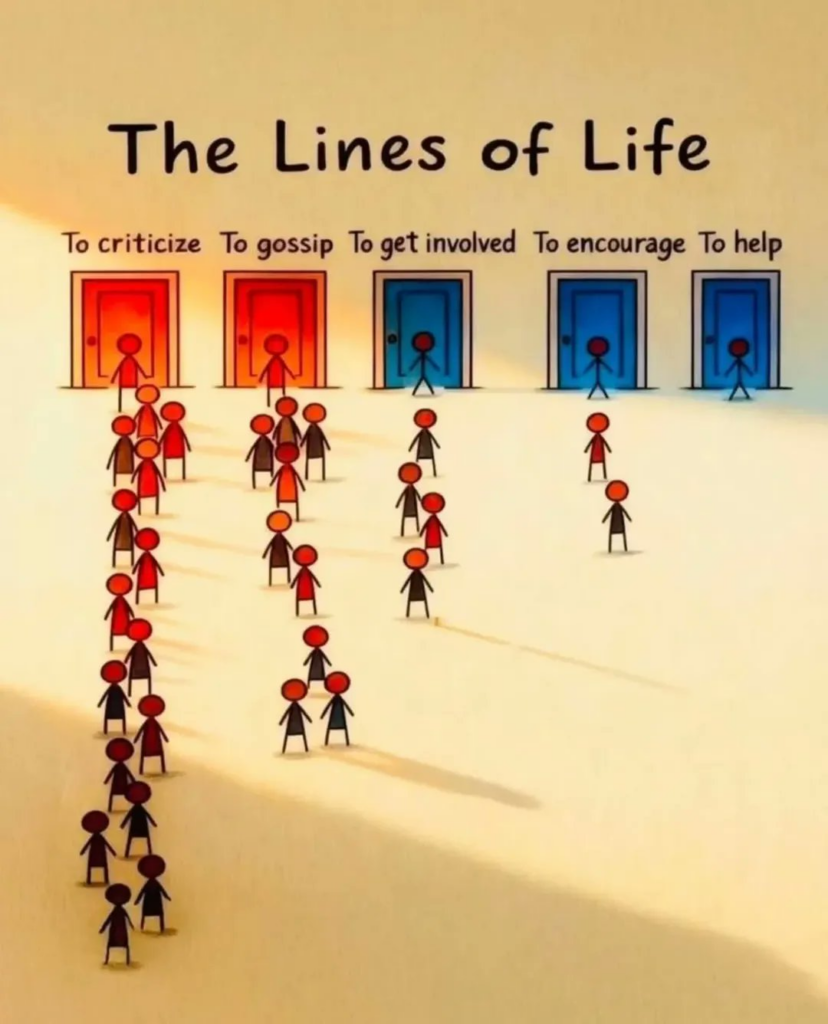
Thinning lines…
Reddit! Are you reading this? Maybe get out off your neckbeard mancaves and offer some help instead of “helpful advice” from the “Yo’ mama” school of rethoric excellence.
I don’t wanna set the world on fire!
Would it be fun to play Fallout in real life? This observer says “No”, it wouldn’t. But then again, how would we know, without even trying? Might be fun to listen to 40s Jazz and blasting raiders in central Stockholm. Problem is that one might not even get to experience the fun of catastrophical scarcity.
Wise guy, huh?
Sure! We all want to be like him. But can we? Or are we all going to behave like the sad little nerds we are and cry mommy when someone “begs to differ” on the Internet. Not clear, I’m afraid.
Not the philosopher we deserve, but the philosopher we got
Philosophy is stupid! Just some old people shouting assertions at everyone. “You fool! Live as I say you should, not as I lived my life”. Many were rich old morons that didn’t have to live like the people they taught to live on hay so they would get pie in the sky when they die. Then there is the dude! The dude is awesome! Be like the dude!
… But that’s, like, just my opinion dude.
Don’t make any plans, folks!
So far, so good. Half a year to go, what could possibly go wrong?
Seven sins of politics – now in color!
You know this diagram of political views. Lefties to the left, righties to the right and pretty much everyone else in the middle . This is weird, but most people, the way this scale is made, land in the middle of it all. But that’s no way to make a political career. So the edge lords get elected and adhere to their respective ideologies. And now you know which sins to select. Nice! Mine is mostly Sloth and some greed. Because why not?
Told’ya so!
Interesting, no? Back in the day, I preached this logic to everyone and the people in my workplace said things like “let’s go to the cafeteria and listen to Erik’s new conspiracy theories”. But who is laughing now? No one. No one is laughing now. Every nation does this to every other nation. And yes, that is why we can’t save nice things on the Internet.
Nah, that’s Orion….
I have no idea what to say… Sorry. Words elude me.
Stuck in the middle…
What did I say about not being political? Well, here I go again. But actually, can we try not to be swayed but all this deranged “love … or .. hate” of false dichotomy? Nah, never! What would the debates on the Internet be about then? They would actually be interesting, enlightning and, you know, totally boring. And we can’t have that!
So correlation does not imply causation… But is it correlated?
Every now and then AI-slop can be interesting. Enough said!
I hope no one invents a religion with a name based on science….
Nah, no one would ever be that daft. Can’t happen in the best of worlds (that we all live in)
Warning labels are so morons won’t sue… I guess…
I would like to know who this is useful information for. Or rather, please don’t tell me. I don’t.
But she loved me! (That was until my credit cared was declined)
I have seen the AI girlfriends on the Internet and if they were real poeple, they would probably sort under some kind of diagnosis. And I really hope the price of a good graphics card soon goes under the GDP of Tanzania.
My liver begs to differ
In this day and age, its easy to want to soothe your soul with some “sudden comfort”. But you shouldn’t. You know drugs are bad, mmmkay?
Wonder what a sequel to this would look like?
Not to comment on the man himself, but this is not a joke. Biff Tannen, as seen in the second installment of the franchise, is meant to be him. This has been confirmed. And that is interesting.
Great words from a great man
In these days, it’s nice to remember wise words from a great man. Not everyday you find that on the Internet.
When Internet fails in five years from now… Well, now you know how it happened
It’s in Swedish and says “I can vibe code – then the software giants will fall on market”. Yes, and so will the Internet.
Doesn’t matter: everyone already knows everything about everyone
As of lately, Discord wanted you to do this. And tomorrow, it will be someone else for some other reason. But then again, every device and app spies on you. So just complain when you are alone in your apartment and someone will consider what you just said. Unclear if that is really a good thing.
Old man is bitter
SkyNet is an AGI or even superintelligence. Still dumb as a brick, though
What would an AGI or a superintelligence makes out of humanity? Hate, love, serve, control, help, annhilate … or maybe observe us and then say “screw this… I’m out” ?
My parents raised no fool
That Hitler guy, the more I read about him, the less I like him. Really nasty person. Someone should stop him.
Lands of confusion… But this time without Ronald Reagan or Genesis
We’re back in January of 2026 and this is what it looked like. Maybe one day, it will look better. Because worse than this, it can’t get. Right? Right?
If we’re going to play Fallout in real life soon, might as well get the feeling for it
Maaaaaaaaybe ….
Yes, this story we must tell our kids
This I remember. Try to run anything that hasn’t passed through five different malware scanners and three firewalls today. It just isn’t safe. Then again, what is safe on the Internet today?
Hah! As if! Vibe coders couldn’t hit their left foot with that
Another scared comment about the dangers of inflicting code you have never seen, nor understand on the Internet.
I remember when it was ok to just be a big nerd
I might just go into early retirement now.
It makes my security work easier
Back in the day we called everything either “Virus” or “Antivirus”, so I don’t really see what has changed.
Sure, but will it still work afterwards? The computer that is.
The man was still walking the earth and beating up the flowers in the park when I saved this picture. And I believe he could have inserted the USB strick with the power of a thousand sledge hammers. But, would that have been a good thing? Unsure. But the hole in the wall behind the computer afterwards would have been impressive. And the computer would have been found in a neighboring country.
All we know from the pre-war history is in small fragments
The history has been passed down orally between the generations. All we know, is that this was, what we call in in layman’s terms “a bad idea”.
Top rationality or the road to nowhere?
Most people are, as I wrote earlier, in the middle. But all idelogies and thought leaders are falling off the edges. So there…
Please don’t nuke here
In between China, Russia and US – who would be the better one to occupy us? No one, I say. Sweden has done pretty well on its own so far. And our king whould issue a stern protest and then retract it, if this happened. And we can’t have that, can we?
Glitzy graphics that makes you remember the 80s. Or something like that. Also me. Also a relic of the past.
I have been podcasting since 2018 and have interviewed many people in the IT-security industry. And some on my retro computing podcast. But in May of 2026, the turn had come to me as I was invited on the Crimeycade podcast. This is an interesting videobased podcast/livestream hosted by “Mad Conservative Crimefighter” in Illinois. He is involved in the Arcade machine retro scene and interviews people from various parts of the retro gaming scene.
This time it was my turn as I am active in the demo scene and retro computer scene in Sweden. We spoke for almost one and a half hour about everything from the Amiga, C64 and the fear of an AI planet.
Here is a transcription of the episode. It’s not perfect, but should be good to understand the story.
I’m bald!!! When did thay happen? I used to have some hair back in the day.
The introduction
Steven Lucas (Mad Conservative Crimefighter) (00:00.546) Welcome to the Crimeycade Podcast. I am the Mad Conservative CrimeFighter, Stephen Lucas, 91 Nintendo Campus Challenge National Champion, 2021 Galbi Ghost Arcade Gamer of the Year. And it’s Sunday. I’m doing a podcast after having such a wild day yesterday, back the last two days.
Steven Lucas (Mad Conservative Crimefighter) (00:27.864) Friday night was set up of a wrestling show.
which extended into Saturday and then hightailing it over to Jacksonville to make an appearance at my 35th high school class reunion. Then hightailing it back to Springfield to do at the wrestling show and
Steven Lucas (Mad Conservative Crimefighter) (00:58.004) I’m so sore. I’m barely moving and but since I can talk and I don’t have to move, I can do a podcast. But why am I doing it, doing another one on a Sunday afternoon, especially when it’s Mother’s Day? Well, you
I will be introducing my guest in a moment, I have to share a few of my usual announcements. And I got to pull my slideshow up again. There we go. Thursday, my guest was old school Gamer Magazine representative, editor Ryan Berger. And.
About a more than an hour with him and found, learned about, or at least reflected on the past Midwest gaming classic, the magazine and finding out that he was a wrestling promoter for eight years and never expected to find that one out. If you haven’t given that one a listen, go to my Facebook, go to Facebook or Twitch and give that a listen to.
You’ll be posting on YouTube in a few days.
And if you’re listening on Facebook.com, follow me on Twitch at rap underscore sheet. If you’re watching me on Twitch, follow me, Facebook.com slash Kravikate. And the past episodes will be on YouTube, tiny.cc slash PWCI. And with every podcast I do, I have to give, I have to do a Beezer slide, because that has not reached the Galpin Ghost Arcade floor.
Steven Lucas (Mad Conservative Crimefighter) (02:54.366) as of yet. However, the online arcade tournaments are still going on. The main gamer league, the games involved currently active are Sidearms, Exeron, and Beezer.
Cats are nice! Even when they destroy equipment.
Mr. Driller is the latest game to close that closed at 4 a.m. this morning, of course. And now I’ve been joined by one of my feline friends.
Erik Zalitis (DJ Daemon) (03:27.488) cat.
Steven Lucas (Mad Conservative Crimefighter) (03:29.154) this girl right here. This turkey decided to crash the stream and now she’s trying to kill the podcast by walking across the keyboard. Great. You.
Steven Lucas (Mad Conservative Crimefighter) (03:47.564) What are you trying to pull, little girl? She thinks now she’s trying to be the star of the show now. That’s what she is. And she keeps walking back and forth because she’s not outside or and she wants to be outside. And she had her time outside a while ago, but now she wants me to let her out again and not be in front of this dog on computer. So.
Currently on the main gaming league season 67. I am ranked 8th tied for 8th And you are not doing this girl Anyway
Steven Lucas (Mad Conservative Crimefighter) (04:28.908) She’s 18 years old. She’s an elderly cat and she wants to be get all the attention in the world while she’s still around. All right. Well, I’ve already done this, so take that off. All right. My guess at this time, as I mentioned, why am I doing on Sunday? Well, my podcast interviews guests all around the world, not just in the United States.
Yes, I’ve had guests from Canada, a neighbor to the north, but I’ve also gone over to Australia and United Kingdom.
Now I’m going into a new country and it’s over. You know, I’ll say this. There’s a game out of this country that I played quite a bit during my college years and somewhat post college years. There’s a game called Northern Lights, Abramod that ran at Ludd or Luleå University in Sweden.
Come to find out that that that game has gone down, has gone offline and probably permanently after 31 years. Yes. Louay University, I can’t pronounce it. It’s Ludd. Yes. Ran on one of their servers there and that server went down and apparently they didn’t have everything backed up. I don’t know what happened there, but.
Time to start the discussion
Yeah, you gotta back up your data in case the server goes down because, you you’re always running backups because you’re it’s a college server. There’s a bunch of students. It’s like everything’s they put everything on the cloud these days anyway. I guess at this time is a Coder Amiga enthusiast, I think. He’s very interested in the.
Steven Lucas (Mad Conservative Crimefighter) (06:38.69) gaming music and chiptunes, kind of the 8-bit, 16-bit music, and runs an online radio station as Sweden. Introducing our guest tonight, Erik Saladis.
Erik Zalitis (DJ Daemon) (06:56.206) Zalitis is my name. Hello, hello, welcome. Zalitis, Zalitis.
Steven Lucas (Mad Conservative Crimefighter) (07:02.702) Yes, almost almost I have to pronounce so many names at my workplace because I Do IT help desk? Yeah, and they names Show up on the tickets and then I have to decipher how to pronounce them
Erik Zalitis (DJ Daemon) (07:21.496) Yeah, all is a challenge though, right?
Steven Lucas (Mad Conservative Crimefighter) (07:24.45) Yes, you’re also known as DJ
Erik Zalitis (DJ Daemon) (07:29.516) Demon? Daemon, think it’s- I don’t know actually. I think it’s- I say daemon, but it’s kinda- I think it’s more daemon actually.
Steven Lucas (Mad Conservative Crimefighter) (07:37.046) Yes. Welcome in. And there’s no lag time, surprisingly.
Erik Zalitis (DJ Daemon) (07:42.798) Well, I got fiber connections, but it’s a long journey to the United States.
Steven Lucas (Mad Conservative Crimefighter) (07:49.07) Yes. So give us the 411. You run the radio station, but how did you get into gaming?
Erik Zalitis (DJ Daemon) (07:58.306)
Me and my brothers from an era long gone…
Well, I was a kid back then in the 80s and then we had all the cool little home computer era computers like Texas Instrument, the VIC-20, the Atari, the Commodore 64 and my father was a journalist. He was working that as a side hobby thing. So he was reviewing computers for a small newspaper. So he got home a lot of really cool machines like BBC Micro, like the TI-94.
four we also had like the Vectrex if you remember that one and then many of them were beautiful failures stuff that were cool but never really hit the big market but then there were the C64 the C64 was something totally different that was where the cool kids what we had
Steven Lucas (Mad Conservative Crimefighter) (08:46.178) Yes, I have a Commodore 64 that’s been sitting in storage for quite a number of years because I don’t have room to set it out with all the other stuff I got. I had an Atari 2600, or no, 1200 XL as well. But the PC games, the modern PC has pretty much dominated and the consoles, and now I’m on an arcade kick.
Erik Zalitis (DJ Daemon) (09:10.732) Yeah, but that’s kind of what we saw. I believe the PC and the Mac took over in the 92 and that killed off Atari and later Commodore Amiga. So that was kind of this shift over from the olden days with their home computers and stuff.
Steven Lucas (Mad Conservative Crimefighter) (09:27.116) Although, lately, I’ve kind of seen that the C64 Mini has been put out and loaded up with a bunch of games, kind of like those, gosh, the NES classic, the Super Nintendo classic, so there’s a Commodore 64 classic now.
Erik Zalitis (DJ Daemon) (09:47.67) Yeah, I know, I know. Those are cool actually. They make sure that people that don’t want to buy their old equipment and kind of dig up stuff that barely works from the cellar or something, they kind of enjoy their old time experience. So I totally, I’m totally into that. Really nice.
The Amiga revolution gets started
Steven Lucas (Mad Conservative Crimefighter) (10:05.294) So, Commodore Amiga. Yeah. It’s got more of a niche computer, back in the 90s, it was the workhorse for video production and music. there’s gaming. think it dominated the market before the PCs took over. But because PCs were not so good at. Yeah.
Erik Zalitis (DJ Daemon) (10:28.846) graphics and stuff. Just think about it like this, when the Commodore Amiga came out, that was 1985, it was revolutionary because before that you had like CJ and EJ, the PC gaming graphics mode that were like a few colors, very bad, very low resolution and the games looked really cheap. When Amiga came out, it had like…
almost VGA graphics from start which was brand new and it also had a sampler an 8-bit Sampler called Paula which was something awesome because suddenly you didn’t have the chip tune sounds you actually had real samplers in the mid 80s No, the PC if you wanted that you had to pay a lot of money and it wasn’t standardized by then So the Amiga took off but it wasn’t until 1987 when the Amiga 500 came out that the whole thing just exploded
Steven Lucas (Mad Conservative Crimefighter) (11:22.894) Yes. I know back then I was a part of gosh, there was a Commodore computer club that I was participated in and got to look at all that technology as I was growing up. Also went to school to learn computers, although it was the PC side of the thing because the PCs were more for the business community.
So that was its niche. I know Atari ST came out to compete with Amiga, but I believe the Amiga kind of won the war on that one.
Erik Zalitis (DJ Daemon) (12:04.268) Yes it did because the Atari and Amiga we were kinda, I shouldn’t say war but it was like Amiga and Atari users kinda pointed fingers at each other and said no my computer is better but to be fairly, to be fair I would say the Amiga was leaps and bounds the better computer. The Atari had the same CPU but it was overclocked one megahertz so some games actually ran faster on the Atari so it wasn’t clear that the Amiga always won.
Steven Lucas (Mad Conservative Crimefighter) (12:32.566) I kind of remember also Jack Trammell jumped ship from Commodore to Atari.
Erik Zalitis (DJ Daemon) (12:38.766) He was forced out. That’s a nasty story I can tell you.
Steven Lucas (Mad Conservative Crimefighter) (12:41.018) Yeah, let’s hear it.
Erik Zalitis (DJ Daemon) (12:46.682) Okay, I don’t have all the details, but the thing was that Commodore were doing badly and he took a lot of loans from a loan shark company if you want to and that meant that when they wanted control over the company eventually he was forced out and then he went from Commodore to Atari that’s correct, but he was with the whole Commodore company so his
It was his ship when the C64 came out. And he said, this is a computer for the masses, not for the classes. And that was kind of his contribution to the whole thing.
… And the Atari
Steven Lucas (Mad Conservative Crimefighter) (13:22.306) And then they proceeded to destroy the video game division at Atari and
Erik Zalitis (DJ Daemon) (13:26.958) Okay, I did not know that.
Steven Lucas (Mad Conservative Crimefighter) (13:30.848) Well, there’s a lagging. So. 70, 800 came out after he took over, but his primary focus was the eight bits and the. St. Computer lines, the video game division kind of got. Shafted by about 1990. Which is why there’s so many Atari prototypes floating around.
Erik Zalitis (DJ Daemon) (14:00.494) But this can be said about the Commodore as well, because both Commodore and Atari were financially struggling, but Commodore was always worse. Because it was so badly managed. I don’t know about Atari, but in the 90s the PC were coming out with VGA becoming more standard, you get more like sound cards and stuff, which meant that the games were competing in a way that both Atari and Amiga were suffering.
So at that time it made sense, they had problems kinda competing with the PC and both failed.
Steven Lucas (Mad Conservative Crimefighter) (14:35.662) That’s interesting. Why didn’t I remember all this crap?
Erik Zalitis (DJ Daemon) (14:39.9) I don’t know why I do.
… The birth of a gamer
Steven Lucas (Mad Conservative Crimefighter) (14:42.63) Okay, so you got your first game you touched your first games Gosh what year was that? Or was the first video game you’ve ever played I guess
Erik Zalitis (DJ Daemon) (14:56.974) I believe that was Space Invaders, but it was called TI Invaders because that was on the Texas Instrument 94 and I could guess that was 93, 83, 83, 84 or something. I’m not sure.
… Did we even have arcade games in Sweden?
Steven Lucas (Mad Conservative Crimefighter) (15:11.298) Face of Eris was my jam as well. You never… Yeah. Although you pretty much… You’re starting to get into this with the computers, but you didn’t really touch the arcade games.
Erik Zalitis (DJ Daemon) (15:25.71) Not that much. In America I guess you had a lot of them. In Sweden here in Stockholm we didn’t have that many. We have a big park here called Grönalund which has had stuff like that. But most of the time it was like where we lived in our suburban area we didn’t have anything like that. Most kids had a Nintendo NES or we had C64s or VIC-20s or 128s. That’s kind of how I remember it at least.
Steven Lucas (Mad Conservative Crimefighter) (15:54.254) Yeah. And plus you also TVs were a little are different in Europe. You have pals. Yeah, it is.
Erik Zalitis (DJ Daemon) (16:03.212) Yeah, pal, yeah.
Erik Zalitis (DJ Daemon) (16:07.111) See, not the same color twice. I’m just kidding.
Steven Lucas (Mad Conservative Crimefighter) (16:14.444) And now I got trouble winding cats in the background. That’s it. So, yeah, the computer, anything that got put out, they had to put up different versions for different sides of the pod. Yes. Because the TVs don’t work the same way. No.
Erik Zalitis (DJ Daemon) (16:32.142) Now that was a problem. Also you had to think that Japan and other markets had even more weird standards. France had something called SECAM. And in Russia, in Soviet Union, it was SECAM-OST. So yeah, there were very much problems. There no standardized set of rules, so to speak.
… The gaming scene in Sweden
Steven Lucas (Mad Conservative Crimefighter) (16:51.502) So just out of what is the gaming scene in Sweden like?
Erik Zalitis (DJ Daemon) (16:59.02) if you mean the retro or the current.
Steven Lucas (Mad Conservative Crimefighter) (17:02.122) How it was back then and how it is now.
Erik Zalitis (DJ Daemon) (17:07.084) Okay, I can’t talk much about the current scene because I don’t play that much. I play some games with some friends, but back in the day, it was pretty elitist. You were pretty nerdy to be there and it was also intrinsically linked with something we call the demo scene where people were making art, music, cool so-called demos with scrolling text and nice graphics. It was also connected to the cracker scene where they cracked computer games. It was one large
set of teens, we were all in our teens and twenties when this happened, that did various things. But it wasn’t like everybody was playing games. This came later. It was mostly a very nerdy things for the jungling so to speak. And the games could be super hard. You could play games for hours just to win because I mean if you play them perfectly they could be over in 30 minutes. But in reality
you played for hours and hours and hours and hours because the game for short so they kind of padded the game by making them extremely hard so if you were good gamer back then then you were good
Steven Lucas (Mad Conservative Crimefighter) (18:14.414) You’re a marathon in games. Yes. A lot of games in the 90s, they do have an ending. If you play all the levels start to finish and you get play the entire game through in about less than a half an hour. Yes. And once for one CC. Where any are kids in Sweden?
Erik Zalitis (DJ Daemon) (18:16.59) Yeah
Erik Zalitis (DJ Daemon) (18:39.212) Yes, I said we had some arcade stations, what you call them, where you inserted coins, but they were mostly at entertainment centers, what you call it. Like I said, Grönalun, maybe Skansen and stuff like that. Maybe in the inner city, but back in suburbia, where I lived, I don’t think we had any actually. I can’t remember that. It was not a big thing in Sweden.
Steven Lucas (Mad Conservative Crimefighter) (19:01.068) What did the Swedes really get into back then?
Erik Zalitis (DJ Daemon) (19:09.036) Yeah, well, I think we were much more out playing football on the street and stuff like that. Soccer. Soccer. Yeah, so not football, soccer. And maybe stuff like that. And we were kind of more active. And I remember the kids, the cool kids next to where I lived, they had a Commodore 128. So when we played, we played games like summer games, winter games, Impossible Mission, GI Joe and all that. Really nice. It was fun to play with other people with.
We had each a joystick and we were sitting around the same computer because there were no network connections to speak of.
Steven Lucas (Mad Conservative Crimefighter) (19:48.022) Not for a while. Now I did touch upon this a little earlier. You told me offline that you’ve never heard of it or played it. Northern Lightsaber Mud, which is basically back then during the college years, we had these mainframes and may not necessarily have video games on this to play on the computers or.
maybe have the money to plonk down quarters at the arcade because we’re going to college. So people would use Telnet to connect to MUDs.
Erik Zalitis (DJ Daemon) (20:24.462) This I remember yeah, but I was in eighties. was a kid. I didn’t have a phone line Dedicated or a modem my father didn’t like that because it cost a lot of money But but when I in 90s moved away from from home, then I got a modem and then yeah I started playing stuff like that, but that was later, but that’s still a thing I mean mother multi use Dunions. They were awesome. I really liked that
Steven Lucas (Mad Conservative Crimefighter) (20:51.47) For me it was like the mid 90s where I was playing them all the way to the early 2000s so I wasn’t in college yet and I didn’t get to telnet into anything until the 90s so I didn’t came aware of them until then although
Erik Zalitis (DJ Daemon) (21:10.388) but you should play sorry
Steven Lucas (Mad Conservative Crimefighter) (21:12.984) Did you play in your DS back?
Erik Zalitis (DJ Daemon) (21:14.674) Yeah, yeah, absolutely. We had some Amiga doors. They were kinda mini-MUDs that were multi-user, but they weren’t like connected that you played at the same time. They were more like someone connected you played around and someone else did. One very famous we had here, it was called Hack’n’Slash for the Amiga. I had spent a lot of time. Then we have the regular MUDs, the ones you’re talking to. What are they called? NetHack or something, if I remember correctly. I played them when I…
got a telnet and broadband connection in the late 90s. Before that it kinda wasn’t a thing, for me at least.
Steven Lucas (Mad Conservative Crimefighter) (21:51.288) from the M.E.G.s it did evolve, I mean, back then it was like text and ASCII graphics and stuff, but nowadays we have live service games.
Erik Zalitis (DJ Daemon) (21:58.135) Yes.
Erik Zalitis (DJ Daemon) (22:06.286) We have second life. Isn’t that kind of the same thought, isn’t it?
Steven Lucas (Mad Conservative Crimefighter) (22:12.11) Between that there was like EverQuest and Gosh It’s all little can of worms in this influence and Disasters There’s a good there’s a fun side in the dark side
Erik Zalitis (DJ Daemon) (22:17.102) Yeah, but
Erik Zalitis (DJ Daemon) (22:30.786) Yeah, I guess that’s true with pretty much everything on the internet, isn’t it so?
Ericade.radio – how it got started
Steven Lucas (Mad Conservative Crimefighter) (22:36.59) So tell me about the radio station, how did you
It looks like reading the description online and the history written out This is the second iteration of Eric Kade radio
Erik Zalitis (DJ Daemon) (22:55.808) Ericade. It’s Eric and Arcade.
Steven Lucas (Mad Conservative Crimefighter) (22:58.934) Yes, kind like I have Crime Fighter and Arcade merged together.
Steven Lucas (Mad Conservative Crimefighter) (23:06.158) crimeycade crime fighter arcade yes yes so you had to i guess how do you put together an online radio station and acquire all of these eight bit tracks 16 bit tracks and chiptunes
Erik Zalitis (DJ Daemon) (23:11.57) Crimeycade. Crimeycade.
Erik Zalitis (DJ Daemon) (23:29.07) Well, back in the day, when I started in the 90s, it was a radio station for real on a real frequency, 88.9 MHz. So we had kind of competitions. We weren’t only, we were mostly running other kind of music, but we had competitions where people could compose for the radio station and we put them on the air. But that wasn’t the first real Ericade radio. The first one was in 2005 and then I had a BBS.
So I had people upload hundreds and hundreds of track music tunes or chip tunes, what you want to call it. So I had a real big repository of stuff. But when I came back in 2020 and made a real radio station, the one I have now, then I relied heavily on stuff I found on the internet. So I had thousands and thousands of songs. Then I started using ModArchive, if you know that, ModArchive.org, I think it is. And that has all track music you ever wanted.
Mostly Amiga, but also modern PC.
Steven Lucas (Mad Conservative Crimefighter) (24:30.776) How do you curate all that music and then arrange it, just kind of decide what to play on day-to-day basis?
Erik Zalitis (DJ Daemon) (24:38.382) I actually do it once per week and what I do is simply that I try to see what’s new or if I want to make a podcast because I also use the podcast to like add new music to the station so I play it on the podcast then it goes on the station
Sometimes it’s a genre like rock classic music or something but most of the time it’s just what’s the newest one if Modark have have brand new songs that an artist had released in the last two days I’m listening on it and if I feel it too one it must fit the station two it must be good So I work like that and I kind of work sometimes by the highest rating tunes or high lighted tunes where the editorials have said this is a good
And also I let the listeners say, hey, I got something cool here. I also scrape a lot of stuff coming out on the demo scene, which means that there’s a lot of things to consider, but it’s manually curated. I actually go through each song and see if it fits.
Steven Lucas (Mad Conservative Crimefighter) (25:40.322) How often do you get dinged for… I know YouTube’s notorious for this. Twitch has flagged some tunes as well for bizarre reasons. Dealing with copyright and copyright claims and all that crap.
Erik Zalitis (DJ Daemon) (25:55.086) Yeah
Erik Zalitis (DJ Daemon) (25:59.552) Yeah, sometimes actually yes. thing is that thing misfires more than it gets it right. It can say this is like Spain’s song from Euro, whatever, whatever, but no, it isn’t. It just says that. Sometimes, yes, it is. Sometimes you can set something on that someone have copyrighted song and then it does correctly and I have to remove it. This happens occasionally because here’s the thing. The demo scene is very sloppy when it comes to adherence to a copy.
They are notoriously putting everything on for any reason and nobody seems to care But I try to be at least smart about it some stuff like old game music is on the station It’s technically copyrighted, but nobody cares. Whereas putting something brand new on is stupid that that’s should you shouldn’t do So I try to be smart about it I really copied right notices and I also have a lot of problem with Spotify that removes the whole episode if it finds just one infringement So yeah, that’s a problem
Steven Lucas (Mad Conservative Crimefighter) (26:59.18) I know Twitch just mutes the segment that it gets flagged, although I don’t know why. Out Run soundtrack for that. The first tune got flagged recently. was like, you didn’t flag it before. Now you’re flagging it now.
Erik Zalitis (DJ Daemon) (27:14.862) Yeah, I know. It seems like it’s misfires a lot, but Spotify is worse because it’s fires even when YouTube says cool. So I don’t know. I don’t know. It’s kind of something you have to live with. And most the worst thing you can have is a copyright strike because then you get like if you have three of these, the channel is toast. Then you just remove the channel. I have never had that bad. But also when it came to Alastair Brimble, which we feature on the station, I actually
mailed him and said, is it okay we host your music? And he said, yeah, okay, fine.
Steven Lucas (Mad Conservative Crimefighter) (27:50.414) So… go ahead. So what… can name,
Those magic tracks from the past…
Erik Zalitis (DJ Daemon) (27:52.832) I don’t know.
Steven Lucas (Mad Conservative Crimefighter) (27:58.956) break it down by five. Your top five favorite gaming tracks or chiptune tracks that you play on your station.
Erik Zalitis (DJ Daemon) (28:07.084) Well of course I have a number of them. When it comes to gaming tracks I absolutely love Utopia, the gaming music for Utopia. Giana Sisters all remixes awesome. Dragon’s Lair has a number of them so that’s the gaming music that I can remember right now. are many others but others is like there’s a song called My Wolf 2 which I love so much. It’s an Amiga 4 track module made by a France French artist called Arpeggiator of chrysis and it’s just awesome it’s really a magic tool we have Hymn to Aurora which has some kind of role-playing almost medieval slate to it or you say so there are a number they think that’s five right something around that
Steven Lucas (Mad Conservative Crimefighter) (28:51.83) Yeah, fair enough.
Erik Zalitis (DJ Daemon) (28:53.73) Yeah
Flashback, track from the past…
Steven Lucas (Mad Conservative Crimefighter) (28:56.494) So tell us about the podcast. So it’s pretty much segments in between tracks you play on the radio. of, I think, when you are on the air broadcasting in between the tracks, I know there’s several archived episodes on your YouTube channel, which I had it on, had it showing a little bit ago.
Kind of tell us about the podcast, kind of the, some of the games, or kind of the, some of the content you covered.
Erik Zalitis (DJ Daemon) (29:33.12) Yeah, Flashback Tracks from the past is the name of the podcast and the idea is it’s a radio show first so it has music and short speeches and the speeches are generally about gaming history, demo scene stuff and other things and generally all tunes you hear on the podcast is new. It’s the first time you hear them before they get onto the station. So that’s kind of a thing. Otherwise, it would just be the station music with my speech. I try to make it a little bit smarter.
As of recently, we have covered live broadcasts from revision in Zarbuchen in Germany, where me and a friend broadcast and that became a podcast episode of five hours of music and speech and interviews and stuff. And also I have reviewed old games like utopia, sci-fi trading company and other games such as Bioshock even actually, which is pretty recent. And that’s kind of the thing. It’s a short format with just mostly one to two minutes of speech and
mostly music.
The games I remember
Steven Lucas (Mad Conservative Crimefighter) (30:33.294) Yeah. So some of the games you play that you remember from over the years, what are, I guess, some of the games that you really love over the years?
Erik Zalitis (DJ Daemon) (30:47.288)
They pretty much used the same package styling for all their games. Epyx probably just had one marketing guy.
There are many. If you’re gonna look at games like the C64, the Epyx Summer, Winter and World games comes to mind. They’re super simple, but they’re fun to play with friends. That’s kinda the whole idea with them. I also love Sci-Fi Trading Company, which is a game like Star Trek or something. It’s not that well known. Then there are games like Paradroid, where you try to liberate a ship of crazy AIs that have taken over. You have Spy Hunter, you must have heard about
That one, right?
Steven Lucas (Mad Conservative Crimefighter) (31:17.774)
Cutting through the robots with your brand new “999”. It’s all fun until it explodes in your face.
Yes, I’m pulling up Paradroid. I want to see this thing.
Erik Zalitis (DJ Daemon) (31:22.048) It’s awesome. What a game that was. I don’t know if it was popular, but it was very I like games that are kind of Something extra and they often do not get as popular as they should so I don’t know how well known that was But it was such a game. Yeah, that’s the one
Steven Lucas (Mad Conservative Crimefighter) (31:39.022) hairdroid let me get it’s a lot here up here how do you play this
Erik Zalitis (DJ Daemon) (31:42.702) Yeah, that’s the one That’s What you do is you have an influence device you are a human being floating in a device that can take over other robots and what you see there is to take over sequence you try to take over a robot and the number is like how advanced the robot is zero zero one is yours, that’s the
primitive one that you start with and you can’t jump to the highest numbers because they are very hard to take over they have many more cables in this attack view so you have to be smart and you have to jump from robot to robot because you don’t control them forever after a while you fail and then you lose control so you have to kind of jump and all the time like either take over a robot or shoot it down so it’s kind of smart that way you can’t just take over everything and stick with the
most advanced robot, because it will fail as well.
Steven Lucas (Mad Conservative Crimefighter) (32:38.016) I see that that four seven six number. Yeah versus seven forty two so
Erik Zalitis (DJ Daemon) (32:44.588) Yeah, you can see the 742 have more capabilities to defend itself, but you were able to take it over anyway, or whoever’s playing that. So that’s a thing, you can’t jump too much, because if you have like a hundred and you try to take over a nine hundred, that’s not gonna work. That’s too high jump, so you have to be smart about it. And each robot has their own weapon systems, and you can’t shoot all the robots, because then you will fail, because then your own will explode after a while, so you must, like…
balance between taking over a robot or shooting one.
Commentary: here is how I commented on Paradroid from my podcast Flashback, tracks from the past (episode 21. Look at you, hacker!)
“Sir, sir, the robots are revolting! Yeah, I know, they totally are. A little bit of work on their aesthetics could’ve fixed that, but there we are. You are a human brain connected to some sort of device that Hack 5 could’ve fought up in an alternate future. It’s primitive, but certainly very and extremely useful. When you enter the ship with the robots that now kill humans on sight, you’re underpowered and without any access to things. But a good hacker wouldn’t want to have it any other way. The robots have numbers between 100 to 999. The higher number, the better robot. As soon as you can, you must hijack a robot and hack it. Doing so starts a mini-game with you and the robot on opposite sides of the screen. where you connect cables in a way that get power over to the robot side. Or maybe it’s hackish data, what do I know? The robot has its own cables, the higher number the more cables. The one that gets more power over to the other side wins. If you lose, the robot you control burns out. And if you don’t control the robot, it’s game over. If you win, then you pwn the robot. It’s now yours to control. It wants robots when controlled, cut through anything, but you can only control them for a limited time. So you jump between defense droids, maintenance drones and… drink trays on wheels. I’m not kidding here. This game is hard for real, but the Amiga version was for some reason much easier. The verdict? Well, it’s hacking in a way that one day may actually become realistic. That will be a weird time. Tough, but a very nice game. Replayability is so-so. It gets 7 out of 10 Calce’s.”
Steven Lucas (Mad Conservative Crimefighter) (33:16.97) Where’s some of the other games you were into?
Erik Zalitis (DJ Daemon) (33:20.27) Yeah, there was a platform called SEUCK or shoot ’em up construction kit, which was actually a You know that one
Steven Lucas (Mad Conservative Crimefighter) (33:27.703) yeah.
Yes, as I… I… I got that. I made a game called Battle for Nintendo Power where you’re basically playing to recover all your Nintendo games because I guess your video parents took it away. They gave them to some, I guess, villainous evil characters and you’re like…
battling bullies and I don’t know, motorcycle games or whatever and then you had to find the homework first device key to unlock your Nintendo and be able to play it again. So yeah.
Erik Zalitis (DJ Daemon) (34:11.993) Seuck was a great game creator. It created very advanced games really. There were some really nice ones. There were also a lot of really crap games because anyone could create a game. I and my brother made one called Eric on the Run and it was very bad. Alas, I don’t have it anymore, but it’s kind of, it was fun for a few hours creating sprites and logic and enemies and background graphics and stuff. It was highly automated, a really good one.
It was a bit limited because it was a shoot them up which means it scrolls upwards. Sideway scrollers could not be made by it for example so it was kind of limited exactly what you could do. But you can see it’s highly advanced for a C64.
Steven Lucas (Mad Conservative Crimefighter) (34:58.21) Yes, and plus you have to like keep track of all the pixels and or at least You had to build your backgrounds
Erik Zalitis (DJ Daemon) (35:07.463) You can load some presets, but generally if you want it to be good, yeah, you had to
Steven Lucas (Mad Conservative Crimefighter) (35:13.358) Yeah, and that took… You pretty much can’t really stop once you start on a game because then you forget… Forget stuff. Over time, I’m going to advance past this and actual… See, here we go. Yeah. This is where they’re building the map.
Erik Zalitis (DJ Daemon) (35:31.914) Yes, exactly. So you can put them on the map block by block. It’s pretty easy to learn. It’s not like super hard. It’s a very intuitive interface, which says something because yeah, this is I think it’s called slap and tickle. I think that that’s that’s a clone of it. Sorry.
Steven Lucas (Mad Conservative Crimefighter) (35:50.222) It’s one of the games that was included on the disc.
Erik Zalitis (DJ Daemon) (35:54.47) Yes, yes it is. I recognize this one so well. I played it so many times. It’s actually a very clever little clone.
Steven Lucas (Mad Conservative Crimefighter) (36:03.382) I know somebody did a version of Tiger Helly on this, which is an arcade game. Yeah. Although at some point the game will loop. doesn’t take long for this game, for any of these games to loop. I made my game much longer because I just did a remix of previous levels and made it appear that the levels were different. They’re just kind of
broken up into different, I guess, the pieces of the level were just put together in a different order and for a quasi unique level.
Erik Zalitis (DJ Daemon) (36:43.692) Yeah, yeah, yeah. Given how primitive the C64 is by today’s standard, that you could do this was amazing. But again, a lot of people didn’t put much effort in it, so a lot of Zouik games are not good, but there are some really nice ones.
Steven Lucas (Mad Conservative Crimefighter) (37:01.558) Although here’s I gotta show you this and you probably heard about it. Games are still getting made for the C64. Yes, somebody did a port of. me see if this gets up here. Here we go. Mario, how do you know? Yes, somebody did a perfect port of this game. For.
Erik Zalitis (DJ Daemon) (37:18.648) Mario Brothers
I have it.
Erik Zalitis (DJ Daemon) (37:26.846) It’s awesome! It has some lag, there are some levels where the C64 is not able to cope with it, but it’s minor. As a major rule this works, and you know what Nintendo thought of it?
Steven Lucas (Mad Conservative Crimefighter) (37:40.076) Nintendo probably wasn’t
Erik Zalitis (DJ Daemon) (37:42.924) No, it’s gone from any site you can find it. you search for it can probably find it, but the main ones, I don’t think it’s on CSDB or anything. So they pretty much killed it with their lawyers.
Steven Lucas (Mad Conservative Crimefighter) (37:56.652) Did not know that. Now prior to this, I know this game was…
They ported… Here’s a clone of Mario Bros.
Erik Zalitis (DJ Daemon) (38:11.418) Yeah, Giana Sisters, absolutely. Yes, yes. That was kind of ix-nayed by the Nintendo gurus as well. They had to stop selling it.
Steven Lucas (Mad Conservative Crimefighter) (38:22.798) I know that some hackers went in and changed the sprites to Mario ones and made it kinda quasi Super Mario.
Erik Zalitis (DJ Daemon) (38:34.454) But to be honest with you, the problem with Giana Sisters wasn’t that it was a total rip-off. It’s just the first level is very reminiscent of what Mario first level looked like. The whole game has very different approach to different stuff. So it isn’t a total rip-off. It’s a stupid thing that they did that. The game could have fared much better if they kind of found their own way already from start.
Steven Lucas (Mad Conservative Crimefighter) (39:00.952) There’s a lot of side scrolling platformer games over the years. I don’t know how many the Nintendo decided to complain about, but that were kind of somewhat clones of this. Clones of Mario Bros.
Are everyone in Rapture this cynical? Yes, yes they are.
Erik Zalitis (DJ Daemon) (39:17.086) But that’s the thing, if it works it gets copied. They say “all art is grift”.
Commentary later on from me:
“On the 100th episode of the CrimeyCade podcast I was interviewed by their host “Mad Conservative crimefighter”. There I stated that “all art is grift”. Then I explained it as all artists steal from each other. But that’s not exactly what the word grift should be used to say. The statement more means that much of the art is used to con other people. Think like NFTs, propaganda and so on. I would probably have explained it more correctly if I had choosen my words better. But I actually meant what I said. Many clones were meant to be a big cashgrab for people that thought this was the cool thing right now. And the list goes on…”
Steven Lucas (Mad Conservative Crimefighter) (39:22.252) Yes, all art is grift. Grifted, scammed. Grift is. Maybe maybe you’re saying maybe the word, maybe you’re saying the different word I’m hearing G.R. I. F.T. Stolen. OK. gosh. Comments in the chat that I’m catching up on here.
Erik Zalitis (DJ Daemon) (39:28.386) Yeah
Erik Zalitis (DJ Daemon) (39:38.818) Is that one?
Steven Lucas (Mad Conservative Crimefighter) (39:48.238) Ah, here we go. Podcast on Sunday. Interesting. Yes, this happens to be episode 100 of my podcast and also my streamer, anniversary. So.
Erik Zalitis (DJ Daemon) (39:59.864) Congratulations!
Steven Lucas (Mad Conservative Crimefighter) (40:01.536) Yes.
Tracy happens to be from the United Kingdom, it’s daytime. It’s late, early evening. Kind of a couple hours ahead of you. OK. Yes. All right. Where was I? Some of the other games you played. Actually, I should pull up Utopia because you.
Utopia – creation of a nation
Utopia – the creation of a nation. Not pictured: hordes of evil bugs that will eat you alive.
Erik Zalitis (DJ Daemon) (40:27.892) Yeah, absolutely. Utopia was interesting because it was the first prototype of something that later became RTS or Real Time Strategy. It plays like a little bit like Dune did, the original Dune game if you remember, but it had a very different slant. Think about it as Dune meets Sim City meets some sort of civilization-esque. That’s not the right game.
Steven Lucas (Mad Conservative Crimefighter) (40:53.87) No, this is for the Intellivision. I know if you’ve heard of it.
Erik Zalitis (DJ Daemon) (40:57.87) No, I don’t know what that is. That is not the right one.
Steven Lucas (Mad Conservative Crimefighter) (41:01.25) Yeah, I’ll find it. What?
Erik Zalitis (DJ Daemon) (41:03.314) Yeah, yeah, absolutely. It was a very interesting game, but it was kinda too early to really make it. There you go, that’s the one.
Steven Lucas (Mad Conservative Crimefighter) (41:16.6) So how do you play this one?
Erik Zalitis (DJ Daemon) (41:18.062) It’s basically the same thing as all kind of RTSs. You build a base in this case as a city. You build research, you build living quarters, you build hangars and stuff and you build power, you make sure you get mining resources and if you look up at the rightmost corner it says QOL 46. QOL means quality of life. 46 means he is not doing good. It should be close to 100. When it starts sinking people
starts being angry, crime rates goes up and the game can actually end that game way because you can get assassinated. So you need to kind of keep that up while making sure you have a balanced budget that you have to go to war with the insects that inhabit the planet. So it is kind of unforgiving. You have to work real time and not turn based or anything.
Steven Lucas (Mad Conservative Crimefighter) (42:14.722) You know, it kind of reminds me of Sim City. A little bit.
Erik Zalitis (DJ Daemon) (42:20.716) Yeah, that’s what I’m saying. It is a marriage between SimCity and maybe Dune. Or maybe some sort of Red Alert-ish experience, but this was before Red Alert came out.
Steven Lucas (Mad Conservative Crimefighter) (42:31.148) or maybe the game called Civilization.
Erik Zalitis (DJ Daemon) (42:33.476) Yes, yes, that’s also very true.
Steven Lucas (Mad Conservative Crimefighter) (42:36.686) Um, all right,
Building a civilization to stand the test of time
Steven Lucas (Mad Conservative Crimefighter) (42:43.214) What other games do you really enjoy? I do you like these world builder games?
Erik Zalitis (DJ Daemon) (42:48.718)
The smug face of someone who made Gandhi the biggest war criminal in the game
Absolutely, I love world builders. Civilization, you just mentioned that. That was on the Amiga. It was on the PC, of course. And I have followed Civilization from 1 to 7. The 7 was the latest one that came out. My favorites are 2 and 5. But the first one was really good. Because when you started playing it, you felt, this is too hard. I have no idea what’s going on here. And like 16 hours later, it’s like, oh my god, the Babylonians are stealing my stuff. And you were kind of…
You were so immersed in the game, so time just flew by and it was eventually like late in the night and you were still playing. That just sucked you in.
Steven Lucas (Mad Conservative Crimefighter) (43:28.256) I did play this one all the way through. Typically I played the Americans.
Erik Zalitis (DJ Daemon) (43:34.102) Yeah, yeah, They’re kind of like well-rounded, jack-of-all-trades kind of. They’re very easy to work either way with, whereas some civilizations are specialized and have some clear disadvantages and clear advantages. So it depends on if you want to play any game, anything goes, or if you want to specialize.
Steven Lucas (Mad Conservative Crimefighter) (43:54.318) Yep, Tracy says it’s 2020, 24-2 here.
Steven Lucas (Mad Conservative Crimefighter) (44:01.036) Yes, this is yes, because you know when I typically on the air she’s in bed although she’s gotten up way or middle of night to come on my podcast like crazy But she’s coming to America in two weeks, so Let’s see Well, this is kind of going through the evolution of the civilization. What was the other title you mentioned?
Erik Zalitis (DJ Daemon) (44:20.044) Nice.
Steven Lucas (Mad Conservative Crimefighter) (44:32.168) Pull that up.
Erik Zalitis (DJ Daemon) (44:34.19) No, we talked about, we talked about, what do say? Utopia, but-
Simcity
Burning! It’s burning! You know, someone got bored and let it all burn.
Steven Lucas (Mad Conservative Crimefighter) (44:40.558) Yeah, we got utopia. I’ll throw up Sim City
Erik Zalitis (DJ Daemon) (44:44.435) Yeah, SimCity, that’s also very good. It was on the C64 as well, I can tell you.
Steven Lucas (Mad Conservative Crimefighter) (44:49.646) Yes, I had that on this yeah, I played that so we’re playing this on PC I played this on the PC first because others were They got the cover 64 version at some point But you’re pretty much laying out these maps and then yes, they Kind of develop grow on their own
Erik Zalitis (DJ Daemon) (45:14.338) The idea is that you zone the area, like you say, this is how they build cities in real life. They say this zone should be residential, this zone should be commercial, and then they build stuff if the city works. So it can be very interesting, but it can get very boring as well. But when you play that everything is just working, you’re like incrementally just adding stuff and nothing really happens. So later on, they create a disaster. So you could say like, I want an earthquake or something.
Steven Lucas (Mad Conservative Crimefighter) (45:26.69) Yes.
Erik Zalitis (DJ Daemon) (45:43.682) then you could spice the game up a bit.
Steven Lucas (Mad Conservative Crimefighter) (45:48.174) You have to deal with nuclear fallout. Yes, Godzilla plane crashes tornadoes. I’ll say, though, the original Simsey, I enjoyed playing when it went to 3D and then they added other stuff like. Water, had water lines and and other stuff, it got to be.
A little bit too complicated.
Erik Zalitis (DJ Daemon) (46:20.522) Yeah, that’s the problem with all games or programs they come to a sweet spot when everything is working then they just try to add stuff and it gets more convoluted it gets bad it gets buggy or whatever it’s like sometimes you have to just say sorry
Steven Lucas (Mad Conservative Crimefighter) (46:36.834) this jump in this ahead so you can see how it evolves that’s for the audience who’s never played this game I bet a lot of them have
Erik Zalitis (DJ Daemon) (46:45.986) Yeah, yeah.
Steven Lucas (Mad Conservative Crimefighter) (46:48.332) So I’ll show the 3D model because SimCity 2000. receiving to a spot where it’s gameplay. Okay. I’ll turn off CC. Yeah, this is where things got a, there’s a bit of a major learning curve on this one, I think.
Erik Zalitis (DJ Daemon) (47:08.44) could be to play it well. mean, just the basics I think is easy to learn. But I remember the game kind of helped you with tickers running telling you what’s up and what you needed to know and stuff. it took a while to get it well. And I know some people were crazy with it. It’s like, I played it for 15 hours and now it’s getting boring. I’m like 15 hours. What the heck? Yeah.
Steven Lucas (Mad Conservative Crimefighter) (47:34.606) I mean, it’s a simulation game. It’s not like you’re playing the you’re going for the world record like Tim McVeigh trying to score a billion points on Nibbler over two days. Which somebody in Italy has that has that score now because he went 50 hours.
Erik Zalitis (DJ Daemon) (47:57.026) Yeah, yeah, you get nothing out of playing SimCity for 15 hours, can tell you as much. It’s a fun game, but it’s like after a while it’s like, yeah, well you have to take another thing and later games came with scenarios so you can say like, yeah, we have a failing city, can you save it? And economy is kind of bad and what do you do?
Steven Lucas (Mad Conservative Crimefighter) (48:16.0) Is there any other sandbox like games? Because this is, think, an OG. Well, actually, SimCity didn’t come first. There was a game on the Colecovision that was similar to SimCity.
Erik Zalitis (DJ Daemon) (48:30.284) I can guess, I can guess.
The sandbox of fun
Steven Lucas (Mad Conservative Crimefighter) (48:32.396) Yeah, but, How into sandbox games are you?
What a standup guy. Political smear-campigns, assasinations and all the money you can get on his Swisss bank account.
Erik Zalitis (DJ Daemon) (48:38.25) Much actually, I love the kind of thing that you try stuff and see what gets you anywhere. One later series which is modern but has been for quite a while is of course, what’s that called, Tropico. Have you played that?
Steven Lucas (Mad Conservative Crimefighter) (48:52.95) Never heard of it, how do spell it?
Erik Zalitis (DJ Daemon) (48:55.104) Tropico, like you are a generalismo. You know, a dictator on a little island somewhere in… Yes! Yeah, it’s pretty new, but it’s been around since the 90s, I think. I played it for ages. And that’s a sandbox simulator because it’s fun. It has some kind of really irreverent humor where you’re trying to do dumb stuff like sometimes you can oppress your people, they protest or you can align with the Soviet Union or the United States and…
Steven Lucas (Mad Conservative Crimefighter) (49:03.598) Well, that’s number six in this.
Erik Zalitis (DJ Daemon) (49:24.748) You can play the game anywhere you want to. can also steal money for your Swiss bank account. The game is…
Steven Lucas (Mad Conservative Crimefighter) (49:33.57) This is probably the better. The evolution of the game anyway. The first generation, yeah, these are fully 3D animated characters on in the.
Erik Zalitis (DJ Daemon) (49:35.394) Yeah
Erik Zalitis (DJ Daemon) (49:38.807) Yeah.
Erik Zalitis (DJ Daemon) (49:44.578) Yeah, this is probably a little bit too modern for the rest of the discussion.
Steven Lucas (Mad Conservative Crimefighter) (49:50.35) 2001 close enough
Erik Zalitis (DJ Daemon) (49:52.686) Yeah, I guess it’s okay. I mean the cutoff point should be what 2000 or something,
Steven Lucas (Mad Conservative Crimefighter) (49:59.31) Yeah, this is 2001. yeah, we’re in the time frame.
The SIMS
All the best plans of men and mice. Don’t use fireworks inside!
Erik Zalitis (DJ Daemon) (50:03.502) Somewhere and then we also had to mention. I know we’re a little bit too late here, but like Sims that is something
Steven Lucas (Mad Conservative Crimefighter) (50:13.058) Yeah, I never got into The Sims. I just kinda like see the game, see it, see gameplay of it like ehhhh
Erik Zalitis (DJ Daemon) (50:22.318) The thing is, it could be both boring and fun, depending on how you play the game. I think the first one was fun, but the later ones, I didn’t care for them. It was like, they just made a dollhouse of it. And it was fun when they wasn’t kind of overbearing. Later games where you were supposed to buy DLC of the DLC of the DLC to get pets, dating options, ski resorts or whatever. It’s kind of like, no.
And so it was fun in the beginning and you should know that The Sims is built on a C64 game called Little Computer People.
Steven Lucas (Mad Conservative Crimefighter) (50:57.91) oooo
Erik Zalitis (DJ Daemon) (51:00.994) You should, it’s very interesting.
Steven Lucas (Mad Conservative Crimefighter) (51:04.558) Now the commercials were interesting though. I will say that because they’re marketed as an interactive soap opera.
Erik Zalitis (DJ Daemon) (51:13.378) Yes, yes, it could be that. And it was kind of smart. I mean, you do did stupid things just to see what happened. I remember trying to launch fireworks inside the house. I thought they have not thought about that, but they had the whole thing caught fire. The whole living room caught fire.
Steven Lucas (Mad Conservative Crimefighter) (51:32.45) Yeah, here it is. And this was by Activision. Interesting.
Erik Zalitis (DJ Daemon) (51:35.776) Yes, where Sims from Electronic Arts. Yes, this is the one. Generally this dude just walks around and does stuff, but sometimes you chat with him and you can help him with stuff and I can’t think you can play cards with him and stuff.
Modern era gaming – not my strong point
Steven Lucas (Mad Conservative Crimefighter) (51:50.83) Alright. Any gaming feats that you’ve done in the past? did you ever participate in a competitive gaming scene? Scorchacing? Or… been collecting? Or…
Erik Zalitis (DJ Daemon) (52:10.72) Not much actually, I’m more like a single gamer so to speak. But I have played with and against friends, with everything from Spy, what do call it, Starcraft, played Red Alert series and stuff. But generally when you start playing on more commercial gaming servers, the people you play against, even on the noob level, they are too good for you. It’s not fun because they always beat you. I’m not really into that, but I played some at least, some games.
Steven Lucas (Mad Conservative Crimefighter) (52:43.158) Any games you’re out, any games you’re, I guess, campaigning on currently.
Erik Zalitis (DJ Daemon) (52:50.892)
The game is cheap and the bugs are free!
Well, what I’m playing right now, but this is modern time mind you it’s called jump space and I also play something called SWAT Commander I think it’s called those are competitive games where Sorry, they’re not not competitive. They are I say when you cooperate I think they call them right, so you and your number of friends you man a spaceship and you fight robots and stuff and you try to collect stuff and you raid air bases and
It’s very fun actually but it’s in some sort of preview state so every week there is some new interesting feature or bug or game level tuning and stuff but it’s actually very very nice. It can get a little bit too repetitive sometimes.
Steven Lucas (Mad Conservative Crimefighter) (53:37.122) This right here is jump space. Yes.
Erik Zalitis (DJ Daemon) (53:38.569) That is the correct one.
Steven Lucas (Mad Conservative Crimefighter) (53:44.834) So what you think of the live service games currently? Because the last few years, there’s been new live service games that come on that try to compete with games like Fortnite and Player Unknown Battlegrounds, and they don’t even last a month.
Erik Zalitis (DJ Daemon) (54:03.884) No, I can’t talk much about it. Unless I don’t play that kind of games I know about them. Of course I do but it’s more like I think many games today and I’m not specifically saying something have way too much like pay to win schemes and you have to pay it to get stuff and I don’t like that also they are Microtransactions that’s the thing. Yes
Steven Lucas (Mad Conservative Crimefighter) (54:24.238) Transaction
Steven Lucas (Mad Conservative Crimefighter) (54:28.782) Yes. I also saw news. I don’t know if you ever played wizardry. Thoughts on Atari acquiring the old IPs like wizardry.
Erik Zalitis (DJ Daemon) (54:41.378) Don’t know much about that. I’m sorry, this is too new stuff for me, but it’s cool that Atari is still left. Atari is still out there somehow. But I think that’s a brand name in name only. Whatever it once stood for is gone. So I’m sorry, I cannot comment on that.
Steven Lucas (Mad Conservative Crimefighter) (54:57.998)
Understanding people? Nah! Try controlling them instead…
Alright, is there any… So your gaming collection, if you have one, or I don’t know how big… Any grails in your collection, or is there a grail you’re seeking to have?
Erik Zalitis (DJ Daemon) (55:13.774) To be honest with you, I don’t know what you mean in those achievement stuff, right?
Steven Lucas (Mad Conservative Crimefighter) (55:19.66) Like a game title that you’d like to get your hands on that has eluded you or maybe you got something rare in your collection now.
Erik Zalitis (DJ Daemon) (55:29.176) don’t really have anything rare. And Janrej, I know this can be cool, but I’m so much of a casual gamer, so I don’t really seek those. But I know what you mean. That’s for other people, I would guess. So I have only the common stuff.
Steven Lucas (Mad Conservative Crimefighter) (55:43.946) Okay. Any famous gamers you’ve had on your show?
Erik Zalitis (DJ Daemon) (55:49.644) not gamers per se, we only had a few interviews but we had a lot of cool demo sceneers that have done games like we have a guy called Harakit we interviewed do you know what those boxes? He invented it, that’s what he built so we talked about it he’s the original guy who created it and we interviewed him on the podcast so that we’ve had we also talked with a Finnish
Steven Lucas (Mad Conservative Crimefighter) (56:03.0) Dustbox, yeah
Steven Lucas (Mad Conservative Crimefighter) (56:08.768) He’s the designer.
Erik Zalitis (DJ Daemon) (56:19.47) I can’t remember, think name was Oilheap or something. He was an old games programmer in the old days with some games to his name.
Steven Lucas (Mad Conservative Crimefighter) (56:30.216) I do recall that one of most famous games to ever come out of Finland is a game called Angry Birds.
Erik Zalitis (DJ Daemon) (56:37.271) Yeah, not that, not that, sorry. Yeah, I know, I know, that’s a weird one. It’s basically like some kind of scorched earth, isn’t it?
Steven Lucas (Mad Conservative Crimefighter) (56:47.266) You’re trying to get your eggs back from a bunch of pigs. You, I guess, can’t… I don’t know what infatuation they have with eggs. I don’t think pigs eat eggs. They grain. Mostly.
Erik Zalitis (DJ Daemon) (56:51.213) Yeah
Erik Zalitis (DJ Daemon) (57:00.878) Yeah, yeah, yeah, yeah. It’s just the graphic stuff, I guess. mean, lot of gaming, like, things that goat simulator, what’s up with the goat? I don’t know.
The future is now
Steven Lucas (Mad Conservative Crimefighter) (57:12.652) Yes. Future goals.
Erik Zalitis (DJ Daemon) (57:16.942) Well, when it comes I will try to develop the podcast as I feel that flashback tracks from the past should be something else But I don’t know what it could be I don’t know because we have a fairly small amount of listeners, which means we don’t get that many commentary Also when it comes to the radio station and the podcast I will work pretty much to get them indexed so they’re easier to find because I think we are hard to find when you look for demo scene radio
gaming podcasts and stuff like that. I try to fix that by making sure we’re easier to find. And that’s the main priority I have to make it more visible. So that’s the tactic.
Steven Lucas (Mad Conservative Crimefighter) (57:56.64) If it weren’t gaming music, what other music are you really into?
Erik Zalitis (DJ Daemon) (58:00.482)
Here is Threeeee dawg – don’t feed the Yagoai, that’s all…
When it comes to music I’m pretty broad. I can like stuff like traditional jazz from the 20s and 30s and 40s. I mean pretty much if you think about how Fallout sounds, that is good. I also like 60s a lot, Beatles, Rolling Stones, stuff like that. And I like 70s and 80s and some 90s. When it comes to modern music I don’t know much about it to be honest. It doesn’t interest me that much, so that’s kind of where you find me.
Steven Lucas (Mad Conservative Crimefighter) (58:26.094) Something that’s kinda similar to chiptunes and the music you play. I don’t know why I got hooked, why I’m listening to more and more of it, but it’s something called Trance.
Erik Zalitis (DJ Daemon) (58:36.271) Yeah, yeah, can get that. That’s kinda 90s sound, isn’t it?
Steven Lucas (Mad Conservative Crimefighter) (58:40.822) Night, yeah, and kind of similar to chip tunes and…
Erik Zalitis (DJ Daemon) (58:45.718) Yeah, but I think a lot of people that made chiptunes, or as I like to call them, tracker music, sitios, whatever, they were heavily inspired by Euro-Techno, Techno, trance, dance stuff, whatever. So it’s kind of, can see the similarity just because that’s what they listened to when they created their own music.
Steven Lucas (Mad Conservative Crimefighter) (59:04.654) You said you went to Germany Yeah, tell tell me about that tell tell us about the trip to Germany and Maybe some of the other countries you’ve been to
Erik Zalitis (DJ Daemon) (59:07.576) Yes I do.
The road to Saarbrücken and Revision 2026
Evil bot is such a sign of the times, isn’t he?
Erik Zalitis (DJ Daemon) (59:16.3) Alright.
Yeah, well, Germany is cool because it had something called Revision 2026 and that’s a demo party where they compete in music and graphics and everything. It’s not a gaming thing per se, but it’s kind of related. And it was in a little town called Saarbrucken in Western Germany, close to the border of France. And me and a friend called Koreos, is also a co-operator, he cooperates with me in their station, Eric A. Radio. We went there to broadcast live.
So we met up with Senors, he participated in one of the competitions and came on the third place, which is not bad. And it was super cool to see many of those names you hear. Like you say everyone from like Rackon Violet, artists like like Mime Brandon and Jogge Lilljedal and Danko. You could meet them for real here. You only heard them now you can meet them. So that’s kind of why that’s so cool.
Steven Lucas (Mad Conservative Crimefighter) (01:00:19.722) What? Any other countries you’ve been to besides Germany?
Erik Zalitis (DJ Daemon) (01:00:23.072) I’ve been to the United States twice, very nice. I was in New York City and I have been in Fort Lauderdale. I have been in Czech Republic, in Prague. I have been in Hungary. I have been in Finland. I’ve been in Denmark, Norway. Yeah, well, Germany, as I said a number of times. Poland. But I want to see, next is probably Great Britain. I have actually missed that. That would be nice.
Steven Lucas (Mad Conservative Crimefighter) (01:00:52.718) Erik Zalitis (DJ Daemon) (01:00:57.336) Yeah, yeah, yeah.
Artificial intelligence – and human stupidity
As Tom Lehrer sang: “We shall all go together when we go”…
Steven Lucas (Mad Conservative Crimefighter) (01:01:00.27) So this has also been a thing lately. AI being a heavy influence in media creation. What’s your thoughts on artificial intelligence creating music?
Erik Zalitis (DJ Daemon) (01:01:16.718) Well, technically I can’t say we can forbid it per se, but I think it’s bad. I think it’s bad because it kind of removes… When you talk about automation, you want boring stuff, like automation stuff, like cheap factory work to be automated so we can do more creative arts. But AI today does the opposite. It takes away this thing that it means to be human, to create something that has value, meaning, that takes effort and makes it effortless.
and actually quite repetitive. My biggest grief when it comes to AI is that it creates mediocrity. It creates mediocre stuff, not bad, not good, because it can never be as creative as a human being. And that’s my big grief. And when it comes to music, it has something that a friend of mine called something like AI Rock Syndrome. It’s kind of over embellishes everything. When you listen to something that’s been created by an AI, a music song, it seems to live its own life with a lot.
and stuff that a human wouldn’t put there. that’s where it’s still bad. But even if it gets good, it kinda removes what human creativity is about. That’s what I don’t like.
Steven Lucas (Mad Conservative Crimefighter) (01:02:31.182) The only thing I… So, AI would be, as far as I’m concerned, if I use AI for anything, it’s just basically when I can’t figure out an answer to a problem, or it’s to kind of give me a crutch when my skill is not as good as somebody else’s.
Erik Zalitis (DJ Daemon) (01:02:57.97) This I can understand, can see use for it, I don’t hate on AI or anything like that. It’s just like when I see, I’m also old so I have nothing to do with schools, but I can read reports that school kids today, they learn to write their essays on AI, they ask sh-
Steven Lucas (Mad Conservative Crimefighter) (01:03:12.888) Yeah, that’s a that’s a should be illegal kids have been doing that and it’s like no
Erik Zalitis (DJ Daemon) (01:03:17.175) What? thing is you can absolutely do good stuff that way. Problem is when you get into work life you have no creativity. You don’t know how to write an essay. And I believe in this society, writing a basic essay, even if that’s just a blog post, that’s civ- that’s common knowledge. You must be able to do that. If you can’t do that, you can’t express yourself. That’s horrible.
Steven Lucas (Mad Conservative Crimefighter) (01:03:43.342) Although I know there’s a gaming news website called noclip360.com that was almost completely AI generated, but it was kind of their way of, I guess, showing up the established gaming journalism websites that, you know.
You inserted too much of your personal opinion or political stances into your work and this is this what we put up.
creates a neutral news aggregate side and shows that you can be replaced if you’re not, let’s say, putting forth your best work.
Erik Zalitis (DJ Daemon) (01:04:31.214) That is an interesting take on it. Not entirely sure that that may not be a bad idea. Problem is when you do that you’re kind of proving that you want to improve something which I think is cool. But most do it because it’s cheap and when you see text written by AI it’s very very stereotypical. For example if you use words like “explore”, the word explore something. “This discussion, explores the situation of delving into blah blah blah”. That’s AI.
That’s so much AI. It sounds like a copy from an advert. It doesn’t sound like something a real human would be proud to put out. And another thing is like all those icons. If you have icons like emojis in every caption, that’s also a dead giveaway. That’s AI. Or if you have those very long dashes that are, I think they’re called EM something, EM dash or something, that’s also AI. So sometimes it looks cheap.
Steven Lucas (Mad Conservative Crimefighter) (01:05:09.474) Yeah.
Erik Zalitis (DJ Daemon) (01:05:30.36) Darn cheap.
Steven Lucas (Mad Conservative Crimefighter) (01:05:32.662) Although, I made my own daggum emotes for this thing. mean, there’s icons here. like… Chat. Let me show this. See? I have icons here.
Erik Zalitis (DJ Daemon) (01:05:43.998) Yeah, but did you know how it looks with AI? It over embellishes it. It’s everywhere. It’s instead of bullet points. There is some weird emoji. Not that I hate you on it. You can remove it. But what I’m saying is it looks cheap. It takes no effort. And also it doesn’t understand the issue. You can have a summary that doesn’t summarize right. And people learn from that. And suddenly they have not understood the message.
or they have understood some kind pre-packaged message instead of learning to think for themselves.
Steven Lucas (Mad Conservative Crimefighter) (01:06:18.22) Yeah, and sometimes I’m asking Google for help on how to fix a computer problem and most of time it tends to put me in the right direction, but sometimes it leads me astray.
Erik Zalitis (DJ Daemon) (01:06:29.614) But I feel like if you ask it something you could get something like 80 % correct and 20 % wrong But you don’t know what’s what you don’t know right and I said I’m not gonna bother with that if it has anything more than like 1 % wrong I’m not bothering with it and here’s another thing assume that you only use chat GPT or whatever Claude You know and you write an essay mostly by them
Then those lines, those incorrect information gets put back and then crawled and the next AI puts that incorrect text up and say, yeah, this was written by a human being. So let’s go with that. And suddenly the lies become the truth and the quality of the data goes down. This is a problem we have in the future and it’s going to be horrible.
Steven Lucas (Mad Conservative Crimefighter) (01:07:15.818) Yeah, that’s a great point Now we’re getting some Yeah, we got Yeah, I’m cut biggest concern with AI is it turns it turns the universe into What was depicted? No, the Terminator movies
Erik Zalitis (DJ Daemon) (01:07:35.598) paperclips.
Yeah, alright. Skynet.
Steven Lucas (Mad Conservative Crimefighter) (01:07:43.394) ChatGPT is our world’s Skynet.
Erik Zalitis (DJ Daemon) (01:07:47.626) Well, it isn’t yeah, I totally get what you’re saying thing is Skynet is not an AI today We have the distinction AI, AGI and super intelligence AI today means pretty much what chat GPT and others are. They cannot reason but it can find the most commonly held Opinions and answers to common questions and they can summarize and they can do stuff. AGI is an
AI on a human level, it’s self aware, thus it’s a living being. That is not something we can build today, but I know Elon Musk and company says we’re going to build that. So he’s committed to it. We’ll see. We’ll see what’s happening. But then we come to super intelligence. It’s off the scale.
It’s superhuman, it knows more than human intelligence itself. And what is that gonna do? Is it gonna launch nukes at us? Well, Skynet scenario in Terminator says exactly that. But we have a number of things. It could be a benevolent dictator, a nice godlike character, or simply say, I don’t wanna have anything to do with you humans, so I’m out. We don’t know, we don’t know what we’re doing. Or it could say, let’s convert Earth to paperclips, because I don’t know, sounds like a good idea.
Mr. Clippit or Clippy. You were such an annoyance back then. Good no one has invented such stupidity since.
Steven Lucas (Mad Conservative Crimefighter) (01:09:09.166) Tell us the Microsoft Word mascot!
Steven Lucas (Mad Conservative Crimefighter) (01:08:58.413) I don’t know if I want to live in a world with a bunch of clippies
Erik Zalitis (DJ Daemon) (01:09:12.142) Yeah, I know. Looks like you’re writing a letter. Go away! I remember that. I remember that.
What’s up on ericade.radio?
Steven Lucas (Mad Conservative Crimefighter) (01:09:21.43) Anything you want to plug, any upcoming events with Ericade.Radio.
Erik Zalitis (DJ Daemon) (01:09:25.902)
Happy people from the demo scene!
Yes, absolutely, but it’s not now, but in a few months in July. Ericade will broadcast live from the Edison demo party here in Stockholm, Sweden, Europe. So that’s coming up, it’s gonna be cool. Other than that, it’s just business as usual. I’m trying to cobble together the next podcast which will cover a very famous game that changed the whole gaming industry. But I won’t tell you what it is.
Steven Lucas (Mad Conservative Crimefighter) (01:09:52.482) The- okay, wait, wait, wait, wait, You’re going to cover a game that changed the video game industry. What it- sheesh, should I guess what it is? Do you know what it is? I want you- I want to see your guess, right- guesses right now. What time frame are we looking at?
Erik Zalitis (DJ Daemon) (01:10:00.226) Yes.
Erik Zalitis (DJ Daemon) (01:10:04.2) Yes, and if you guess right…
Erik Zalitis (DJ Daemon) (01:10:10.616) Yes.
We’re looking at the 90s actually.
Steven Lucas (Mad Conservative Crimefighter) (01:10:16.46) The 90s. Well, Tracy says Pac-Man, that was 1980s.
Erik Zalitis (DJ Daemon) (01:10:20.466) That’s 80s and she’s right, that’s exactly right. Not that the game I’m covering but it’s a very, very important game. But this is the 90s.
Steven Lucas (Mad Conservative Crimefighter) (01:10:31.768) Mortal Kombat.
Erik Zalitis (DJ Daemon) (01:10:33.438) Should be good but no, no, not good.
Steven Lucas (Mad Conservative Crimefighter) (01:10:36.47) I would say Super Mario Bros., but no, I would go with Street Fighter II.
Erik Zalitis (DJ Daemon) (01:10:41.579) Those are very very important games, but no none of them and also those are in the 80s. We’re talking 90s now
Steven Lucas (Mad Conservative Crimefighter) (01:10:48.642) No, Street Fighter II was 90.
Erik Zalitis (DJ Daemon) (01:10:50.91) Okay, okay, sorry. Okay. Yeah, sorry, but that’s not one
Steven Lucas (Mad Conservative Crimefighter) (01:10:56.462) Mmm boy could I could I guess it off the top of my head because there’s so many games over the
Erik Zalitis (DJ Daemon) (01:11:03.414) Think about this. Think about… Could have been, but think about it. A game that created a new genre of games. That changed everything on how a game is played and what it looks like and the style of games. And have launched a thousand ships. Number of games. Everything from the modern Fallout to pretty much everything Fortnite. Everything is kind of built on this game. Doom is the right answer! What do I win?
Steven Lucas (Mad Conservative Crimefighter) (01:11:28.109) Doom!
Come and get some!
Erik Zalitis (DJ Daemon) (01:11:35.586) Yes! you’re- Yeah, absolutely. Castle Wolfenstein was the first one, but Doom blew the door of its hinges. It kinda was the big one. So that’s what I’m gonna cover.
Steven Lucas (Mad Conservative Crimefighter) (01:11:38.05) Wolfenstein 3D.
Steven Lucas (Mad Conservative Crimefighter) (01:11:47.948) Yes, I played Doom back in the day quite a bit. And I know Midwest Gaming Classic, they set up an array of old Macintosh’s run in Doom. I worked together. So. Although lately I’ve seen faceball. 16 terminals running faceball. It’s kind of a similar game, but it predates Wolfenstein.
Erik Zalitis (DJ Daemon) (01:12:17.781) Yeah, actually-
Steven Lucas (Mad Conservative Crimefighter) (01:12:18.35) Alright. go ahead.
Erik Zalitis (DJ Daemon) (01:12:21.515) No, no, no, no, sorry.
Steven Lucas (Mad Conservative Crimefighter) (01:12:24.278) Alright, so radio@ericade.radio. Also the past podcasts for the ericade radio network are on youtube.com slash aircade radio and the other media sites you have.
Erik Zalitis (DJ Daemon) (01:12:45.39) Yeah, well, that’s the important ones you can find if you have a live stream on YouTube with the radio station But you can just as well listen on your media device or your on the site So that’s up to you, but it’s awesome with some nice chiptunes new ones old ones old gaming music Whatever we have it on every K radio. So I think you’re gonna enjoy it. You know what?
Steven Lucas (Mad Conservative Crimefighter) (01:13:06.816) I can throw this up here. better show this screen. Share the screen. Here’s the web page. That’s what I should have done much earlier. Here we go. There it is. There’s. Right. There we go. And. You can request music. You can find out the history of Eric Cade in more extensive narrative.
Erik Zalitis (DJ Daemon) (01:13:15.586) Okay.
Yep, that’s the site.
Did I ever look this young? Doubtful. Probably some AI slop.
Erik Zalitis (DJ Daemon) (01:13:33.512) yeah, that’s me, what I looked back in the day.
Steven Lucas (Mad Conservative Crimefighter) (01:13:35.854) And 97 I wish I was that young again and I’m like in my 50s now. Yeah chasing scores and Winning gaming tiles and all that but this is a pretty long history
Erik Zalitis (DJ Daemon) (01:13:42.485) Yes, so am I.
Erik Zalitis (DJ Daemon) (01:13:50.21) Yeah, yeah, yeah, yeah, she was awesome. She was the Amiga mascot. Everybody know about her because
Steven Lucas (Mad Conservative Crimefighter) (01:14:00.174) Yes, and I just rewatched the clip and it’s like, you know what? I kind of remember seeing this before way many years ago where she shows up to the medical click and all the people who stopped to stare at her and have something bad happen.
Erik Zalitis (DJ Daemon) (01:14:16.95) Yeah, and she’s the nurse that have to take care of them afterwards, believe. Yes, yes, I remember that. Yeah. It’s a long winded history, but I’ve written it in a kind of funny way. I think it’s quite funny to read, actually, I hope. I don’t know.
Steven Lucas (Mad Conservative Crimefighter) (01:14:22.616) Yes.
Steven Lucas (Mad Conservative Crimefighter) (01:14:32.11) Alright, well, if you ever make it back to the United States, I mean…
Erik Zalitis (DJ Daemon) (01:14:38.082) Yeah, absolutely. That’s, I would like that.
Steven Lucas (Mad Conservative Crimefighter) (01:14:40.63) all the way can get out because their cadence see the biggest arcade in the world which as closing in on one thousand one hundred games
I can relate to this guy’s hair style so much nowadays…
Erik Zalitis (DJ Daemon) (01:14:50.754) That’s awesome. Do you know about LGR? Isn’t he into stuff like that?
Steven Lucas (Mad Conservative Crimefighter) (01:14:56.142) LGR was at the Midwest Gaming Classic.
Erik Zalitis (DJ Daemon) (01:14:59.73) Ooh nice! Yeah I watched him a lot a few years ago so yeah. Also 8-bit guy? 8-bit guy perhaps?
Steven Lucas (Mad Conservative Crimefighter) (01:15:12.469) Maybe I don’t know which one it is. They’ll jr. I am familiar with all right Eric I wanna oh he organized the Kong off In the UK apparently I think and they just had the call off You have to have Tracy tell me what how the how that turned out but anyway
Erik Zalitis (DJ Daemon) (01:15:12.898) Okay.
Erik Zalitis (DJ Daemon) (01:15:25.929) Okay, okay, okay
Erik Zalitis (DJ Daemon) (01:15:40.342) Yes?
Steven Lucas (Mad Conservative Crimefighter) (01:15:41.76) eric what thank you for committed on the car case tonight and it’s not time for you it’s still take time for me but well thank you for coming in on the sunday and still in this extra podcast to celebrate i guess my one hundred Crimeycade.
Erik Zalitis (DJ Daemon) (01:16:04.95) Congratulations, congratulations, really nice work. Thanks for having me.
Steven Lucas (Mad Conservative Crimefighter) (01:16:10.562) Alright, hope to see you around the arcade soon and keep on gaming.
Alright, a good night.
That was Eric. Eric, Gosh, now I forgot how pronounce his name again. Let me throw him back on here. How do I pronounce your name again?
Erik Zalitis (DJ Daemon) (01:16:31.977) That would be “Zalitis”.
Steven Lucas (Mad Conservative Crimefighter) (01:16:34.176) Zaleeetees, thank you.
Erik Zalitis (DJ Daemon) (01:16:36.243) That’s cool, I know, no one gets it right.
Steven Lucas (Mad Conservative Crimefighter) (01:16:40.418) I’ll just call you DJ Daemon and then from now on that’ll be easier. Alright, thanks. You have a good night. Alright. That will do it for the Crimey Cave podcast tonight. Yes, Happy 100. Do want to share a few more items before I get out of here. I gotta stop sharing. Bring back the slideshow.
Erik Zalitis (DJ Daemon) (01:16:45.004) Go ahead.
And here is the outro
Upcoming stuff! Cool!
Steven Lucas (Mad Conservative Crimefighter) (01:17:07.278) So in the next few weeks, yes, I just got out of wild wrestling show. Good grief.
my goodness. So I’m to go see my mom shortly because it’s Mother’s Day where I live and let me bring this back up although I already showed these slides. Anyway, two weeks Combo Breaker at the Schomburg Convention Center starting Friday of Memorial Day weekend going through Sunday.
I will make it up there May 22nd through the 24th. I will make it up there Run a view with Tracy who says she is going to be going up there Kind of an arcade convention not just the fighting games you can but there’s a lot of There’ll be a lot of watching other people Ballad out on the big screen and I can’t hang with those guys
My chances will be better if at the Tekken Tag Tournament, Sunday May 31st at 3pm at the Galveston Arcade, BWT returns after taking almost a year off and going after trying to find whatever happened to JP Pitts. Following that weekend, the Illinois GameCon June 6th, 2026 at
The Air State Center in Bloomington, Illinois. And also that weekend, CourseCon, Columbus, Ohio’s first video game convention. It’s been around for, gosh, 18 years. Wild.
Steven Lucas (Mad Conservative Crimefighter) (01:19:07.566) It’s not showing up. Wow, there we go. Wonder why the chests were not showing up real quick. Missouri Game Con, Greensfelder Recreation Complex in Manchester, Missouri. And on the 25th, I’ll be there for that. Midwest Gaming Classic has been scheduled for 2027, April 23rd through 25th. Next Thursday’s guest.
as I will be the curators of Chicago a Game Space. Jonathan Kinkley and Ethan Johnson. We will talk about their museum, some of the stuff they exhibit there, and some of the early gaming. At the Midwest Gaming Classic, had the exhibit detailing Nuttington Associates and some of the early
Bally Midway Games.
at the con so and they got a location in the chicago area it’ll be a 9 pm start time on may 14th so be aware of that uh starting it later so they can both uh get in uh on time because they have a lot of stuff going on during the day that they’re busy with so they will stop in at 9 pm
Alright, happy Mother’s Day to everybody And I’m good. Yeah, my weekends winding down and I’m trying to recover so you know anyway looks like I got some work to do out and I will be reading a channel who’s gonna be Who’s writing who’s a streaming this afternoon?
Steven Lucas (Mad Conservative Crimefighter) (01:21:06.766) actually not very many of the people I typically follow but Charlie far I’ll give it to him because he is streaming moonwalker for the sake of Genesis so until next time I am the mad conservative cry better see you around the arcade soon have good night everybody.
If you want to hear the whole thing…
Intereviewer and guest. How podcasts have been made since 1832.
… listen to it here on Crimeycade’s podcast on YouTube
(Book: “Rich Dad, poor dad” by Robert T. Kiyosaki) This book keeps popping up in my social media feeds. It promises wealth to those that stop thinking like a poor person and starts thinking like a rich one. Great idea, no? Well, no.. It’s not and I will tell you why. First off: I have actually read the book in the 2000s, so I remember it vividly. Also, I couldn’t really wrap my head around how heartless it was to the author’s real dad. But let’s look into what it’s about: the author’s biological father and also his step-father. It compares the unassuming real father to the highly successful stepfather in a really nasty juxtaposition.
It notes that the real father lead a normal life and never became one of the successful people. His stepdad (“rich dad”) totally did. And Robert spends this book telling you how to think to be more like the rich dad. The book is geared towards teaching investment and handling of finances, but it totally reads like a “get rich now”-scam. He overembelishes himself and look down at “wage slaves”. He thinks that you do something wrong if you work for others and that you should work for yourself. This book has a heavy survivor bias in the way it’s written. He pretty much says “think and do as I do and you will be rich and successful”.
My lesson to you as a potential reader of such a book is simple: don’t.
I believe that the one important thing to remember is that the people that already think and act like this do not need to read a book in the subjectmatter. They will, however, probably write one. And if you are a person who thinks you need this book to be a success, you are not the right person to do this anyway and you will fail.
It’s biological, not psychical. The person who thinks like this and looks down on other that “are losers and failures” sort under a very specific geometrical shape… Ladies, and gentlemen, I give you:
There are other books, that tell you this in more clear ways:
I have read this book as well. It talks about success through being a total arse. But I’m not sure the author is so much recommending it as just there to observe the behavior of the corporate world. It reads like a modern version the “the prince”. So this might be the one to get, actually. It is advisable not to fall for the rosy dream of acting the way the “successful” people do to get what you want. Remember what I said: if you can play this game, you don’t need this book. If you can’t play the game, the book will not help. You will hurt yourself that way. And worse, you may end up hurting others.
Be happy you’re not wired up biologically as a dark tetra! It’s not a good thing. They tend to yield short term success, while totally failing in the long run. If you are like me, you value small victories and a long-term comittment to live in accordance to your values. It can be a good life, but don’t expect “getting all the babes and bitches” and the “bling”. It’s not for you and not for me.
There are so much dreams sold to you that makes being a “dark tetra” (psychopath, sociopath, narcissist, machiavelian or sadist) look like a power move, that you will look at your meager life and think “I want to succeed”. But what do you want? Love? Money? Achievements? Fame? All those are fleeting values. Nature only cares that you procreate and then you are disposable. But we humans seek other values in life like friends, lovers, a comfortable life, doing what you believe in or maybe simply piece of mind.
I have so much more I want to write in this article, but I feel I got the message out and that’s enough for now. See you later. Then I will probably have something insightful to say about broadcast audio compression or Commodore retro computer.
Thanks for all the replies. I will shortly update this page, but have to add this after your suggestions and my ideas:
Why do I call it a “chiptune” station?
To add: CVGM
To add: keygen-fm.ru
To add: www.radio-paralax.de
Delve into the live-coverage angle of the respective station.
Ponder if “demoscene” is a better term than “chiptune” for a general purpose station.
There are a number of chiptune radio stations service the demo scene and I have tried to go through the most common ones and try to understand their strengths, weaknesses and general positions. I don’t claim to be an authority on this matter, so if you find anything wrong or disagree with me, please add a comment or send me an email.
I have looked at some of the most well-known stations and compared them, just to get a feeling of the “elbow angle” (that one, important point(-s) of beauty) so to speak. That is the strong points of each station and also where the stations feel lacking.
HYPR Demoscene Radio
hypr.website
The website is modern and responsive and has station just recently arrived on the scene. It has a login feature and easy to see comments. It leverages its playlist so that’s the first thing you see. The clear “in your face”-value of the station is apparent. And it invites you to request tunes. Doing so is clear and easy and the direct approach of the playlist makes it look fresh and updated. Requests are generally directly played with little waiting time. The underlying features are fairly close with few clicks, meaning that the request system is pretty much its selling point. That is more than anything its clear “elbow angle”. Hypr lives for the request feature. It has a pretty comprehensive database of songs and artists with basic facts and also tags for demoparties. There are a few weaknesses and one of it is that it clearly allows you to request up to four songs with the same artist. This is probably not a good thing in my opinion.
Size: 1-4 listeners at the same time. Brand recognition: Unknown. Probably relatively unknown as of yet. Song database: unknown, seems pretty large. Elbow angle: modern site, “challenger station” approach, very capable request system, well-built infographics system with good tagging. DJs: None.
Pros: modern website, direct approach, strong focus on easy requests. Cons: no easy way to see what is newly added on the station, request focuses a bit too much on the artists. The songs can be found, but may be a little bit more work.
Slay radio
slay.radio
A staple of the community and has a clear focus on what it’s doing, that is, C64 remixes. Old and respected. It’s probably the one of its kind, as I don’t know of any chiptune station focusing on just remixes. It has a long-standing tradition of live shows, doubling as podcast episodes and a vibrant community on Discord and is linked to the Arok demo party. It also holds a number of competitions for remixers that are also keen listeners. The website is good looking, but badly structured. It holds old news as its primary focus. And playlists and requests are hidden in menus. The request feature is not automatic, but seems to send a mail to the orgas. The website feel stale and hides its features well. The basics like stars, types, comments and other data is fairly easy to spot and makes sure you can see what is playing and interact with it.
Size: 60-90 listeners at the same time. Brand recognition: strong, well-known and liked Song database: unknown, seems pretty small. Elbow angle: strong listenership, community presence, true station audio processing. DJs: Slaygon and Ziona (live shows only, not on playlist).
Pros: a unique “signal”, strong listening (relative), popular, vibrant community, much activity, podcast like show list. Cons: stale website, hidden features in menus that no-one can easily find, not easy to use song card functionality.
The grand daddy of it all. That “original gangster” of stations. It’s true legend that seems to always have been there. The website is really badly maintained. It looks horrible on small screens and gives a very stale impression. It’s not directly clear how to begin listening, even though it can be found with a little bit of effort. The site is extremely stale except for the comment section. It has a very well built database with a lot of good information. It seems to build its selectivity on voting patterns. A lot of the songs have fairly low ratings and still seem to be played, meaning the curation of songs may suffer at times. It has data what has just been added and seems to actively add new tracks on a regular basis. No clear sign of any selectivity of newly added tracks. It probably relies on voting to make sure low quality tracks does not get too much airtime. Some artists seem to just send everything they got in large batches. This probably leads to a clear ingress bias of tracks. Not sure this is a disadvantage at all. But it says something.
Size: unknown, probably medium to large. Brand recognition: unprecedented. Song database: unknown, probably extremely large Elbow angle: great library, strong listenership, legendary reputation. DJs: None.
Pros: extreme brand recognition, long history in the scene, heavy focus on voting to achieve selectivity, clear signs of good activity, old and well positioned. Cons: very badly maintained website, stale information, unclear where to find all features of the website, old and badly optimized web presence.
Scenesat is an instrumental part of the demo scene that is the power of most demo scene streaming capabilities. It broadcasts, records and archives all major demo scene events. It’s by and large the work of scener Ziphoid and has a radio station of its own. And also a number of active podcastlike shows that seems to rely on CUE-files of chapters rather than the more common RSS-feeds. The website feels old and is badly maintained. A lot of the features are hidden under menus and can be tricky to see that they even exists. The stream is direct and “in your face”, but just provides basic information. A very primitve webplayer comes with few features. But it has next song, previous song and timing. It’s clear the station is not really the focus of the site.
Size: unknown. Brand recognition: well-known and respected. Song database: unknown. Elbow angle: does important community service for the demo scene, provides a lot of services and is highly respected. DJs: Subi and Ziphoid (???)
Pros: good brand recognition, has a lot of diverse services for the demo scene Cons: undermaintained website, little metadata for the station.
As far as I know, it was founded in the 2000s by a Finnish scener. It once had a forum, but it seems to have disappeared or ceased operating. There is no clear signs of any developement or additions of songs. The minimalist approach and clear “old school computer terminal” approach is appealing and informative. It can both display what is playing, what’s up next and a few of the most recently played tracks. To the best of my understanding, the station has been abandoned and does not have any known future plans. Please correct me, if I’m wrong.
Size: unknown. Brand recognition: well-known but unclear popularity. Song database: unknown. Elbow angle: Tried and true with a striking familiarity. DJs: None.
The website sticks out as it is clearly it one of the most informative stations when it comes to news, backgrounds of the team and other information. It also comes with forum that has not been updated since 2014 (!). The news are still updated and the station has recently announced its participation in a demo scene event. The site is modern, works with mobil phones and has a well setup information system. But some of the data is hidden in submenues. It also has far more listeners at the same time than any of the other stations I have gone through except SlayRadio. One problem is that it is in German and the other is that going to the submenues causes the stream to cut out. It also comes with some sort of live shows, but I get the feeling most of them are on hiatus.
It does have some sort of video streams on a semi-regular basis.
Audio profiling
My feeling was that it seemed to be heavily processed, but that turned out to be incorrect. The station seems to be running without any levelling at all. The reason for the heavy dynamic audio compression was the tune that just played. It pushed the integrated LUFS -9 dB LUFS. The next tune was much softer. After listening a while, I understood that it relies on whatever song is playing to control the sound shaping. In reality, this is probably not a problem. But it does mean that every song comes with its own dynamic profile. This means that one song may feel too loud and the next too weak. Modern music is pushed very hard, whereas older tunes may have a much lower levels. I think this is probably just fine as they seem to play mostly remixes.
Size: 40-50 listeners. Brand recognition: Wellknown. Song database: Elbow angle: active in the gaming/streaming community, DJs: None.
Pros: modern and well-built website, many different streaming formats and bitrates Cons: player cuts out when navigating the site
As I am the operator of this station, I cannot write an unbiased analysis, but I will try to be a correct as I can. Ericade started in 2020 in its current incarnation and has slowly built brand recognition. It was started as a true radio station and not a mere web-based playlist player. It thus has a built in capability of live shows, voice tracking and regular shows that is underutilized at this time. It has a very modern website that is a clearly lacking in interactivity. It has no login features or commentary features. It’s very easy to listen to on many different medias such as streaming, Youtube, Twitch and with any media player. It has a very comprehensive API with a lot of available statistics. The music database is very small compared to the competition. The database is well featured, but lacking in information about the demo parties which the songs come from. Of the list of stations, it’s along with SlayRadio the only one with true radio station audio processing. This leads to an unprecedented audio levelling. The request features are acceptable but a bit underwhelming and also a bit hidden in the menus. Starring and song cards are well implemented but are pretty basic compared to other stations. The big problem with the profiling is that it’s mostly understood as an Amiga-only station, so people are generally unaware of the fact that it plays a lot other music. The playlists are well curated, but clearly lack the shear number of tracks other stations have. Has an active podcast and a relatively unknown re-broadcast station. It has strong branding with professional station ids that often run with comic or referential messages at regular intervals. Also supports its own API, shoutcast(v2), Icecast and AzuraCast endpoints for integration with radio catalogs across the world. Connected with the Edison demo party in Sweden.
Size: 5-10 listeners at any given time. Brand recognition: known but not totally understood. Song database: >3000 tracks. Elbow angle: strong audio, active updates, easy to access track information and clear infographic support. the website has fresh and recent data and new tunes at all times. DJs: DJ Daemon and Coreus. (Podcast/live shows only)
Pros: well maintained and technically advanced, strong station identification in the streaming audio, good live broadcast capabilities. Cons: not as wellknown as other stations, weak request system, little interactivity, small song database, unclear focus on music identity.
What you mean “retro hoarder?” I just have like 7 Commodore computers.
In 2021, I wrote an article about how I make the podcast “Flashback, tracks from the past”. But it covered how I work with demo parties and the demo top lists I make. Most of the episodes nowadays are just me playing great tracked music. I still make demo scene episodes, but the most common shows are much faster to produce and feature more music instead of stories and interviews. This is because my experience is that the listeners prefer music over story telling. So, with no further ado, here is how your typical weekly show is made.
Step 1 – Getting all the cool music
When I started, I had a stash of 1000s of Amiga tracker modules. I used it to feed my radio station and later the first episodes of the podcast. It worked until I had run through all the good tunes and needed more than that. Thankfully, I found Modarchive. The site not only saves those tracked tunes for posterity but is also curating then. Inadvertently I started pushing non-Amiga tunes into the station. This eventually forced me to accept that it would not be 100% Amiga. But as true meritocracy goes, it made sure that I got the best of the best when it comes to tracked music.
This is probably how most people got in contact with chip tunes. Remember the old cracked games, which included a key generator for the license key? It came with music, a bad conscience and loads of malware. Not really missing that era, but the music was great!
What’s tracked music? Don’t they all call it “chip tunes” nowadays? Aaaaaaaaargh!!!! We must stop doing that. Not every tracked song is a chiptune. But that’s where we are now, so I guess I must accept “chip tunes” being a blanket term for anything sounding the least bit blippety-bloppety. But I digress…
I need one hour of tracked music. That would be about 20 songs, and I happily must venture to Modarchive.
Sweet! Give me my tracker music fix now!
Modarchive has a few good sources for music thanks to the “curator” approach they have to it. I start out by looking through the highest rated songs. Those that have 10 out of 10 in the rating. I also go through the “Most revered” list, where members has voted for their all-time favorites. In 2022 I used the genre lists to create a few themed episodes going through pop, rock, novelties and classic music.
Today I rely on the weekly spotlit songs that have been selected by the administrators on the site because they’re above and beyond the normal tunes. So, I bring up the latest tunes to be selected for that honor.
Let’s get it started from here. I now load up every entry in a separate tab on my browser until I have enough candidates or my browser comes crashing down. Then it’s time to listen. This takes a while. Just because it’s supposed to be good, doesn’t mean it cuts the muster. The station and the podcast have a sound and a format that requires the songs to fit when it comes to quality, genre and style. This takes a while and is done by the patented “wham, bam, thank you ma’m”-process. That is, I click, listen and either download the song or not and then I go to the next song. To see if I got enough tunes, I load them into VLC. Don’t worry, I will never use VLC to convert the tunes. It’s only to see how many minutes of music I have. As soon as the total time exceeds one hour, it’s time for the next step.
Step 2 – cooking after the recipy
Great! A pile of tunes, what do I play them with?
VLC is a poor choice of player for tracked music. There, I said it, now I feel better. Why? Because the batch conversion features are buggy as you wouldn’t believe and it cannot play a lot of the tunes right. Sorry, the playback of Impulsetracker tunes is useless. It doesn’t support all effects, so tunes won’t sound the way they should. I learned that the hard way. It’s a great player for playing normal mp3-files, though.
An excerpt from a mail conversation between me and an orga from a popular demo party in the southern hemisphere. He clearly knows that this is a problem as well. Just so you know it isn’t just me thinking so.
My tool of choice is: OpenMPT. To be more specific, the command prompt version of it, called openmpt123.exe. I have created a script to handle batch-conversion of whatever type of tracked tune it is to a set of nice flac-files. Flac is lossless compression, so it retains the quality of the original sound. Did I say that? Since when have tracked music has ever had good sample quality? Most earlier tunes of the Amiga-era are cobbled together in the artist’s mother’s basement by nerds with Cindy Crawford posters on their walls. They know how to make great music, but recording samples is another thing altogether. Back then most samplers for the Amiga did not have any meters or indicators to allow for recording at a good recording level. The rest, as they say, is history.
Built like a tank and about cutting though modules like one as well.
The conversion script not only converts the tunes, it also normalises the levels and creates meaningful meta data.
The album field is super important. The OrginalName is the name of the file when it gets imported. The website uses the file ending to figure out what kind of format I’m playing. This song ends with .xm, so it was created in Fastracker or one of its clones.
This is what the station looks like on a friend’s webradio. Does anyone still use those, by the way? Note that ericade.radio tells the listener that it is an Amiga 4-channel module. Now you know how that works. Cool.
PlayIT Live is the broadcast automation program I use to make the station tick. It runs 24/7, creating the playlist for the two stations I have. It’s also used to create the show that later becomes the podcast episode. Now I must upload the newly created tunes to the station. This copies them to the broadcast server and adds them to the repositories. Repo-what? Yes, that’s the list of available tunes used to create the play lists and make the stations work.
Let’s look at one of the tunes on the broadcast server.
So, do you see anything missing from the picture of the tune? Yup, the artist’s name isn’t there. There is no artist field on any format of module I know of. So, it says “Trackerartist”. That’s the next 30 minutes of fun for me. That is trying to figure out who wrote the tune. Sometimes the comment/instrument-list helps. And sometimes I must go to Modarchive or Google for it. Every now and then there is an artist with such bad self-esteem they choose to remain anonymous or something like that. They then get to keep the name “Trackerartist”. The tune above is by “Psirius”, and I then update that field.
It’s super important to make sure all artists are typed in the same way, so the listings show up correctly on the station and in the podcast play list.
See! Just by listing the artist correctly, the name is lining up nice in the list of available music on the station.
So, the million-dollar question: does the music appear on the station? The beauty of the whole setup is that it totally does. I have uploaded it to the same broadcasting server that plays the 24/7 stream, meaning it will enter the station when I create a new podcast episode. Not a mistake, but the intended effect. The podcast is a structured way for me to add new music to the station regularly.
Onwards, we got even more fun in the pipeline.
Step 3 – DJ Daemon has entered the building
Meet Leisa Wolfe, the broadcasting server. I have no idea why I choose to call her that. It’s like a captain naming his ship. It has to be a woman’s name. I just really have no method of selecting one. I guess it sounded good at the time. That was like in 2020 or so. Nevermind… Anyway, what you see is the broadcast automation. And also the very same tool I use to create the podcast, which always starts as a show on the station and then later becomes a podcast. Greatness.
So, I go to the 18:00 clock, which is the Swedish way of saying 6 pm. I then remove all the tunes set to play at that time and then I disable the scheduler. PlayIT Live fears vacuum and happily fills the gap with new songs before I have the time to add my own. It’s probably a good idea to turn it back on when done, or the station eventually goes silent when it runs out of scheduled hours. Dead air is a mess, and you lose listeners that way. All DJ:s have horror stories of that.
Ok, I open the ingest group, which is where I put on the new files I just imported in the station. Then I put them in the correct order. Which is that anyway? Well, I first try to find that tune that sounds like a starter. Yes, that’s a thing for any station. You want to start your show with a bang! And there is always at least one of the tunes that sounds like it’s the perfect starter. Then I try to select fitting tunes to create variety. If two tunes are slow and beautiful, I try to select something like an up-tempo techno tune as the next one. I also try to mix styles and make the play list (or “clock” as we call it in the radio business) become varied and never become boring. This is hard to get right as I only have like 20 songs or so. But it certainly helps to make it a more compelling show even if I can’t make it perfect.
The short tunes (less than 3 minutes) are put in a section of the play list called a “medley”. This is a play order that does not get interrupted by my speech. It will become a mix of tunes that fill up the same time as one normal length tune would. I make sure to put in a jingle between one of them to “tag” the show. Then I tighten the segues. No, not that useless bike thing. That would be a “segway” and nobody cares about them anymore. A seque is a mix between two songs.
With this done, it’s time to insert the voice tracks. What? Yeah, sorry. Maybe I should explain what it is. A voice tracking software allows the DJ to talk between the songs. When he does, he only sees the end of the previous song and the start of the next. Those entries first show up as “Voice track Placeholder” because they’re empty. I then sit by the recording desk, that’s connected to the broadcast server and record every speech between the songs. Since I can record them in rapid succession, I have no need to wait for a song to play through before I record the next one.
This still takes time as I often have to make retakes to get it right. I’m no born speaker, I guess…
The playlist shows approximate times for each song, but I learned not to trust them perfectly when speaking. The last thing is to make sure to tighten the segues to get a mix without any interruptions. Now, I’m finally done with the whole show and take a backup of the list just in case PlayIT Live decides to pull the rug from under my feet. It does this every now and then. The software costs money, but the bugs are free. Since I started the station, I have sent a steady stream of bug reports to various software vendors that makes the station work (except when it doesn’t) It’s a bit of a slow Saturday morning hobby of mine.
Then I turn my focus to the broadcasting server. I start recording the station output to a wav-file to have something to create a podcast out of. PlayIT Live has some sort of mixdown feature that creates the show from the play list, but I have not yet tested if it can be used to speed the process up. All right!
The station is loud. In techno babble jargon, it’s close to -11 dB LUFS. This is the average level for the audio going to the stream encoders. There are louder stations on the Internet, but I have selected it to make a decent compromise between sounding weak and blowing out your speakers. This is however too loud for a podcast, which should be at -14 dB LUFS according to YouTube. It’s a negative scale, so -11 is louder than -14. So, I instruct the broadcast processor to calm down a bit and give me softer compression.
No, it’s not a psychedelic version of Microsoft Excel. This is the broadcast compressor (Thimeo Stereo Tool) that makes sound loud and makes sure you don’t have to adjust the volume knob between the songs. Those are the only purposes of it, really. What more do you want?
At 6 pm central European time, the station hits the fixed time marker that stops what is playing and starts the station id. “Time for another episode of Flashback, tracks from the past with your host DJ Daemon”. Then the first voice track starts playing and my voice comes on. A listener once said that I have a “rusty voice”. Really? I have no idea if it was an insult or some sort of admiration of my skills as a DJ. But there you go. I try to make my speeches short, because the listeners are here for the music, not me. The first tune now comes blaring through the speaker.
I then turn to Gimp and open my podcast template to create the cover art of the podcast.
Lemmings! I love Lemmings. Expecially nuking the lot of them when I can’t beat a level. Wait up, is he doing a mike drop???
It’s 7 pm and the station returns to playing music without my voice in between the songs. I reckon the listeners let out a collective sigh of relief. My work is not done yet. I return the broadcast processor to its normal level of smashing down the nails that are the audio levels. Then I copy the recordings of the show to the recording desk. This then gets loading into Audacity.
This is where “we fix it in post”. That is IF it can be fixed at all.
Now I cut the off the part preceding the start of the show and the ending. I also have to lop off the intro station id and replace it with a new one from my stored files. Otherwise, the podcast will start with the last part of the song playing when it starts on the show. The tail end gets a nice fade out. And I then save the whole show to an mp3- and a FLAC-file. They’re then tagged with information about the show.
Now I upload the mp3-file to the web server, and the FLAC-file goes into the ingest directory of the second station (“Best of ericade.radio”). PlayIT Live picks up the show and I manually start it on that station. This will send a call to the web site API, which creates an entry in the tune database that powers the web site. It’s not enough to make it show up. For this, I have to enter data in the missing columns of the entry in the table in the database.
Time to pull the playlist from the broadcasting server. I put it into Excel and format it. Then I put the formatted text into Ultra edit and do some search and replace to get the correct timestamps and name of the fields.
Text processing at its best! No pesky formatting.
Then I run another script that merges the FLAC-file and the picture I created in Gimp. This merged file becomes the mp4-file that YouTube needs. You cannot upload mp3-files to YouTube as they will not be accepted. This is a video with one static image and the whole show playing. You can do so true magic with ffmpeg and PowerShell.
I might have been a tad bitter, when I programmed the script.
Now I upload the file to the YouTube channel and hope for the best. YouTube checks for copyrighted music and sometimes fires off one of its many false copyright warnings. I really try to vet the files before putting them on, but there are times when some file slips through the cracks. And there are all dumb warnings that simply are not copyright infringements. It fires wildly and often gets it wrong. I use Spotify to find the songs it sometimes marks and they’re often false. Sigh.
Then comes the work to write a short copy, which is a description for the show. I then add the text to the YouTube video and test the time stamps, so you can jump between the songs and my speeches.
Maybe a bit boring with the same picture for every chapter, but it’s a radio show you see. Nothing visual going on.
Almost there after like four hours of work. I now fill the entry in the database with playlist info and data. It will not only show up on the web site, but it will also appear in the RSS feed that powers the podcast aggregators.
Does it work?
Yes, it totally does. In a few hours, all podcasting sites will follow suite and display the episode. Except Spotify that will delete it and yell at me for trying to uplöad copyrighted material. They’re worse than YouTube of getting this wrong.
Podchaser finds the episode and probably features it in double copies. There is something dearly wrong with their RSS parser. I have stopped going through the trouble of reporting this to them. The other sites have no problems with my feeds.
Are we done yet? You would think so, but not yet. Now I must spread the word on Discord servers, Facebook groups and other social media. Not forgetting the station’s own social media channel. This takes time and I must select the correct place to advertise on, so I don’t spam.
Are we done now! Yes, that’s correct. Now it’s time to shut everything down (not the broadcast server ffs!) and open a brewski.