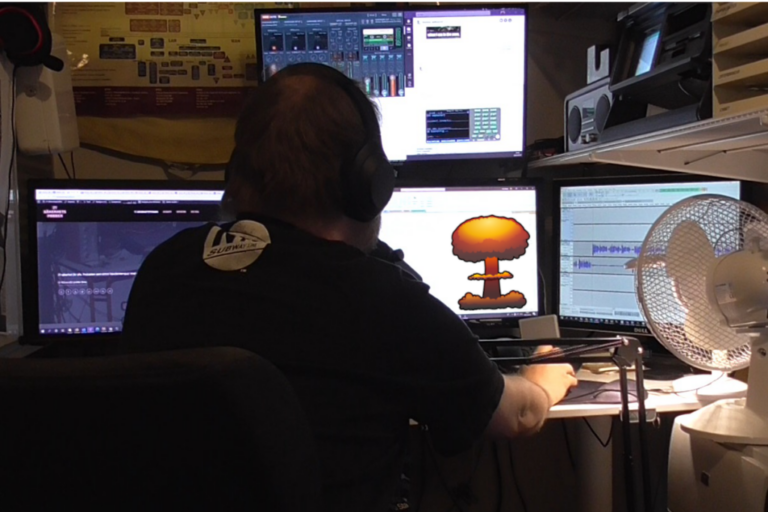
Don’t worry, we can fix it in post production. Promise.
This station has a number of names: The ERICADE Radio Network, TERN, ericade.radio and ericade radio. It’s mine and I play 24/7 chiptune and demo scene music on it. It’s located on ericade.radio or radio.ericade.net. Either way works…
… Or how I learned to stop worrying and love the daily chaos
It was quite a chilling realization when it hit me. I couldn’t believe my bad luck, when a calm 30 minutes before the in-official launch, became a frantic race to get the show on the radio at all. I was new to the voice tracking way of doing radio, where you record the bits between the songs at a rapid pace. You hear the last four seconds of a tune, speak, and then advance to the next one. No need to wait for the song to end, and thus you can push the next hour of programming “in front in you”, while on the air.
That’s all good and fine, but I had recorded 30 minutes worth of funny banter, an introduction speech, and some thoughts – and placed it all on the wrong broadcasting hour. It would NOT be heard at midnight when the station was to officially open to the world. In fact, the station was about to go live, and I had just voice tracked the hour before the launch to give me some time to get it right at midnight. I would soon hear myself announcing the grand opening in an hour, knowing it just didn’t exist. I had totally screwed everything up.
If you wonder, yes that is normal radio for you. Always been that way. two hours later I might have sounded a little bit stressed out as I announced the new station. Those remaining minutes, I ran on adrenalin and total panic. As the hour completed, I looked at the statistics: no-one had listened – not even a second.
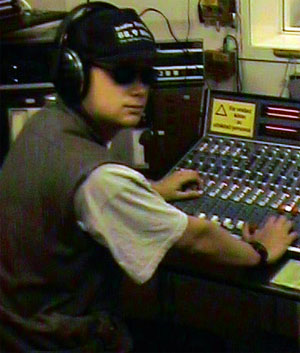
Trying to look cool. Great it’s radio, so the listeners did not have to see this.
The ERICADE Radio Network is a grand tradition. I was a community broadcaster between 1995 and 2006 and had a dream of playing Amiga tracked music on the radio. I held three tracked music competitions on my bulletin board system called “The ERICADE Network” and most of the entries were then played on the air. In 2005 I took all the tracked tunes I had on my board and created a playlist using Win Amp and Shout cast send out a signal over an uncaring Internet. It was on there until 2015, when I removed it for good. Yeah, I told you this story before.
That was supposed to be it. But in 2020 something nasty came along and I ended up stranded at home alone for a long time. I listened to the reports and worried. The first time during the pandemic I travelled as an IT-security consultant to an adjacent city. But after the summer, spent almost no time outside my apartment. At first, I felt productive, but as months passed, I got less and less happy and started working at odd hours or starting late. I needed some good hobby, so it wasn’t work and then idly surfing on Facebook. It was hardly a decision I made. It was something that grew out of boredom and the will to create something cool. And I wanted that Amiga radio station I always dreamt about. But, no, that not the entire story.
I had no idea about this ever becoming a station as I made a few live broadcasts on Facebook playing Amiga-music and chatting with friends, family, and co-workers. The problem was that playing songs was hard. I tried VLC, but it wasn’t meant to be a sound board or a jukebox. Connecting father’s old Wurlitzer to the station would have worked better. It from 1955 and is heavier than I am by the way. Buying Ads on Google is a thing nowadays, and Jason Allen from PlayIt live seems to have put a bid, putting his software “PlayIt live” on the top of the page as I was looking for some sort of music player that could generate playlists for me.
But PlayIt live was no mere playlist-player. I noted, it was meant for broadcasters on a budget. Bad idea – you know me and radio. It just had to be done. I decided to create a station as soon as it struck me, I now had the tools to do so.
September the 14th was the first real on-air day, and I could hardly devote a workday to broadcast. They don’t pay me for that. My idea was smart for doing something so stupid as to create a station for just a handful of listeners. I simply devoted 15 minutes in the morning and 15 minutes on the evening as a coffee-break broadcast routine. Being home alone just meant that the coffee-breaks during workdays were a few minutes for surfing on Facebook and drinking coffee. Nothing was really lost.
The last hours were done in the evening. This routine had me going “live” for 24 hours a day. If you weren’t tired of hearing my voice before, you certainly had the possibility to be so now. I was already clear that I was just the DJ. The station needed a voice. A singing jingle-woman would have been awesome, but that was beyond my budget. So, I went to the website Fiverr and clicked on the first female voice actress on the page: Nicole Carino. Her voice felt right so quickly, I didn’t bother to look for alternatives. Voice actors generally get paid per words spoken. I ordered the first station IDs before the station even launched.
Yes, I’ve spoken about station ids. No need to repeat that. Just know that a station I identifies the station and often gives you a nice slogan. “You’re listening to The ERICADE Radio Network – Your leader in tracked music”. Oh, maybe I should tell you what the name is all about. ERICADE?
Yup. I was a dumb kid, when I decided to create my first gaming development company for the Commodore 64. It would program great games in C64 Basic and it had to have a unique name to go with it as well: Accolade. My father wasn’t buying the latter part of that, as Accolade existed. And I knew that. I also knew about copyright. But my father then took my first name “Erik” and “Accolade” and merged it to “Ericade”. I hated it! Worst name, ever!
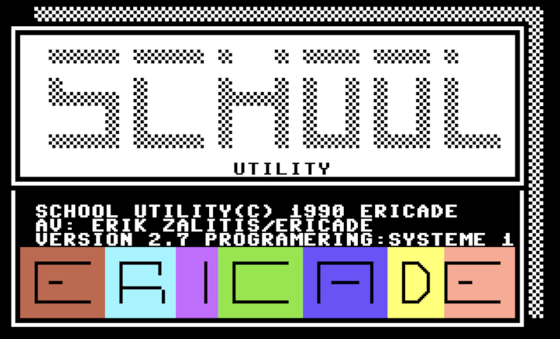
Look! I made this program. I also mix English and Swedish and can’t spell correctly in either language.
But over time, it grew on me. Ericade. My own company. I had no idea what to call myself. In early stuff I created I call myself stuff like “System-1”, “Systeme-1” and “Steelpulse” (stolen as well) of ERICADE. But none of that felt right. When I joined with the very geeky organization “Unga Forskare” (Young Researchers), I was introduced to Unix and Linux. The background processes were called Daemons. Today, Linux calls them “Services”. But a service is often still named something ending with a “d”, like SSHd or FTPD. Yeah! The Daemons are still there.
Daemon of ERICADE! The was my one-man show, program developer, demo group, BBS network, arms dealer, and research department. I may have embellished parts of that list a bit. Anyway…
In 2020, I had long renamed myself the Stripecat on the Internetz. This was originally “Tigersclaw”, named after the spaceship in Wing Commander 1. But a tiger is a striped cat, so I changed it. But when I hit the airwaves, Daemon had to come back. It was my name as a sysop in the real (but lame) demo group “Eternal” and my handle on my BBS called the ERICADE Network. Network? It sounded good to call the BBS that as it ran “in the speed of light”.
Funny note – it was Nicole Carino who commented that it should be “AT the speed of light”. So, I have had a slogan with incorrect grammar for the last 25 years. Aha, ok. Fine.Now I had nice Station ID like: “The ERICADE Radio Network – Amiga blast from the past!”, “The ERICADE Radio Network remembers … the Commodore Amiga” and “Music from the geeks of the 80s and 90s – The ERICADE Radio Network delivers!”.
Nicole had an amazing dictation and a super clear voice. It sounded good. My intent of the station was that it would sound as the old-time radio stations. I have a history of being a radio DJ in Stockholm for a community broadcaster. During the 90s we spoke fast and as we were in a hurry and no silence was allowed. The music was always mixed, and we spoke until the artist started singing. This is still common with commercial stations to this day, but I wanted something else. Getting older, I listened to Swedish radio from the 60s and 70s. It left gaps between the songs and the announcer. It was also impossible to speak until the vocal began, as tracked music seldom had any to begin with. I wanted this slow, steady, and calm pacing. Nicole spoke in a natural and methodic way. Today, the station has a very different pacing. This is no mistake. It’s simply that I changed my mind a bit, and the station a lot.
I also had the idea of one story per hour, or as the listeners probably would have called it: “long, boring ramblings”. The first broadcast day, I noted that listeners were no better than the ones listening to normal radio. They are in it for the music, not my musings. I quickly understood that a music station cannot allow me to speak for more than 40 seconds. Later, I had to rethink even that. It’s a thing called a format. Music station play music and talk radio shouts incoherent ramblings about politics. I was a music DJ, so I had to learn.
And you cannot learn faster than when you had the listener logs updating in front of you. When that well-thought-out diatribe against that pesky computer called an “Atari” hit the air, and I saw people disconnecting. That was an immediate “Ouch, dammit”-moment right there. I am snarky to the core if I want to. That was kind of my idea when I started the station. At first, I intended to voice act as a 40 something nerd living in a bunker that is really his mother’s basement. Thankfully I understood that people would not really get it was just an act. But what possessed me to even conjure up such a dumb idea? Fallout! Yes, the Bethesda gaming series with colourful personalities such as Threedog, the “Wolfman Jack”-copy that was always commenting on your progress in the game. Or the malignant “President Eden” or the smooth talking “Mr New Vegas”. I also LOVED the fan-created stations. Especially the constantly drunk Esaias Pendergrass who progressively got more plastered as he announced the records. I love the idea of role-playing games, so I had to create my own persona. And wisely choose not to.
But I did put up a set of 20-something short musings. Please understand that the negativity about the Atari was just for fun. Amiga and Atari-owners always feuded about everything back in the day. It was just a game of sorts. So I thought it was fun to add to the station. I probably lost some listeners over it. Guess what computer brand they must have prefered.
- Do you know the difference between an Amiga and an Atari? If you own an Amiga, you do. If you own an Atari, you don’t.
- If you got nothing better to do right now, patronize a bulletin board system! There is probably some lonely sysop that could use some company right now.
- Do you remember when Amiga meant friend? Not me, but I do remember a time when the Amiga brand wasn’t fought over by all the vultures.
- Do you remember all those popup adverts, GDPR cookie messages and irrelevant warnings about having not enabled Windows Defender on the Amiga? Me neither.
- If the PC is a man in a costume, the MAC is a hipster artist… Then the Amiga is the girl who never left the party.
- World peace can only occur when Amiga and Atari-users settle their differences. As you understand now, world peace will never happen.
- Look, you probably think I give Atari users a hard time, and maybe I shouldn’t. They had to own an Atari, so they have suffered enough already.
- If you have “Carpe diem” painted on your wall, you have in fact already failed at life. Everyone knows you should have an Amiga poster instead.
- You know what? I want “Amy the squirrel” to be the new symbol for the Amiga. Hah! Try to buy the rights to that, Cloanto!
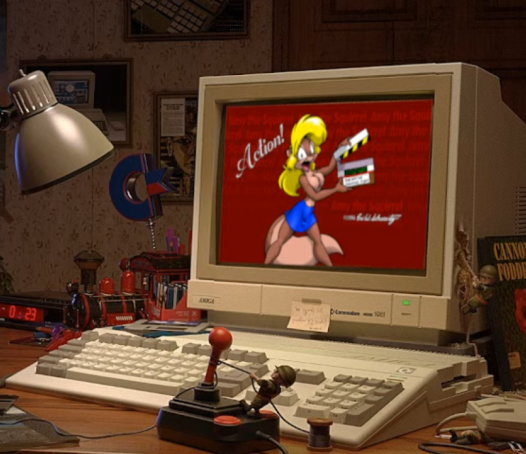
Off course she is a squirrel. I mean the Amiga community is patently nuts.
While funny, the got a bit tedious if you had listened for a few days. I ended up creating nearly hundreds of them. But I could not understand that it would fail to create a true music station. I was still kind of in love with the in-game music stations of Fallout and Grand Theft auto.
As I was putting more effort into a podcast called “IT-säkerhetspodden”, which is a Swedish podcast about IT-security. Then I started expanding my knowledge about digital audio recording and bought a lot of hardware and software. A lot of lonely evenings were spent mastering the equipment and my recordings.
The first setup ran on an old computer I had left over. PlayIt live ran with the additional audio processing and live-broadcast plugins. I also bought a lifetime license for all the core modules. Including the “Voice tracking” one. You know the thing made gullible listeners believe I never ever slept. While expensive, I felt that having no house or boat costing lots of money gave me some cosmic kind of right to buy whatever I wanted. Also, with no wife complaining about all the radio equipment… What the heck. Stuff is fun!If you want to get technical, my microphone was the legendary Shure SM7B, and I had a Rode Rodecaster as an audio processor. That is a nice setup that also helped me produce IT-security lectures for my work and for customer reports. The mike was on a boom-arm, that I could swing in front of me as soon as a new type of security problem needed an explanation. A few minutes later, the presentation or webinar was up on the corporate site.
And I also produced radio and podcasts. This was nice if a bit excessive. But I know of other people having the same setup. Jor-El from Edison has this with a Blue Yeti-microphone and Mikko Hyponnänen does the same kind of lectures (although much more popular than mine) as I do with the same sort of setup. I can mention more people, but you get the point. It’s what it means to produce stuff currently.
In December, I had a Discord forum and a Facebook page for the station. I had by that time stopped voice tracking the station as I had less time for it. But one day I made a short show at 9 PM Swedish time. I just spoke a little bit and played some music. One of our frequent guests on Discord liked it and wrote “Make it a podcast”. The rest is history as they say. I originally intended to call this new show the “Golden hours” as it was to air 9 PM which is a very nice and calm part of the evening. But I know it’s just a slip of the tongue away from a more adult theme. And that was not a good thing to say on the air.
The calm and rational stare of a man getting hit by a plasma gun between the eyes. That’s going to leave a scar. And maybe, like half of the neck.
So, I instead called it “Amiga Flashback”. Now, you might comment of Flashback being an effect of drug usage. But I referred to the old Delphine game Flashback and the fact that it sounds a bit like “blast from the past” or at least gives you that impression. The show I made later became episode one in the podcast series. It has the episode name “A prequel better than Star wars” and episode two was the first “Amiga flashback” proper. The idea was to make a proper show that would become a podcast shortly after it had aired. This idea stuck and has remained to this day.During the autumn I had produced short weekly videos chronicling the past week on the station. I recorded it in different parts of the apartment. Due to being recorded late on Sunday evening and my insomnia, I tended to sound tired and worn. That was no lie. But it was kind of funny to watch, even though it was more often on my expense rather than due to any skill.The show disappeared as soon as I started the podcast. But problems were on the horizon. I had bought a better computer for the station and ran it on Linux with Playit live running in a virtual machine on Windows 10. The machine could take the workload, but it wasn’t terribly stable. I had many fights with it. But the worst problem, was that my big stash of Amiga-tunes was running low.
Egads! What to do? What to do? I found modarchive, a site with thousands of great tracked tunes. Great! But that caused another problem I wasn’t aware of until much later. I did not know that files with the ending “.xm” could not be played with an Amiga. That was Fasttracker. Still, I put them on the station. The podcast switched from a fun project to a very structured way of consistently getting new tunes on the station.
And that meant that it became more and more of a chore. The production was nightmarish at times. I used VLC to convert the tunes. It was buggy, horrendous and had no consistent levelling. VLC is not good at handling tracked music at all. It’s deceptively well-behaved, that it takes a while to understand that it does not always sound right. Amiga-tunes had an extremely broad Stereo-field that probably induced some sort of split-personality disorder in the listeners.
I put a lot of effort into the early podcasts, telling stories. But over time I observed listener patterns, spoke to listeners about their experience and thought about it. I also listened to the radio shows I sought to sound like. No show more than Leif “Smoke rings” Andersson’s legendary jazz show called “Smoke rings”. I had no voice like his but listened to his delivery. He spoke between 20-50 seconds and that ended up becoming my first guideline for the show. This got more refined over time. But I struggled with trying to figure out what kind of show I was making and what kind of DJ I was.
Never happy with the audio, my voice or basically everything else. I still noted how it challenged me to learn, to overcome and to become better at a wide range of skills. I had to understand the listeners as well. And it took time as I’m stubborn as a whole barn of donkeys.
In December the SM7B was replaced by a Neumann TLM103 condenser mike. All the early podcast episodes were made with that mike and the Rodecaster. It sounded decent. In February we still were in lockdown with no Covid-end in sight. It’s beyond me why no one got nuts in the Kreml or White house and nuked everyone. Working from home was both a blessing and a curse. I decided to buy a new microphone. I had always admired the Beatles as a group, and they used the Neumann U47 and U67. Both those were out of my price range. But I did get a good price on a Neumann U87 with a studio kit. That’s still my work horse of a microphone.
I threw out the Rodcaster and switched to a more basic setup with a normal sound card and a Samson compressor/limiter/de-esser as I tried to get a cleaner sound. Remember me and never ever being done with improving anything ever?
In April 2021 I decided to automate the processing. I had just started doing demo scene top lists and reviews. Revision 2021 taught me how I needed to change how I worked with tracked music. VLC was not the right tool. I wrote a bash-script and installed the player XMP to create the first “audio production line” I ever had. For its flaws, it was consistently good at what it did. I started using loudness normalization with that script as well. That meant all songs played at about the same level. You have no idea how good that is until you realize you never again have to pull the volume up or down on your radio as you listen to the station.
Previously the poor audio process plugin had to work at its highest setting to get the audio levels close to right. So, it went between sounding nice to sounding like the artist was hit by a truck while recording the tune. The tracked music was all over the place with audio quality and levels.
I still had a large set of files with music created before this improvement. But still. For me, this was a huge thing. Like inventing the wheel or something. And about as primitive.
– “Ugh! Me do LUFS! Me know radio! Fire hot!””
I then switched the Unified Audio sound card. It had onboard software effects that also worked in Studio 1 and other digital audio workstations. Playit live accepted all voice recordings from the microphone and sound card “as is”. So, it had to be processed before even getting there. Either that or you would sound like “my first tape recorder” from Fisher-price. So, the UAD did a lot of the work and added tube warmth, limiting and 1000 other ways to trash your audio. Neat!
I also gave the station audio processor the boot and got my first multiband-compressor software called JBB. I got it of some strange site from someone in a trench coat speaking with a Russian dialect. Or so it felt. It had been abandoned by its author. But did it sound good? You betcha!
In May 2021 the station was finally starting to sound right (or so I thought). I had tried some software called “Thimeo Stereo tool” as a station processor. Man, what a wreck. It broke so badly, that in a tearful moment I swore on my pet goats grave never to use that again. I held that promise… For what, two months.
I also reinstalled the broadcast server from scratch and got rid of the virtual setup.
May 2021, I had voice tracked daily most of the spring, but it was quite a chore and listening wasn’t exactly stellar. But I soldiered on. The podcast was still telling stories, but I was strict on timing and used scripted speeches. I’m no good at reading anything loud, so it was a lot of work producing the episodes. I was much better at adlibbing, but still, English is not my native tongue. So, you were always guaranteed a true Swenglish performance. But I don’t sound worse than any other Swedish trying to speak in English. I know that is saying nothing. Don’t remind me.
I was then approached by a group of Amiga musicians that wanted to play their tunes on my station. This did take a bit of an unexpected turn, as they changed their mind after noting that I played so many non-Amiga tunes. Remember I didn’t really know that Fast tracker couldn’t play on an Amiga, and I failed to notice that I was putting in more and more Impulsetracker-tunes as well. This turned out to be a blessing in disguise as it forced me to rethink. And that is how the station became a “tracked music” broadcaster rather than an Amiga-station. The podcast was renamed from “Amiga Flashback” to “Flashback, tracks from the past”. And a lot of restrictions were lifted on what I could play. The Amiga-tunes were still the centre of it all.
Everything was getting better, and I decided to add 50-60 fresh speeches to those retro-computer themed snarky voiceovers the station did twice hourly. I choose life advice for some weird reason. It was super funny on the blog and penned by me. As spoken on the station, not so much. Or maybe it was if you wanted to laugh at me rather than at what I was saying. The performance was not bad, but lines like this sounded more than just a bit out of place on a music station:
– Learn from the experienced, then apply it to your own life in order to not do their mistakes… Or not… You know, not doing it gives you their experience. There’s always that.
– Winners don’t quit and quitters don’t win. If you don’t win and don’t quit, you need to learn the “sunken cost fallacy”.
– You’re often wrong… … especially when you just understood something…
While not a huge mistake, it made the station sound unprofessional. But in the summer, things were beginning to change.
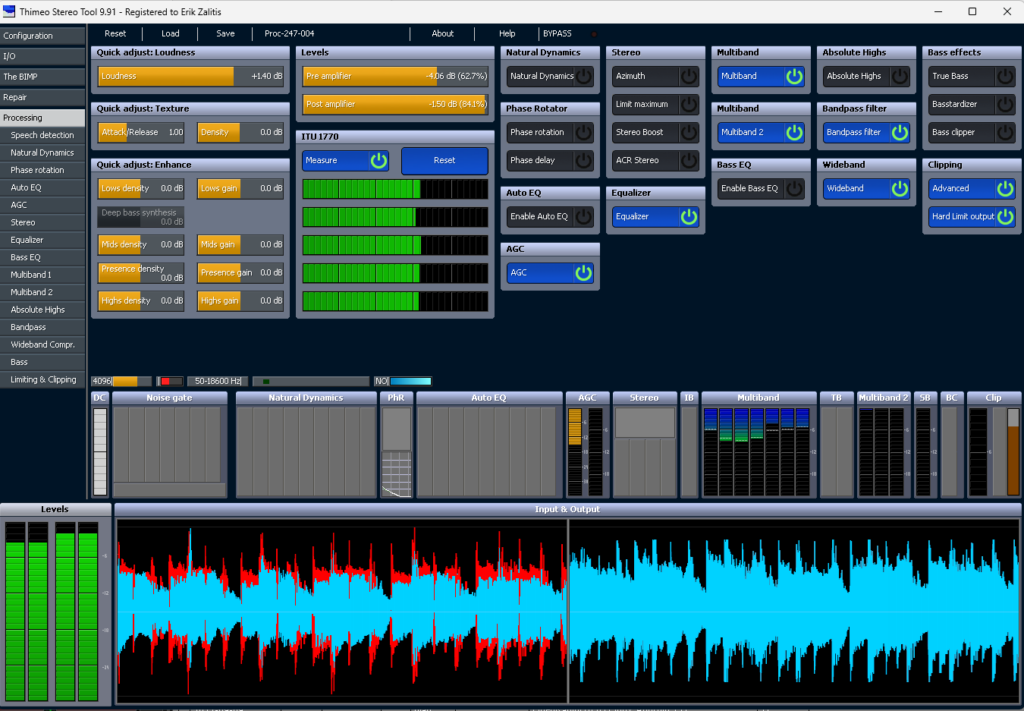
It’s very impressive with all the blinkly lights. This important to show to your unimpressed friends so they know how cool a radio station is.
I decided to give Thimeo Stereo Tool another go. I could see the quality in it. And the problem that made it break turned out to be easy to fix once I reached out to the user community that it had. And then I was finally the happy owner of a true broadcast compressor. After tuning it and pulling out most of my hair, it finally sounded right. Who am I kidding, I felt it sounded less bad. The tool is awesome, but my belief in my own prowess as a sound engineer is not so strong. But I learned and eventually the station got that professional sound I wanted.In July I attended the Edison demo party 2021, broadcasting live on location. I was the proud owner of two Covid19 vaccine-injections and thus felt invulnerable enough to attend. It was fun and quite a learning experience. I ended up broadcasting during Friday and Saturday. But the latter recording broke due to a technical malfunction, so it could not be rebroadcast. But it sounded good as it was on the air.
During the summer I focused the podcast on many of the demo parties running and got a lot of brand-new tunes for the station.The website had already from the start showed the name of the song playing, but the artist was a problem. Tracked music does not have an artist field. So, you must guess who made it. Often, they write their handle in the comments or instrument list. However, sometimes they seem to be too ashamed to say who they are. I put a lot of effort into getting the names into the artist field of the station website. And eventually I decided this had to be fixed in a better way. I started a huge undertaking of creating a fancy technical thing called an “API”. That’s short for Automatic Pudding Imaginer. Or something like that. It’s simply a function on the website collecting what’s playing and making a searchable database for it. The station broadcast tool, PlayIt Live sent what was playing and the API had to figure out if it knew of it already of not. This made a lot of new features possible, like short information about the artists and the tunes. The website could now tell you a lot about what was playing and letting you click on links to go to their Bandcamp site or artist site on Modarchive. It may seem simple, but the effort was big, and I sank many hours into it.
In August the “all clear”-signal came here in Sweden. Covid was “no more”, and everyone could get back to work. Well, it wasn’t that easy, really. It was just that the mutations were getting less dangerous, and no one wanted to stay in lockdown forever. As I’m writing this, Covid seems to come and go as it pleases. And yes, people still die from it. But try to understand that we really wanted to believe it was gone. And it was probably the only right decision to make. I was kind of unsure of going back to the office, but I did. Covid did visit me in November 2021, and it was no fun, let me tell you that. But this meant the live broadcasts were over. The podcast continued.
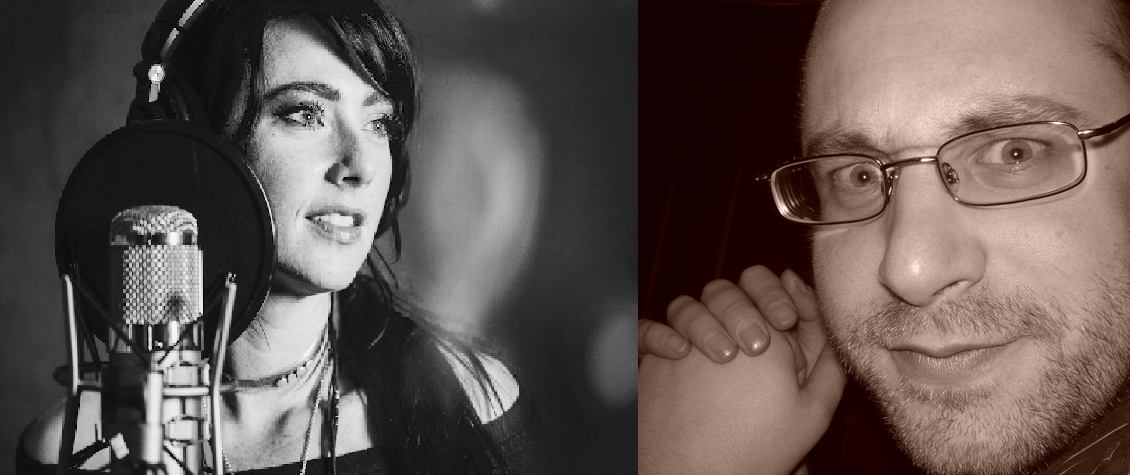
A voice actor and a broadcaster providing their voices to the station.
In August I switched from Nicole Carino to Jono Woodward as station voice when I commissioned him to create new Station IDs. As I tested those, I noted that Jono’s fast paced Station ID made the station feel much more like a true music station. But I couldn’t really match him, as I talk more slowly. This also made me realize that the live DJ-performances were over. I did the last one on the exact one-year anniversary of the station’s birth. And that also meant that the switch to the new Station IDs were final. If you ever hear Nicole’s voice on this station in the future, it means the broadcast system has gone to greener pastures. Her voice is the “we’re off the air message” you would rather not want to hear.
During the autumn I experimented in returning to storytelling as the demo parties dried up a bit. Some good stories came out of that, but the podcast was hard to define. Was it about demo parties, retro-stories or just the music? Well, yes. And it turned out I would have to make a choice later.

In the fall of 2021, the stars came rolling in. I had finally succumbed to that “give it stars”-craze. You know how everything needs a rating. But it did give me insights as people started rating the songs. I learned the novelty “funny tunes” were universally hated and everyone loves Dr. Awesome. Come on – his name is “Dr. Awesome”, and that’s truth in advertising. But he also got lots of airtime on the station, so it was probably also a big reason. Still, he was really supergood at what he was, and still is, doing. All Amiga tunes were removed from the station and had to apply for their jobs again. Not because I’m a bad boss, but because I wanted them to sound good. All the VLC-converted garbage was thrown out. I knew that if I converted them correctly this time, I would never have to do that again. And as you understand by now, that was totally wrong as per usual. But I’ll get to that in a bit.
Winter was putting snow all over Sweden, or it would have if there were any snow. It was a pretty “Novemberish” winter as far as I recall. To celebrate something or at least fix a problem, I decided that all Amiga-tunes had to played in mono. And I recorded a special episode of the show were I only played Amiga-tunes never heard on the station for two hours. That episode was called “Four channels to the wind”, a take on the old saying “four sheets to the wind”, which means being drunk as a skunk. I sure wanted to be, but broadcasting drunk is a bad idea. It gives the sound a somewhat boxed in and mushy mid-range. Mostly because you end up throwing up all over the mixing console. And we can’t have that. So, I stayed sober.
In January I asked a friend to listen to an episode of Flashback, tracks from the past. I wanted him to give me ideas on how to improve listening. He was blunt about his feelings towards it. To put it in my own words: too much speech or too much music. What? Well, it stood between being a spoken word podcast with music or being a music show/podcast with some speech between the songs. The episode he listened to was about Civilization for the Amiga. I previously decided that all my speeches between the songs must be between 30-60 seconds, using old Swedish shows as a template. Not just Smoke rings, but also Svensktoppen and some other old time music shows. This was not bad, but I had missed one point: they all talked about the music. I spoke about games and retro stuff. Either you wanted to hear the stories for the whole episode or just the music with some notes.
Point was taken and I made the choice to primarily do demo top lists, artist presentations and just some talk about the music. This turned out to make the episodes more consistent. And it was needed for many reasons. Some episodes took 10-11 hours per week to produce. So, I had to streamline the whole thing. I ended up balancing between being a calm night-time DJ or a faster top list-presenting-dude depending on what the subject of the show was for the week.
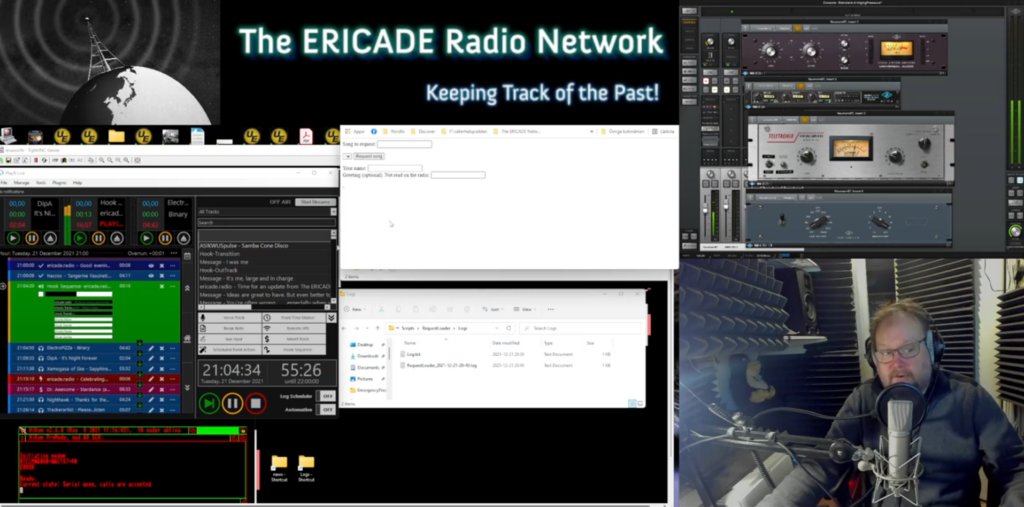
I also had a “challenge-accepted” task in front of me: the request system. With the database getting more and more advanced, I decided the site must have a feature to search and request the tunes you want on the station. And it then had to play them for you automatically. This was a much bigger challenge than I had ever expected, but I got a working prototype up and running before Christmas. It was buggy and broke all the time, but when it worked, it was quite the thing. In early 2022 I finally had fixed the problems and the feature made ericade.radio the only PlayIt Live-based radio station capable of accepting automatic listener requests. The other stations may have had lots of actual listeners, but I had this feature! I declared epic win.
In the spring I used ModArchive’s toplists to make music style episodes of the podcast. All from rock, top, country to silly tunes. This was great until the genres ran dry. Gosh darnit. Always that one problem. In March I decided AGAIN to give the Amiga tunes their marching papers and remove them all. Then I rebuilt them in glorious mono, so the “audio split-vision” would go away. That was the very moment when I was finally happy with the sound of the station. What? Only took like 1 ½ year. And the happiness lasted for about 15 minutes until I felt the need to tune the broadcast processor again. “Because it sounded a bit off”. Probably some sort of “Audio OCD” on my part, but I have learned to live with it. And so have the listeners. It does sound better ever so often.
Demo season started and I covered the demos as dutifully as I could. Some demo organizers, or “orgas” as they like to call themselves, were helpful. Other were non-responding as in “who is this loser DJ who wants our compo-tunes the same day as the competition?”. I gave up in “the first station to play them” and started letting a week pass between the demo party and my episode about it.
The summer of 2022 focused on building the software and introduced the Discord-bot, that allowed the listeners to request tunes and show information about them directly in Discord. It was both awesome and a something of a novelty. Also, I missed live broadcasting from the Edison party due to health issues. But the podcast was still on.One day in the summer of 2022 I copied one old broadcast from 2021 and compared it to a brand-new hour from just a few days ago. Didn’t expect much difference. But it was like night and day. It was like comparing a computer with a broken sound card submerged into a fish tank with kersone in it with… Hmm… I lost my train of thoughts… Probably bound for New Hampshire. But I think I intended to say: all the work had been worth something. It sounded amazing in comparison. Mainly because the old audio sounded amateurish. Amiga stereo were never the glory moment of that venerable old computer. I’m just saying.
As july came to an end, I contacted the old timey BBS sysop Hravnkel and suggested a podcast collab and it became realiy as we sat for an hour and just chat about old memories from the Amiga past. It was a weird discussion about modems burning, pirates copying and why the demo scene could be so hostile. We also choose a few songs each to play and talk about. Superfunny to make and probably survivable to listen to.
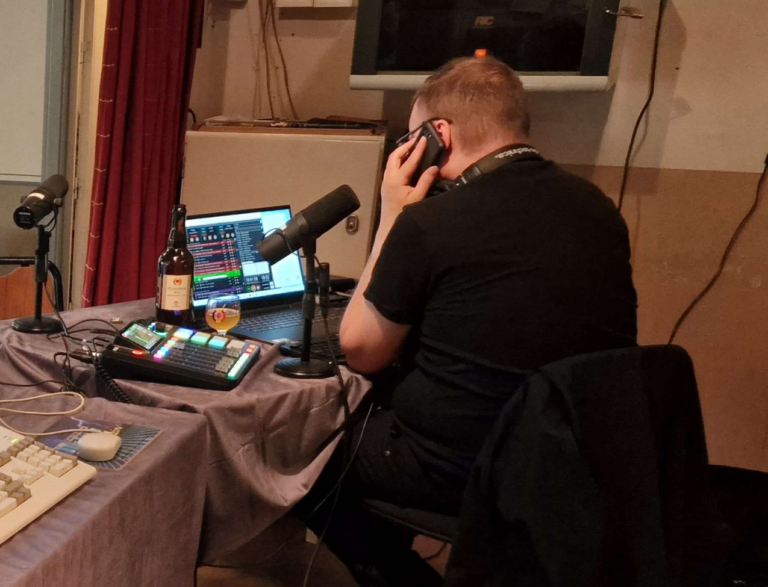
Hi! Do you have some time to talk about the Commodore Amiga? She died for Mehdi Ali’s sins.
I was later invited to broadcast live from Commodore-klubbens event in early september 2022. And I did so for the first and a part of the second.
In August and September, I had to contend with my script and XMP being a problem. The solution was once great, but XMP on Ubuntu was ageing. Its library was older than metusalem and some Impulsetracker-tunes did not sound right. I had no idea how big this problem was until a demo scener explained it for me and played a copy of how it was supposed to sound. Good… It was supposed to sound good.
The XMP library ignored some of the volume commands. If you don’t know how the track is supposed to sound, it’s probably nothing you’ll think about. But in contrast, some tunes totally changed. I had to work hard to find a solution. It turned out to be OpenMPT and its command line tool OpenMPT123.exe. Now OpenMPT was (and is) in active development and could handle anything tracked you threw at it. The Linux machine was put out of its com-missery and I wrote an advanced PowerShell script to convert the tracked tunes into nice sounding music files in the FLAC format. That and I screamed and yelled a lot at the screen as I initially couldn’t get it to work properly. Have you ever worked with files with spaces in their names in PowerShell? It’s no fun. Ever. It makes you mad at the stars for shining.
We were now in the chilly months of fall 2022. In october the server crashed and had to be reinstalled from backups. We were gone for one week. No fun. A few weeks later I threw out the old WordPress website and replaced it with a small custom-made website. The reason why the old site annoyed me? Mostly because it was a chore installing your own code in it. I barely got the music list function to work, and when a user reported that it didn’t work in Firefox, I gave up.
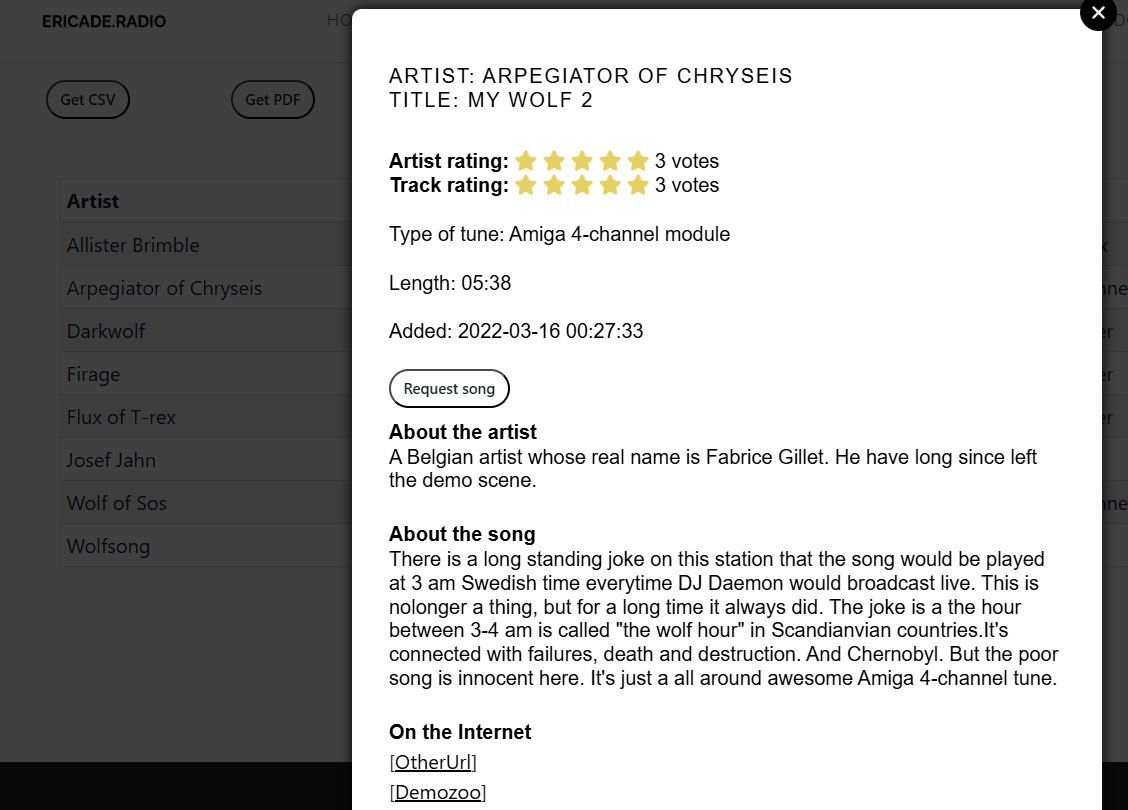
Nice! Now all you Excel-jockeys have something to play with.
This new page came with a song statistics, a table where you could search for songs and finally it was faster. WordPress is nice, but you can’t call it fast.
In 2023 I moved from Solna to Kungsholmen and the rather complex recording studio I had built was now just a couple of unpacked boxes looking accusingly at me. This spelled the end of the weekly show at Saturdays at 9 pm. Thus this meant no more podcasts from the station either. But I missed recording those, so in april of 2023 I went through the daunting process of setting the whole thing up again and that led to the return of “Flashback, tracks from the past”. Now it was a monthly show and the 9 pm scheduled broadcast did not come back.
Development was pushed to the curb side and the station ran without that much interference from me. But then came a message from Coreus, our long standing listener and later on collaborator. He suggested that we should do a live broadcast from Edison 2023 together. A joint venture between ericade and his project retro.gg. I thought it sounded like a great idea and planning began. I dug out my old broadcasting computer, that I used for Edison 2021 and updated it.
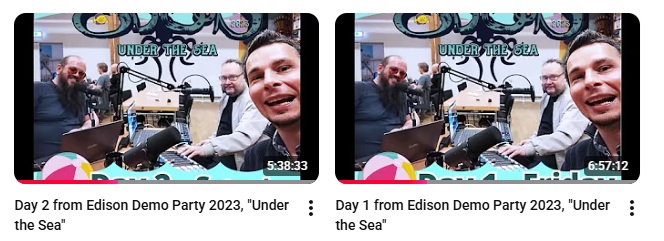
All setup and ready to give you the demo scene!
So came summer and three DJs met in Stockholm. It was me, Coreus and his friend the Baron of Dubstep. On the 7h of July we entered the airwaves and did a heavily musicladen talkshow with interviews. This was done on location and live over the station. It was really fun. In the end we learned some bad news: the was to be the last Edison ever. The organizers had decided to stop doing the demo party. It was a decision they wisely reversed later, but by then it looked as if it was over.
Development of the station during 2023 was slow and the podcast episodes were few and far between. But the station operated and we had a small, but interesting Discord server with some listeners.
In august of 2023 as few “less than stellar individuals”, you know the ones we call hackers decended on the web site discord.io, and forced it to permanentely shut down and disappear. This was the service providing our invitation links to Discord. So no more people appeared on our Discord server. It wasn’t fixed until 2025, causing our Discord server to eventually go pretty silent.
In 2024 we knew that Edison was gone and this live broadcasting thing, was something I wanted to continue doing. Me and Coreus decided to set our sights on Pågadata 2024. This was a small demo party that was seen as a continuation of the Gubbdata party that had shutdown. In the summer we went to Örtofta in southern Sweden and broadcast live. It was a smaller demo party run by people that wanted to have fun and meet. It was great and we logged a number of broadcast hours with music and interviews.
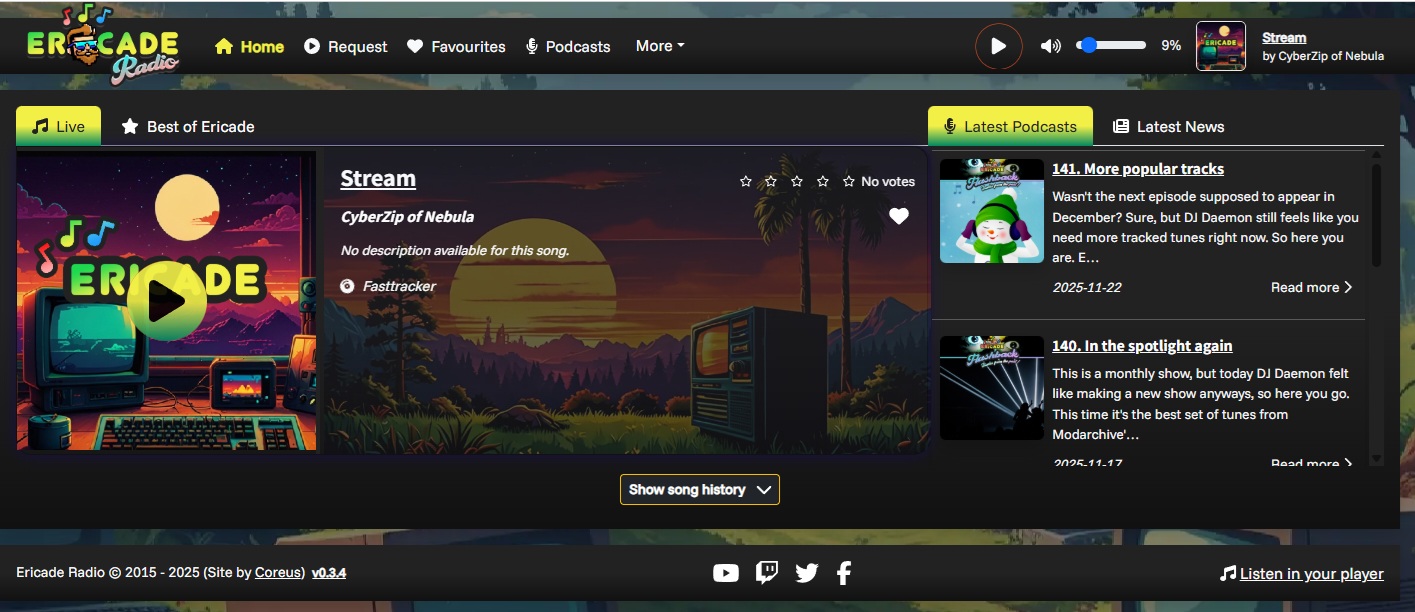
This the 2025 model of website! Get it through your nearest car dealer.
The fall of 2024 led to a major improvement taking place. Coreus and I began replacing the old and aging website for the station. This “old” website would work, but looked really horrible on phones and on really big screens. Coreus took over the role as web developer and in early 2025 and a new website created by him rolled out and integrated the functionality of the old site with a modern and sleek web site design. It was black! Dark websites are awesome, there is always that.
In 2025 I got the news that the Edison demo party was coming back. This time, they had scrapped the old barn house in northern Stockholm for a big boat anchored in the Mälaren sea in the middle of Stockholm. It was the m/s Borgilla.

Ladies and gentlemen: I give you Coreus’s “Blobby”. Nah, I have idea what he’s supposed to be either. But he is an awesome critter!
Coreus and I decided to make a live broadcast from there. This time, there was a big difference. So far we had always been guests on every demo party we broadcast from. This time, the organizers of Edison gave us a role. We would be commentators and have a show where we presented the best competition tunes from all previous years of Edison. This was a welcome change, but there were a lot of extra work. We also provided the paus programming over Twitch. And we got comments from people watching the Twitch stream, that they enjoyed the interviews made with various sceners. And Coreus won the video competition and brought “Blobby” into the world in a cooperation with dem scene musician Alpa.
It was a successful thing except I made a screwup as a commentator. They had a competition with some games that the organisers showed to the sceners. Those games were all hard and the players failed swiftly at playing them and gave up without going anywhere. I thought that was funny and noted that “this didn’t go too well”. The listeners though I meant that the games were bad and I got some angry comments for that but was not told about it until later. Ouch! I hope noone is still mad at me for that faux pas.
The powers that be must have been happy with our work, as both me and Coreus were offered the role as part of the official organizers of Edison. It either that or they are short of people. We accepted the offer.
The calm was returning and we had to handle the backlog with the two Edison shows going up on YouTube. This took some time, but eventually happened.
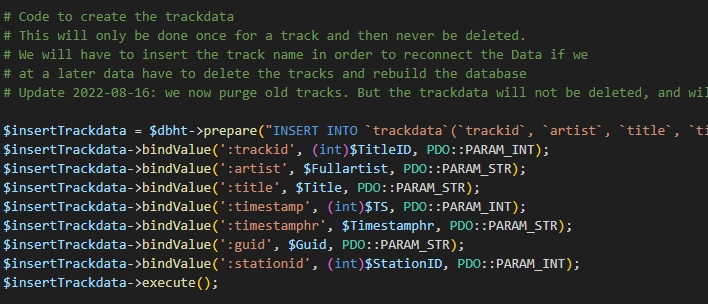
This is an ancient, sacred scroll passed along by a group of ancient wizards.
I spoke with a fellow scener that mentioned that some of the demo scene sites had been struck by hackers. Most wellknown case was BitJam, that went dark after that. Then I got a real close shave when the request function failed one day. After investigating the problem, I noted that the song trying to play had an apostrophe in its name. This crashed the API. It was a classic SQL injection. That was a big security hole in the code. The affected part of the system was blocked from the Internet, so there were no real risk of it getting hacked. Still… Rather nasty thing to find if you ask me. I decided to go through the whole backend and leave no stone unturned.
I fought through my code over the coming three weeks to fix all problems I could find. It turned out to be no more security issues, but a number of annoying errors in functions and I pulled whatever hair I still had on my head out over it. When it was done I was very satisfied over finally sorted it out. This led to me improving the import of the songs as well and it ran much faster now. One thing led to another: I made a number of new Flashback episodes in short succession. The passion was back in a way.
In December of 2025, the Trifecta (Me, Coreus and the Baron of Dubstep) assembled again and talked about AI, Spotify and our favorite games from the past in the podcast.
In 2026 Flashback, tracks from the past was back as a weekly show and I set my sights on trying to do the magic spells of SEO. That’s not some sort of arcane spell to create wealth and prosperity. It was rather a good way to be found on Google and the podcast directories. It’s called “Search engine optimization” and that’s what all the cool kids are doing. So did we. If you search for stuff like chiptune, demo scene and retro computers, it’s great to be one of the first results on the ranking. The only thing better than that must be to be the first result for all things people type into Google. Any 1337 hax0rs out there who want to help me out? 😀
The whole spring and early summer, I got the stations and the podcast registered on all directories and podcast services. I added all new, nice meta data that promised our podcast a sure ride to stardom. I added chapters, full transcription and all the meta tags you can throw a stick at. Did it work? Well, better at least.
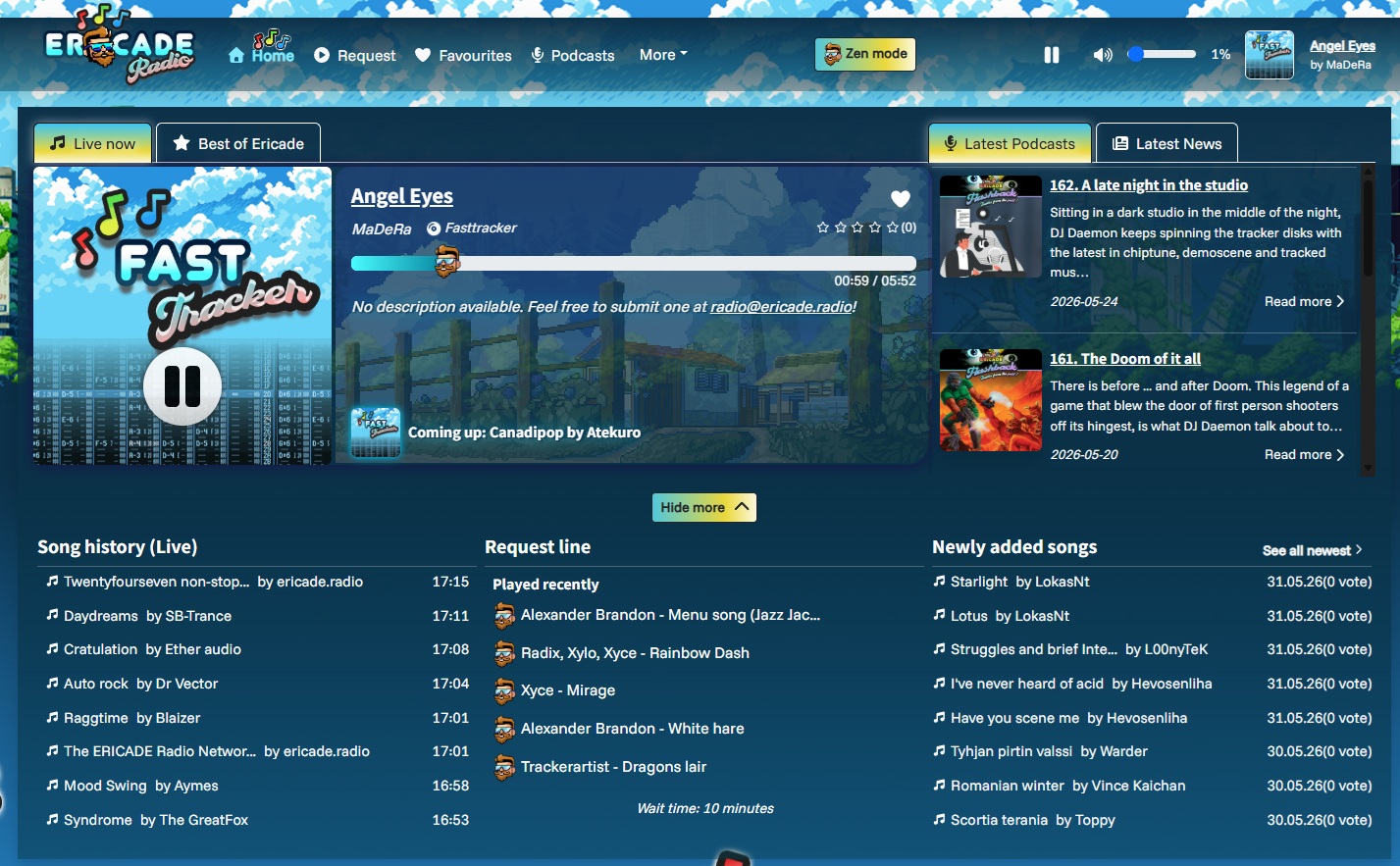
In February, Coreus made some really vast updates to the website and fixed a lot of bugs and improved everything. The awesome new color was blue and had an optimistic view of a destroyed city under a sunny sky. It was true pixel graphics. Jay! Awesome-sauce. No AI-slop. AI-slop is bad, mmmmkay?
Revision 2026 was now a reality and in April of 2026, I and Coreus went to Saarbrûcken in Germany to broadcast live. And so was done. We played lots of great music and talks to sceners like Truck, Oilheap, Jenna (Minebrandon) and others while talking about the everything going on. From this, we created four long, and interesting podcast episodes.
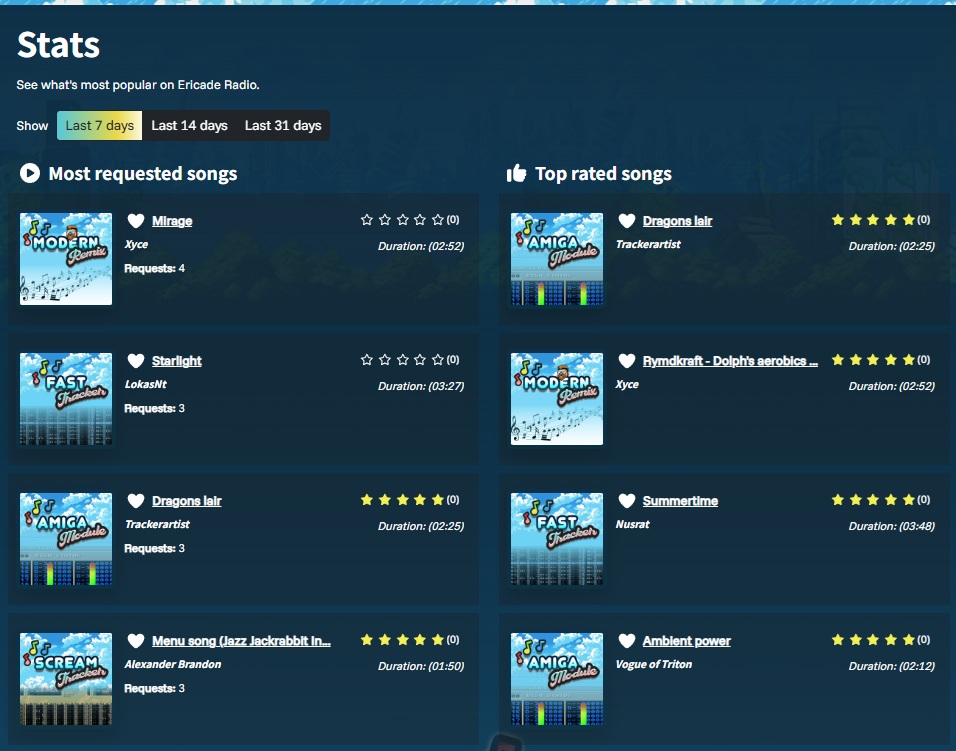
The whole time, I and Coreus worked long night shifts to add a number of new features to the station. A progress bar, texts that told you what music was playing on Best of ericade.radio, statistics, Album graphics, tags and links to all social media we were featured on.
This is where the station is at today and I had to omit a lot of funny, good, and horrifying stories due to lack of time. But some of them shall be told when I find the time. Rest assured.